iWorld
OTT platforms discuss need for regulation

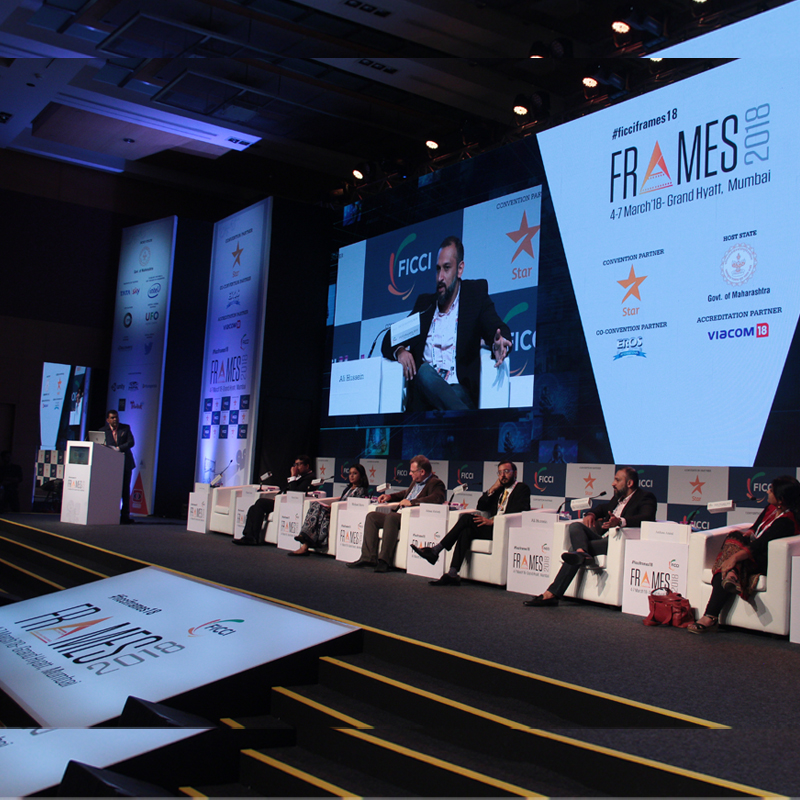
MUMBAI: At FICCI Frames 2018, stakeholders once again debated the need to bring over-the-top (OTT) platforms under a regulatory system. In a session on digital revolution, panellists discussed how India stood a genuine chance of becoming the digital content hub of the world but the threat of regulation from the content, data and economic perspectives loomed large.
The session ‘Rise in Platforms: Digital Revolution in India and Impact M&E Industry’ was discussed with panellists Media Partners Asia ED Vivek Couto, Frost and Sullivan director Vidya S Nath, Verizon Digital Media VP – strategic alliances & channel management Michael Sturm, PLR Law Partner Suhaan Mukherji, Eros Now COO Ali Hussein and Z5 business EVP & head of digital – India Archana Anand. The panel was moderated by Castle Media ED Vynsley Fernandes.
According to Mukherji, the concern is that which authority will regulate OTT as it comes under the ambit of the IT Act. “OTT was defined by the Telecom Regulatory Authority of India and it brought out the information papers on net neutrality,” he said.
Anand said that OTT needs more freedom than traditional media that can differentiate it as being a little more edgy, cheesy and brave. Nath pointed out that the word ‘regulation’ is often interchanged with ‘censorship.’ “In the broadcasting industry, there are regulations like not showing the ads in the day time or show few ads after 10 pm. But the industry does practice self-regulation too,” she said.
Agreeing with her, Anand said that Z5 also practices self-regulation and that every platform follows certain fundamentals wherein everyone steers clear of things such as porn. She favoured having a debate between platforms and regulators to come up with a regulation after mutual consensus.
However, Mukherji cautioned saying, “We should be very careful that we just don’t treat OTT or kids movies or IP networks the same way we treated everything else.”
Describing the nature of digital platforms, Anand said, “We are always on OTT while traveling or even while waiting. It’s really about us consuming way more than we ever did before.”
Nath opined that looking at the current business model, India was primarily an AVoD market. She said that by 2020, Indian OTT market has the potential to grow to 500 million. It was 180 million in 2017. She further added, “OTT is not competing with pay TV or FTA channels, it is competing with other digital platforms.”
The fight is essential for viewer time. Since people don’t pay up easily for content, most platforms adopt a freemium model.
According to Couto, countries like Australia and Japan are largely based on subscription video on demand. In Australia, TV industry has been demolished and the entertainment is largely driven by Netflix. But India is a country with huge potential market. He said, “India is still slow and the most interesting thing about India is that it has a strong online market and online is the subset.”
Japan and China are liberating the OTT space. “They are creating their digital ecosystems with games, videos, e-commerce and many things in it,” added Couto. He also said that the average watch time for any OTT platform including Netflix in Indonesia is 15 minutes but in India, it comes to 3 hours a day.
Sturm believes that Indian markets produce the most content across the globe but looking at the scale, everything falls to AVoD, SVoD and TVoD models. He said, “When you need to reach the mass, then you need to opt for AVoD model. In one or two years, we will be able to run profitable AVoD models.”
While praising the diversity of India and its content creation Sturm said, “India is not just about English and Hindi speaking consumers, it has consumers consuming content in many more languages.” Anand also added that there is a big regional market in India that is waiting to be captured.
Whether global or local, whatever the niche or genre, OTT services have become the centre of attention in the entertainment space and they must become sustainable businesses at some point. OTT players are certain that TV won’t die so soon and their fight is on a different level altogether.
Also Read:
Localised content the way forward for Netflix in India
2017: The year OTTs went regional in India