Connect with us

MAM

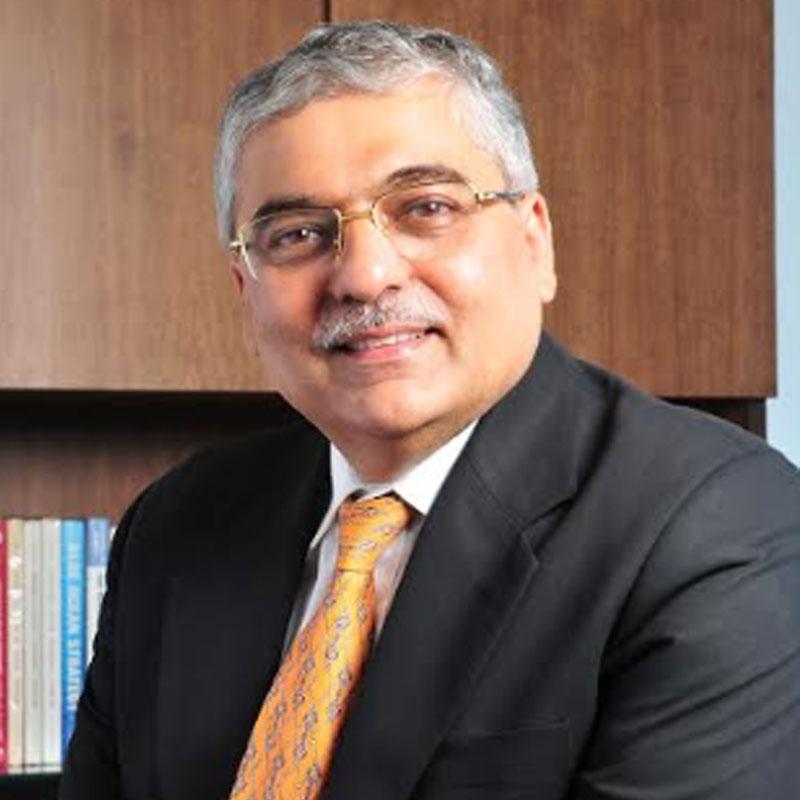
Ashish Bhasin elected as president of AAAI

Published

on

MUMBAI: Media veteran Ashish Bhasin has become the new president of Advertising Agencies Association of India (AAAI) for the year 2018-2019. Bhasin takes over from Nakul Chopra who will now be the ex-officio member of the new AAAI executive committee.

Publicis Media India CEO Anupriya Acharya was elected vice president of the association.

Bhasin has been a part of AAAI as the vice president and has now taken up a much larger role. He is also the chairman and CEO South Asia for Dentsu Aegis Network and a member of the Dentsu Aegis Network Asia Pacific Executive Board.

Advertisement

Outgoing president Mr Nakul Chopra stated, “I have been privileged to lead AAAI for two years – my sincere thanks to all my fellow members for their support. Hearty congratulations to Ashish on his election as President. He is not only a key influencer in our industry but also a AAAI veteran. I am sure that AAAI will only grow from strength to strength under his tutelage.”

The announcement was made today at the St. Regis hotel, with Ram Sehgal being conferred with the AAAI Lifetime Achievement Award 2018. 

The AAAI Lifetime Achievement Award is the highest honour to be given to an individual in India for his/her outstanding contribution to the Advertising Industry.

Advertisement

The award was presented to Sehgal in recognition of his outstanding leadership and contribution to the advertising industry in literally establishing Delhi as a premier centre for advertising in India.

It was this foundation that later led JWT Delhi to become the largest office in India and among the biggest in the world. Sehgal also helped in moulding Contract Advertising into one of the finest agencies and for leading AAAI and establishing one of the finest training programs in the industry ever. 

AAAI is the official, national organisation of advertising agencies, formed in 1945, to promote their industry interests. The Association promotes professionalism, through its founding principles, which uphold sound business practices between Advertisers and Advertising Agencies and the various media. AAAI consists of small, medium and large-sized agencies as its members, who together account for almost 80 per cent of the advertising business placed in the country.

Advertisement

Indian Television Dot Com exclusively spoke to the man of the evening, Ashish Bhasin to understand his goals for AAAI and the Indian media current state. 

Goals you have set for yourself as president of the Advertising Agencies Association of India?

Its a huge honour for me to be elected as the president of AAAI as we are in our 74th year. People who are so illustrious and stalwarts have occupied the position. My immediate past president Nakul Chopra has done a great job, So, the first goal is to live up to their standards.There is a complete change in the Media and Advertising industry and we have to change and adapt with times to make sure we continue to represent all constituents of our industry. And those constituents are constantly changing. Digital is now becoming pretty important today and we should encourage more digital agencies to be a part of AAAI. We also need to agile to the changing dynamics of the media industry and take up the industry’s issues as and when needed. 

Advertisement

We also need to bring in younger people in the industry and also have more women on board. The vice president of the association this year is a female leader after a very long time. Anupriya Acharya is a very competent lady and its great to have her on board. 

How do you view the current Indian advertising industry and what do you think are the challenges for the advertising industry?

There is a complete momentum of change in the marketing and services business across and not just A&M. While there is an interplay between consumers going increasingly digital but we are lucky to be one of those few counties where all medias are increasing. Print and TV are still growing steadily in India. We also have to get out of the procurement and squeezing mindset so that enough resources are available with the agencies to invest in talent which they can use for their client. It is a period of change globally.  AAAI and the Indian industry should take this up as an opportunity and that’s where our focus will be. 

Advertisement

What will the focus areas for AAAI this year?

We want to be the apex body that best represents the advertising agencies along with other industry associations, the government or any other organisation. 

AAAI is said to be the Big Boys Club. While we know there are fewer women in top leadership roles in the advertising industry, over the years we have never seen women as leaders or even participating much in AAAI. Why is that?

Advertisement

It is a perception and we have to correct it. Some even call AAAI as “The Old Guy’s Club”. In an organisation, we need to have diversity and more women in the business as managers who take active roles. I am extremely pleased that after several years, we have  a female vice president and I hope and will work towards having many more women in the association. I hope our new EC will be a judicious mix of young and experienced because you need to have experienced people to have that continuity and wisdom which is gathered over the years. But we also need fresh and young blood in the organisation. We also want to include other agencies, be it big or small, so we are not labelled as a “Club”. 

Click to comment

Leave a Reply

Your email address will not be published. Required fields are marked *

MAM

Brands push beyond compliance as trust takes centre stage

ASCI AdTrust Summit 2026 spotlights shift from legal checks to credibility.

Published

on

MUMBAI: In a world where a disclaimer can be legally sound yet socially suspect, brands are learning that compliance may tick boxes but trust wins markets. At the inaugural ASCI AdTrust Summit 2026, a panel on “Beyond Compliance: The New Currency of Trust” unpacked a growing industry reality: the gap between what the law permits and what consumers accept is widening and fast.

Moderated by Meenakshi Ramkumar of National Law School of India University, the discussion brought together leaders across law, marketing and academia to examine how brands must evolve in a digital ecosystem increasingly shaped by scrutiny, scepticism and speed.

Ramkumar set the tone by highlighting a critical shift, advertising today operates in the same digital space that fuels misinformation, scams and fake news, making credibility harder to establish. “The challenge is not just about what brands do, but the broader context of low institutional trust,” she noted, adding that when violations go unchecked, trust erodes not just in brands but in the regulatory system itself.

Advertisement

This vacuum, she said, has given rise to consumer activism from boycotts to social media backlash as a parallel accountability mechanism.

For Amit Bhasin, Chief Legal Officer at Marico, the distinction was clear, legal compliance is non negotiable, but insufficient. “Compliance is the minimum threshold. The real challenge is staying aligned with changing consumer expectations,” he said.

He pointed to how advertising narratives have evolved from traditional depictions of gender roles to more shared responsibilities reflecting a broader societal shift. “Earlier, it was fine to show one person doing the household work. Today, that may not land well. Consumers expect brands to reflect reality,” Bhasin observed.

Advertisement

He also highlighted internal debates where campaigns that may be legally permissible are still rejected for being culturally insensitive, noting that responsible advertising often requires asking uncomfortable questions before the public does.

If compliance is the baseline, reputation is the battlefield.

Bhasin noted that reputational risk has become a far greater concern than legal exposure, particularly in an era where campaigns can be dissected within hours online. “Earlier, a controversial ad might invite a newspaper editorial. Today, within hours, you’re at the centre of a storm,” he said.

Advertisement

Brands, he added, now evaluate campaigns through a dual lens legal viability and reputational vulnerability with the latter often proving more decisive.

From a healthcare perspective, Satish Sahoo of Cipla Health underscored the complexity of operating within fragmented yet stringent regulatory frameworks, spanning drugs, food, cosmetics and Ayush. “Anything under a drug licence is the most tightly regulated,” he said, adding that this necessitates proactive, not reactive, compliance.

He shared an example from the oral rehydration salts (ORS) category, where Cipla resisted the temptation to position products aggressively despite competitive pressure. “Our product is WHO compliant, and our communication reflects that. We chose not to blur the lines, even if others did,” he noted.

Advertisement

The long term payoff, he suggested, lies in credibility built over consistency, not quick wins.

Yet, as Harsha N of National Law School of India University pointed out, even perfect compliance does not guarantee trust. Drawing from historical and modern examples from exaggerated product claims in the 1800s to contemporary environmental and health advertising, he argued that legal frameworks often lag behind consumer expectations. “A brand can be fully compliant and still be perceived as misleading,” he said, citing instances where fine print disclosures fail to reach or convince the average consumer. He added that larger companies carry a disproportionate responsibility to set ethical benchmarks, even in areas where the law remains silent.

The conversation also turned to digital advertising, where the challenge extends beyond content to how ads are experienced. From algorithmic targeting to personalised messaging, brands now operate in an environment where regulation struggles to keep pace with technology.

Advertisement

Sahoo noted that social media has amplified awareness, with influencers and consumers increasingly scrutinising product claims and calling out inconsistencies. “Awareness has gone up dramatically. People are questioning what goes into products and what brands are saying,” he said.

The role of self regulatory bodies such as Advertising Standards Council of India also came under the spotlight.

Harsha acknowledged that while SROs play a crucial role, they are not immune to criticism, particularly around perceived conflicts of interest and enforcement gaps. “SROs have a higher threshold of responsibility not just to interpret the law, but to anticipate societal expectations,” he said.

Advertisement

He added that failures in self regulation often push the burden back onto government intervention, underscoring the need for stronger, more proactive oversight.

One of the more nuanced debates centred on whether building trust comes at a cost. While Sahoo acknowledged that quality and compliance can increase costs, he argued that companies must absorb them as part of their long term strategy.

Bhasin, however, framed the challenge differently not as cost, but as competitiveness in a market where not all players play by the same rules. “The real tension is when others cut corners and you choose not to,” he said.

Advertisement

The panel concluded with a call to embed trust into business metrics.

Sahoo suggested that organisations must go beyond revenue targets to include consumer equity and trust based KPIs, ensuring that ethical considerations are not sidelined in the pursuit of growth. “Trust sounds abstract, but it can translate into measurable consumer equity,” he said.

As the discussion wrapped up, one message stood out: the rules of advertising are being rewritten not just by regulators, but by consumers themselves. In an ecosystem where attention is fleeting and scepticism is high, brands that merely comply may survive, but those that build trust are the ones that endure.

Advertisement
Continue Reading

Advertisement News18
Advertisement All three Media
Advertisement Whtasapp
Advertisement Year Enders

Copyright © 2026 Indian Television Dot Com PVT LTD

This will close in 10 seconds