Brands
Parle’s bid to overthrow Britannia’s Nutrichoice

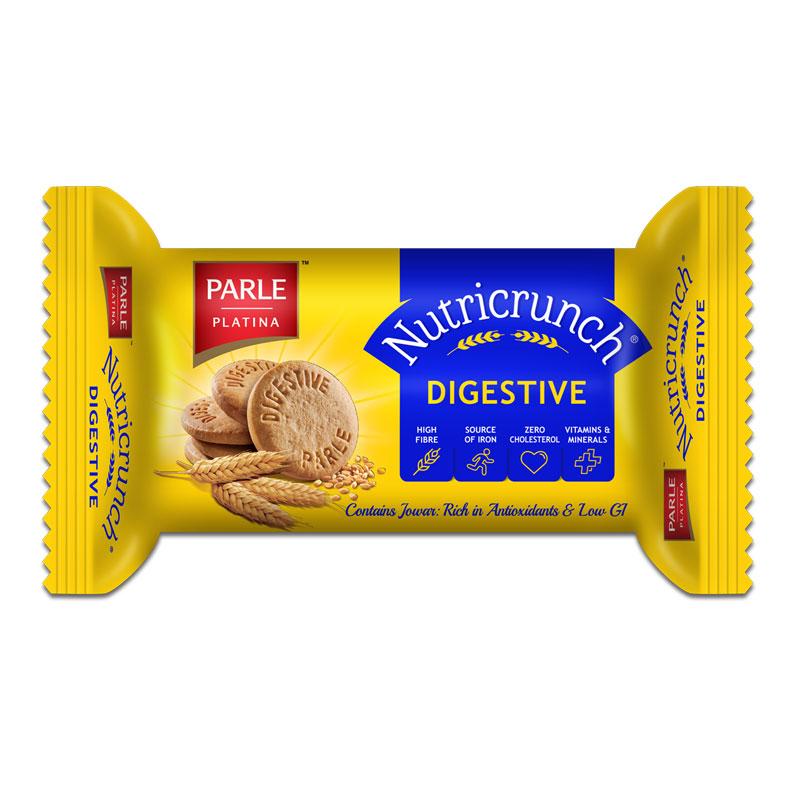
MUMBAI: The digestive cookies range in India is dominated by Britannia Nutrichoice range of biscuits. The market is huge and every brand now sees opportunity in the segment due to increased awareness and healthy eating choices of the consumers.
In a bid to compete and make its mark in this sector, home grown brand Parle Products has launched its own range of digestive biscuits under the umbrella of NutriCrunch. The launch of the healthy range of biscuits is inspired by the growing demand for healthy snacking options among Indian consumers and will include products like Nutricrunch Digestive, Nutricrunch Honey & Oats, Nutricrunch Digestive Marie and Nutricrunch Lite Cracker.
This is the second innings for brand Parle in the health category. The company has decide to phase out its older health biscuit offerings that was sold under the Simply Good brand name. While the production of Simply Good has been completely stopped, Parle Products now wants to complete switch and focus on NutriCrunch. The sheer reason for Simply Good not being so “simply good” was due to lack of effort and focus on the product’s marketing as a healthy alternative to regular biscuits and Parle Products does not want to repeat the same again.
Priced at a sweet spot of Rs 20, the confectionary and biscuit giant wants to capture a sizeable share of 15 per cent in the 1200 crore health segment in India. The company, however, faces stiff completion from Britannia Nutrichoice that occupies a major 70 per cent premium health biscuit category followed by ITC’s Sunfeast range of Famlite biscuits and McVitties Digestive biscuits.
For Parle Products, it’s important to diversify its portfolio into more premium products as a majority of its revenue – both in value and volume terms – still comes from its mass market brand Parle G. While that segment is growing steadily, premium offerings will bring in better margins and faster growth in future. The Platina division is just a year old but is already growing in the high double-digits.
Indiantelevision.com spoke to Parle Products category head for biscuits Mayank Shah to understand insights into launching the product, competition with Britannia, scope in the market and much more.
Why did you decide on launching health products at this point in time?
It was the right time for us to enter the market as we see huge potential in this category. Consumers of health category are divided into those who are actively seeking healthier options and those that passively consumer healthy products once in a while to reduce the guilt of leading an unhealthy lifestyle. A primary reason why we didn’t want to get into health segment was because a larger pool of consumers were passive health-conscious but that is increasingly changing. The active health conscious consumers will not consider the price of a product while purchasing a product, whereas passive consumers only tend to buy when there are offers or the products are available at a cheaper price.
But why did you decide on launching NutriCrunch? What happens to Simply Good then?
We were already present in the health category but we didn’t really focus on those products and rather focused on our other products. We didn’t really see a huge value in Simply Good products as well. That why our focus was limited. However, we have seen an increasing traction in the health category. Soon after we launched the Platina category last year, health segment was always going to be our next focus.
What kind of consumer research behind the product launch? You much have had a lot of pressure on getting it right the second time?
We conducted extensive research this time. We reached out to consumers across India and asked them what kind of product would they like to have. Our research revealed that most consumers were looking at healthier alternatives with low sugar and multigrain biscuits.
What kind of growth opportunity do you see in the sector?
The health segment in India is growing in double digits. It is growing at the rate of 15-17 per cent per annum. There is a shift in consumer’s trend where they are actively seeking healthier products. There is a large quantum of consumers that seek healthier options out of guilt and we see a large scope there and want to tap those consumers.
What is your distribution plan like for the new range of products?
It’s launched under the Platina range and so will be well distributed across metros and mini metros. We are looking at selling it to more than 1 million towns over the next two-three months.
What about online sales? Will that also be your focus to get the product out in the market?
Online and modern trade will be an important channel for us. We will be available across all leading e-commerce platforms.
Why did you launch this new category under Platina umbrella?
Simply because Platina is skewed towards modern trade and online channels. Also because it has a natural fit with the distribution channel and the consumers. Platina consumers are relatively evolved and modern who don’t mind spending some extra bucks for a quality product.
What are your revenue expectation with this product?
There is a huge potential and scope in this segment. The health segment market is currently valued at Rs 1200 crore and we want to corner a 15 per cent share of it by 2019 (by the end of first year of operation for Nutricrunch).
Don’t you think it is a super competitive market for you to enter in? There are already established players in the market…
Yes, it is a super competitive market but it is an extremely growing category as well and there is a scope for more players to participate in it. Its because of the entry of multiple players coming in and more buzz around the category.
What kind of investment went into the launch of this new product line?
We cant really reveal the numbers but yes, we did invest heavily into the R&D for these products and getting them right. It took us a year and half to design the product.
What were your biggest barriers while entering into the category? What sort of challenge do you see in the market?
Our biggest challenge right now is to make the product available across India at the earliest and have a strong distribution muscle. The biggest challenge initially was supplying the products to retailers due to the recent transport strike. We were all ready and geared up for the launch but had to push it due to the transport strike. Our next challenge will be to ensure that we have enough conversions from passive health product custumers to active consumers. We will have to make consumers relatively price insensitive and ready to pay a fair price for these products.
When will you launch your campaign to advertise and market these products?
Once we roll out the products entirely, which should be done by mid September, then we will look at launching the campaign in August.
Will you look at having a brand ambassador for the category since you also have Twinkle Khanna for Platina?
No, we are not looking at having a brand ambassador at the moment.
What will be your marketing strategy for product marketing?
It will definitely be a 360-degree campaign with an increased focus on digital.
Lately, a lot of brands are looking at cutting down sugar and salt in the products. Will Parle Products also look at going the same route?
Our new range of products is a step towards cutting down sugar and salt content in products and we will increasingly look at how we can improve the quality of our existing line of products without changing the taste of quality.