News Headline
TRAI secretary Sunil K Gupta explains need for tariff order

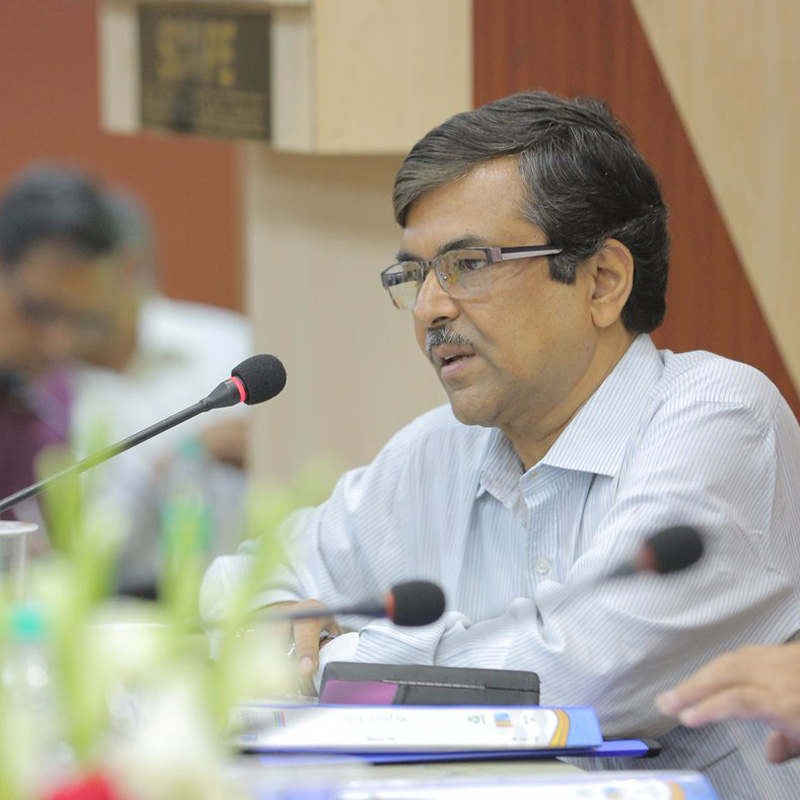
GOA: After several twists and turns, Telecom Regulatory Authority of India’s (TRAI) new tariff order crossed its last legal hurdle in the Supreme Court on 30 October. Now, with less than one month left for the implementation of the regulations, several questions still concern the industry stakeholders. On the second day of the Video and Broadband Summit 2018, TRAI secretary Sunil K Gupta spoke on the new regime via Skype and answered questions raised by stakeholders. He also threw light on the initiatives taken by the regulatory body to make consumers aware of the radical changes.
Indiantelevision.com needs to clarify here that since the VBS session was held in Goa last month, a development has taken place in the form of TRAI, last week, filing a fresh petition in the Supreme Court for review of the Madras High Court observations on a cap of 15 per cent discount on bouquet prices of TV channels.
Gupta started the session explaining the need to have a comprehensive regulatory framework for dealing with the problems of the broadcasting sector. Talking about the problems faced by different stakeholders, he cited the example of the issues faced by MSOs and LCOs, broadcasters as well as consumers.
In the case of MSOs and LCOs, the biggest problem was discriminatory treatment by broadcasters. As a result, it was almost impossible for smaller MSOs to get the content at the appropriate price from the broadcasters because the agreements were not transparent. Moreover, the problem was concerning customers as well due to the different rate of channels at different platforms. They didn’t have the power to choose and were forced to take channels provided by the DPOs.
Broadcasters also faced various difficulties due to the lack of transparency in the entire ecosystem. While they were giving free-to-air channels, they felt that, in many cases, those channels were being actually charged. This menace reduced the probability of use of those channels resulting in fewer viewers. As the revenue of FTA channels is highly based on viewership, the business was getting affected.
“Similarly, there were problems with broadcasters also as many time broadcasters were complaining that the content which is given to the consumers is not of high quality. Secondly, there are certain channels which were demanded by few stakeholders and because of the cap such channels could not be launched as there were serious issues particularly if you look at channels that are a requirement of a select class of stakeholders,” he said.
“So considering all these issues and also the issues of non-transparency, we have come up with a very comprehensive framework. The comprehensive framework gives rights to the broadcasters to price their channels properly and transparently communicate to consumers,” he added.
Gupta also explained that TRAI has made arrangements so that price of a particular channel can clearly be displayed on the electronic programme guide. He later added that due to the new regime, subscribers would have choice of channels as well as all the information. Moreover, Gupta said subscribers can get all the related information on the website of the MSOs in the tab which is called ‘customer corner’.
“As far as MSOs are concerned, there were issues that they did not have funds to upgrade their network for good quality experience to consumers. Now, there will be dedicated money for MSOs and LCOs so the network can be upgraded and good quality service can be given to consumers. Broadcasters also have the freedom to choose what price they can get from subscribers and also appropriately optimise the prices so that they can get maximum revenue of advertisement as well as subscriptions from the consumers,” he added.
Responding to a question from the audience, Gupta said there is no change in the license of the LCOs and they are supposed to take registration form from the post office only. But he also mentioned that they are working with MIB so that the process can be made online.
Many MSOs and LCOs raised the concern that it looks like they are being reduced to merely a commissioned agent. Gupta said the functions of LCOs and MSOs have properly been described under the Model Interconnect Agreement (MIA) and the Standard Interconnect Agreement (SIA) divisions.
“Here the framework is that a channel price which is being prescribed is the broadcaster’s understanding of the price of the particular channel. Now 20-35 per cent discount which is being given is to do certain work for that particular channel. Here, Rs 130 is being given differently and separately to MSOs and LCOs as they are providing the connectivity to consumers and consumers are getting the service from them. In addition to that, the portion of the discount on the content which is either 20 per cent or anything in between 20-35 per cent will also be accounted for sharing between the MSOs and LCOs,” he explained rejecting the claim that MSOs are only about to get commissions.
TRAI is also taking measures to inform consumers properly about the upcoming change. There will be big campaigns as well as meetings in cities like Delhi, Jaipur, Hyderabad, Kolkata, Mumbai and Bhopal. In addition to that, TRAI is also going to start a programme to inform the consumers. Even jingles will be played on radio and other media to grab consumer attention.