MAM
Tata Harrier kick starts the Tata Mumbai Marathon 2019 trophy tour

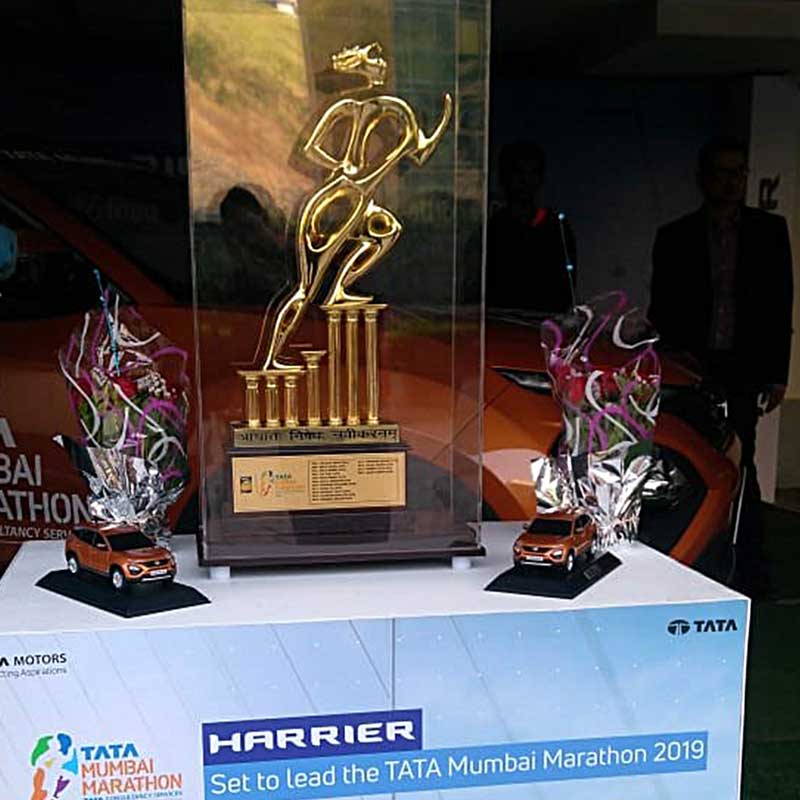
MUMBAI: Tata Harrier- the official lead car of the Tata Mumbai Marathon 2019, today started the Tata Mumbai Marathon Trophy Tour 2019, ahead of this year’s edition of the iconic race. The much anticipated Harrier is proudly ferrying the winner’s trophy across the city of Mumbai projecting its superlative Impact 2.0 design language and its muscular build, based on the legendary D8 architecture of Land Rover. Culminating on 18th January, this tour is also the public debut of this much awaited SUV on the streets of Mumbai.
The tour is scheduled from the 14th- 18th January and will cover the leading corporates of Mumbai, visiting the campuses of TCS, BNP Paribas, Tata AIG amongst others who have the maximum registrations for the 2019 edition of this prestigious race. Enthusiastic runners in these companies will get a chance to see the trophy up close and also witness the Harrier in the full flesh. Additionally, customers will also get an opportunity to book the Harrier at these events and get their hands on the limited edition Collectors item- a scale model of the Harrier, which will be handed over to them at the time of the vehicle delivery.
According to Mr. Vivek Srivatsa, Head- Marketing, Passenger Vehicles, Tata Motors – “We are pleased to associate with the Tata Mumbai Marathon again. We have enjoyed a fruitful partnership with the event, which only continues to grow stronger. We have been buoyed by the response received during last year’s edition. This year, we are back with yet another winner on our hands- our much awaited vehicle and the new benchmark of SUVs, the Tata Harrier. The Harrier will be the lead car in the race this year. We are delighted to give a preview of the Harrier and the trophy to the fans in Mumbai.”

According to Mr. Vivek Singh, JT. MD Procam International – “We are very pleased to have the Tata Harrier make its foremost public appearance at the front of Tata Mumbai Marathon and what's even more exciting is that our lead vehicle will showcase the glory of the Mumbai Marathon trophy. The trophy was specially crafted by acclaimed artist Paresh Maity, encapsulating the energy of the run and the 7 islands of Mumbai. The human figure exuding confidence is not just the Marathon runner but the everyday Mumbaikar, whose journey takes him across the seven islands of the city. Standing on seven pillars also symbolises the human emotions that a runner overcomes to finish his run."
Offering exemplary driving dynamics, this 5-seater monocoque SUV has been extensively tested for a cumulative distance of 2.2 million kms, showcasing its mettle to wade through the toughest of terrains. Powered by the cutting-edge 2.0L KRYOTEC diesel engine, the vehicle delivers exceptionally refined drivability and performance. Harrier will be the first product to sport the Impact 2.0 Design language from Tata Motors and will offer extraordinary exteriors, intelligently designed luxurious interiors, future ready connectivity and infotainment.




MAM
VML India lands two finalist spots at Cairns Hatchlings 2026
The Mumbai agency is back in Australia with two teams, a UN brief and 24 hours to impress

MUMBAI: VML India is heading to Australia again. The Mumbai-based creative agency has secured two finalist spots at the Cairns Hatchlings 2026 competition, one in the Audio category and one in Design, making it the only Indian agency to have reached the finals in both editions of the contest since its launch in 2025.
Four people will make the trip. Senior copywriter Shilpi Dey and senior art director Raj Thakkar will compete in Audio. Art directors Shabbir and Shruti Negi will go head-to-head with the world’s best in Design. The finals take place at the Cairns Convention Centre from 13th May, culminating in an awards ceremony on 15th May.
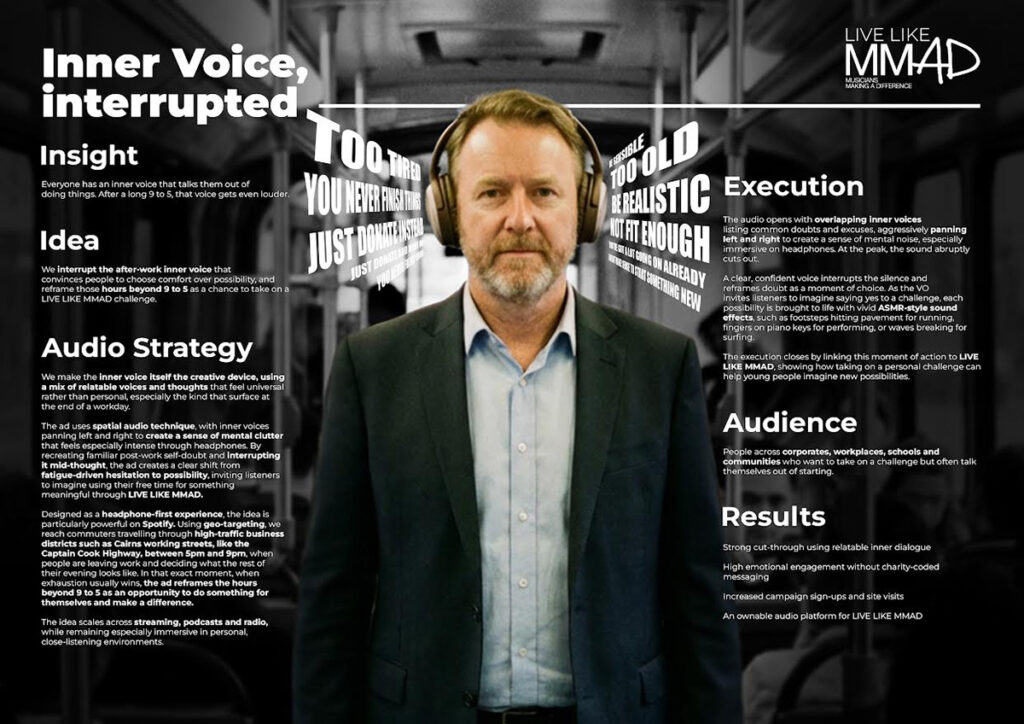
The work that got them there is worth examining. For the Audio category, Dey and Thakkar tackled a brief for LIVE LIKE MMAD with a campaign called Inner Voice, Interrupted. Using spatial audio techniques, the campaign recreates the overwhelming self-doubt that descends after a long workday, physically panning negative thoughts left and right before cutting the noise entirely to reveal a confident inner voice. Strategically targeted at commuters via Spotify during evening rush hours, the campaign reframes the hours after work as an opportunity for personal growth and charitable action.
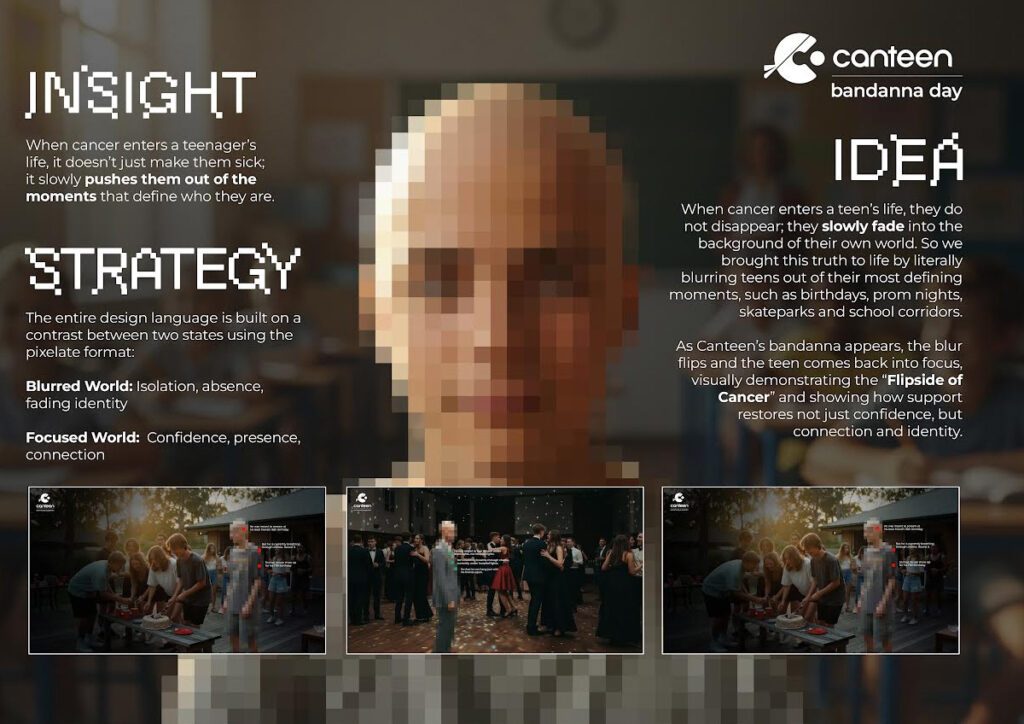
For the Design category, Shabbir and Negi worked on a brief for Canteen’s Bandanna Day, a campaign highlighting how cancer pushes teenagers out of their own defining moments. Using a pixelated design language to create stark contrast between a blurred world of isolation and a focused world of connection, the campaign, titled The Flipside of Cancer, shows teenagers fading into the background of birthdays, skateparks and school proms. As a Canteen bandanna appears, the blur flips and the teenager snaps back into sharp focus.
Kalpesh Patankar, group chief creative officer of VML India, made no attempt to disguise his satisfaction. “We are immensely proud to see our teams consistently excel on the Cairns Hatchlings platform since its inception,” he said. “They have masterfully tackled challenging briefs across diverse categories, demonstrating both layered storytelling and a unique creative approach. This exceptional teamwork is truly inspiring.”
Dey and Thakkar, returning to the finals after last year’s run, were candid about the demands of the audio medium. “It’s one of the most demanding mediums, where we only have a few seconds to capture a listener’s world with sound alone, so absolute clarity is essential,” they said. “The true measure of creative work is its ability to create positive change, and our audio submission was made to help those who need it most while encouraging people to silence the inner voices that hold them back.”
Shabbir and Negi, competing in Design for the first time, described the experience as “a completely different beast.” “We see it as an opportunity to showcase our expertise, raise the bar, and challenge ourselves in new ways, while also learning from creative minds from across the globe,” they said.
In Australia, the four finalists will face a live 24-hour brief from the United Nations before presenting in a live pitch session. Twenty-four hours, one brief, one shot. VML India has been here before. It knows exactly what is at stake.