Connect with us

News Broadcasting

CNBC-TV18 steals the show on the television and digital arena with the most comprehensive coverage of the 2019 Interim Budget

Published

on

MUMBAI: The last budget presented by the NDA government marked the first budget of CNBC-TV18 as an integrated newsroom with comprehensive coverage across TV and the digital space. Over the course of an eventful Friday, CNBC-TV18’s digital avatar was successfully able to elevate and expand the platform’s reach amongst India's growing business audience.

Shereen Bhan, Managing Editor, CNBC-TV18, said, “CNBC-TV18 continued its dominance on budget day, with the biggest voices from corporate India and the markets analysing the fine print of the budget in real time. Our comprehensive coverage was complemented this year by our digital operations, which provided our audience with more options to access our content. CNBC-TV18’s effort to make the budget accessible to all was bolstered by CNBCTV18.com, which helped our readers get more from the budget."

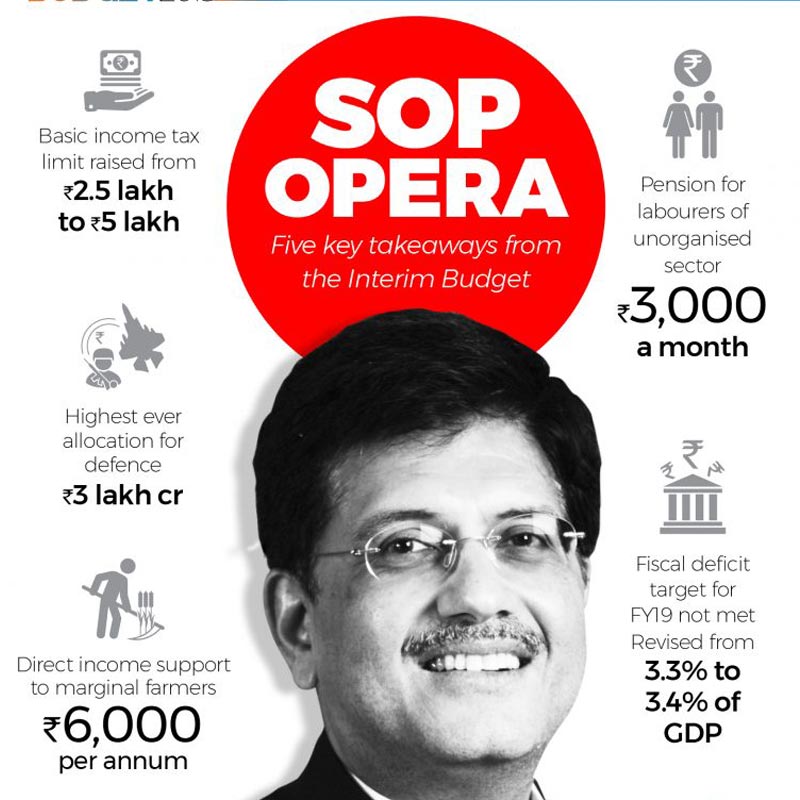
In the build-up to the big day, in-depth and extensive pre-budget expectations were covered through an in-depth budget microsite. Subscribers, who keep themselves abreast of the latest happenings, were sent regular newsletter updates of the expectations, verdict and highlights. To help break down the budget that covered a host of diverse sectors, for the uninitiated, budget highlights were made easy to consume via video, text and infographic formats along with WhatsApp alerts through the day. These tools, on the back of effective ideation and execution, coupled with real-time analyses by industry experts, were able to effectively bridge the knowledge gap that existed between the target audience and the budget presented. 

Advertisement

Binoy Prabhakar, Editor, CNBCTV18.com, commented “CNBTV18.com helps readers stay on top of news and see the corners. Budget 2019, though our first since launch, was no different as we provided our audience with the news and views that matter to them. They benefited from the full power of an integrated newsroom as TV and Digital worked in tandem to provide them breaking news and in-depth analyses to connect the dots about the budget.”

Ensuring that the audiences don't miss out on a single minute of the budget, delivering updates in real-time was of paramount importance. Live coverage of the budget was achieved via real-time Twitter updates from industry experts in addition to cutting-edge analysis of the Budget in the form of videos and live blogs. Visitors were also able to stream the live television feed of CNBC-TV18 on the website to catch up with the budget on the go. 

They could access budget highlights and read about reactions from corporates, industry experts and anchors, which offered them an authentic perspective from those involved in their respective sectors. Some of the leading financial experts present as columnists on the platform included Baba Kalyani, chairman and managing director of Bharat Forge, S Naren, ED & CIO, ICICI Prudential AMC, Nilesh Shah, MD & CEO, Kotak Mutual Fund, Niranjan Hiranandani is co-Founder and MD, Hiranandani Group, Ashish Fafadia – Partner – Blume Ventures, Sunil Rohokale – Managing Director and CEO, ASK Group, Sudhakar Sethuraman – Partner, Deloitte India, Rajiv Chugh – Partner & National Leader, Policy Advisory & Speciality Services, EY India and Shishir Baijal – Chairman and Managing Director of Knight Frank India. 

Advertisement

Also sharing their valuable inputs as guest speakers were Anand Mahindra – Chairman of the Mahindra Group, Deepak Parekh – Chairman of HDFC, Ashok Wadhwa – Group CEO of Ambit Capital and Mark Mobius – Founding Partner of Mobius Capital Partners.

While Finance minister Piyush Goyal took centre stage as he presented the interim budget on an eventful February 1, CNBC-TV18 too came at the forefront in delivering real-time coverage of the budget via authentic offerings from experts. Having positioned itself as one of the leaders of disseminating reliable information when it comes to business, the platform gave its audiences a truly extensive coverage on a day that played a crucial role in the shaping of the country's future. 

Ranjita Sehgal, Business Head, CNBCTV18.com added “For years, CNBC-TV18 has held the reputation of the Budget Headquarters of the country. This year, for the Interim Budget 2019, we went a step further and leveraged the strength of a unified newsroom powered by television and digital providing real-time analysis and insights; making CNBC-TV18 the coveted destination for both consumers and advertisers.”


Advertisement
Click to comment

Leave a Reply

Your email address will not be published. Required fields are marked *

News Broadcasting

Induction cooktop demand spikes 30× amid LPG supply concerns

Supply worries linked to West Asia tensions push households and restaurants to turn to electric cooking alternatives

Published

on

MUMBAI: As geopolitical tensions in West Asia ripple through global energy supply chains, the familiar blue flame in Indian kitchens is facing an unexpected challenger: electricity.

What began as concerns over the availability of liquefied petroleum gas (LPG) has quickly evolved into a technology-driven shift in cooking habits. Households across India are increasingly turning to induction cooktops and other electric appliances, initially as a backup but now, for many, a necessity.

A sudden surge in demand

Recent data from quick-commerce and grocery platform BigBasket highlights the scale of the shift. According to Seshu Kumar Tirumala, the company’s chief buying and merchandising officer, demand for induction cooktops has risen dramatically.

Advertisement

“Induction cooktops have seen a significant surge in demand, recording a fivefold jump on 10 March and a thirtyfold spike on 11 March,” Tirumala said.

The increase stands out sharply when compared with broader kitchen appliance trends. Most appliance categories are growing within 10 per cent of their typical demand levels, while induction cooktops have witnessed explosive growth as households rush to secure an alternative cooking option.

Major e-commerce platforms including Amazon and Flipkart have reported rising searches and orders for induction stoves. Quick-commerce apps such as Blinkit and Zepto have also witnessed stock shortages in major metropolitan areas including Delhi, Mumbai and Bengaluru.

Advertisement

What was once considered a convenient appliance for hostels, small kitchens or occasional use has suddenly become an essential addition in many homes.

A crisis thousands of miles away

The trigger for this shift lies far beyond India’s kitchens.

Escalating conflict in the Middle East has disrupted shipping routes through the Strait of Hormuz, one of the world’s most critical energy corridors. Nearly 85 to 90 per cent of India’s LPG imports pass through this narrow waterway, making the country particularly vulnerable to supply disruptions.

Advertisement

The ripple effects have been swift.

India currently meets roughly 60 per cent of its LPG demand through imports, and tightening global supply has already begun to affect domestic availability and prices.

Earlier this month, the price of domestic LPG cylinders increased by Rs 60, while commercial cylinders rose by more than Rs 114.

Advertisement

To discourage panic buying and hoarding, the government has also extended the mandatory waiting period between domestic refill bookings from 21 days to 25 days.

Restaurants feel the pressure

The strain is not limited to households. Restaurants, hotels and roadside eateries are also grappling with supply constraints as commercial LPG availability tightens under restrictions imposed through the Essential Commodities Act.

In cities such as Bengaluru and Chennai, restaurant associations report that commercial LPG availability has dropped by as much as 75 per cent, forcing many establishments to rethink their kitchen operations.

Advertisement

Some restaurants have reduced menu offerings, while others are rapidly installing high-efficiency induction systems, creating hybrid kitchens where electricity now shares the workload with gas.

For smaller eateries and roadside dhabas, the shift is less about sustainability and more about survival.

A potential structural shift

The government has maintained that there is no nationwide LPG crisis and has directed refineries to increase production to stabilise supply.

Advertisement

Nevertheless, the developments of March 2026 may already be triggering a longer-term behavioural shift.

For decades, LPG has been the backbone of cooking in Indian households. However, recent disruptions have highlighted the risks of relying on a single fuel source.

Increasingly, households appear to be hedging against uncertainty by adopting electric cooking options to guard against price volatility and delivery delays.

Advertisement

If the current trend continues, the induction cooktop, once viewed as a niche appliance, could emerge as a quiet symbol of India’s evolving kitchen economy.

Continue Reading

Advertisement News18
Advertisement All three Media
Advertisement Whtasapp
Advertisement Year Enders

Copyright © 2026 Indian Television Dot Com PVT LTD

This will close in 10 seconds

×