MAM
Asiaville, Sashi Kumar’s new digital venture launched

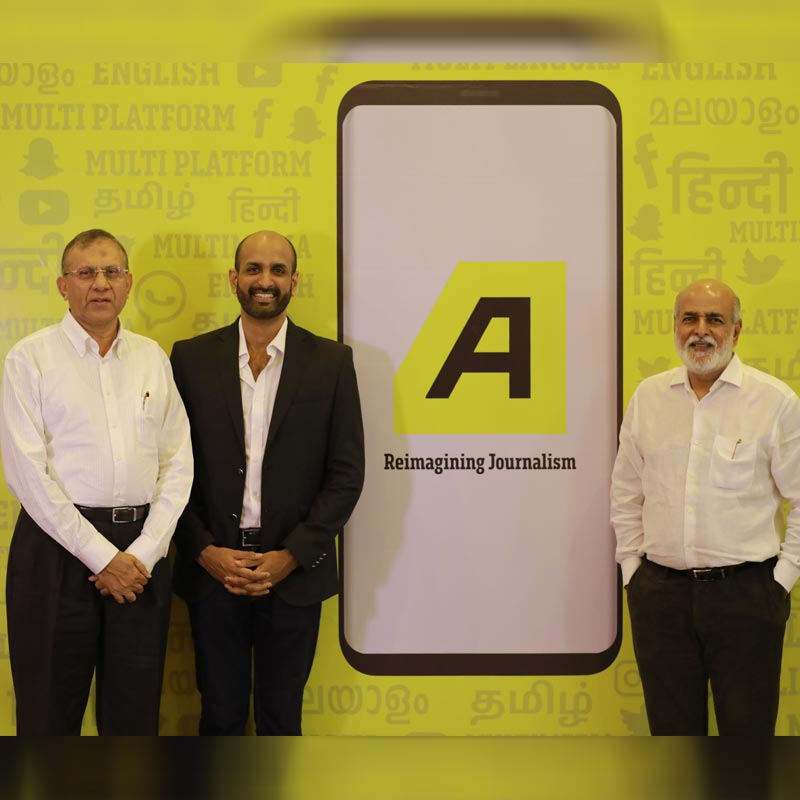
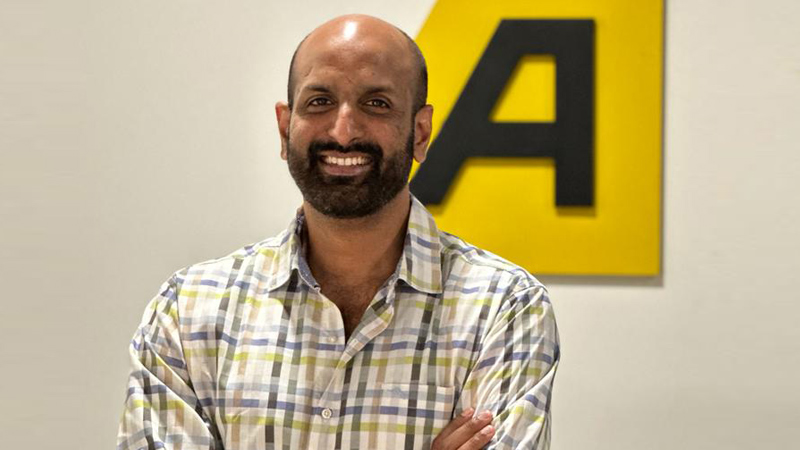
MUMBAI: Asiaville, a Multi-Lingual, Multimedia and Multi Platform digital media venture focused on producing original content across Indian languages is now live across digital media platforms. Backed by veteran media practitioner Sashi Kumar, Founder of Asianet and the Asian College of Journalism; and Tuhin Menon, Former President, Culture Machine, the company seeks to reimagine journalism for a new generation audience. Asiaville produces content in multimedia formats, with equal emphasis on Video, Audio and Text.
Asiaville has launched its websites and is across all social media platforms. The four language websites are: https://www.asiavillenews.com, https://hindi.asiavillenews.com, https://tamil.asiavillenews.com and https://malayalam.asiavillenews.com. Asiaville has offices in Chennai, Delhi and Kochi, with each office housing state-of-the-art integrated studio’s equipped to output multimedia content formats in short spans of time for a digital first audience. Live streaming will be a prominent feature of the Asiaville stable, helping redefine the concept of prime time on traditional media. With a strong focus on product and technology, Asiaville intends to leverage the latest advances in Machine Learning to deliver highly personalized content to end users across languages.
At the occasion, Asiaville also announced their associations with Twitter and IIT Madras. Asiaville is teaming up with Twitter on a series of Live streams in English, Hindi and Tamil in the run up to the 2019 general elections. Leveraging its strength in producing original content across languages, Asiaville will be conducting live discussions with Twitter influencers. The Tamil live streams will be hosted weekly on Fridays from Asiaville's studio in Chennai; and the English and Hindi bi-lingual livestream will be broadcast from its Delhi’s office on Wednesdays.
Asiaville is also working with researchers at IIT Madras to build out their machine learning capabilities, with the objective of targeting users across languages with a great degree of personalization. This tie-up would enable Asiaville to build personalized original content driven user feeds for each of the languages, part of its core mission to build product offerings around the core users taste profile.
Sashi Kumar, Chairman & Editor-in-Chief, Asiaville said “The news media today are at crossroads. They are facing new challenges – technological, political and commercial. There is a fatigue operating on the mainstream media which find themselves buffeted by the freewheeling social media on the one hand and the technology platforms purveying media on the other. It is therefore time to reimagine and reinvent journalism, particularly for the millennial who engages less and less with the legacy media. Asiaville, with its multimedia, hybrid heterodox approach, hopes to meet that growing demand of the near and medium term future.”
Online media consumption in India is going through a phase of tremendous growth. Digital and mobile devices are now the preferred medium of data consumption online. The smartphone market has seen unprecedented growth over the last 5 years, its penetration in India is expected to touch 470 million by the end of 2019. India currently has the second largest internet user base of 566 million in the world and is growing exponentially. Internet adoption in the country is now propelled by rural India which registered a 35% growth over the past year and is expected to reach 290 million users by the end of 2019.
According to Tuhin Menon, CEO, Asiaville, “With 9 out of 10 new internet users likely to be an Indian language user over the next five years, Asiaville seeks to address this burgeoning audience that is coming online through an innovative mix of original content formats that are native to digital platforms. We believe we have the right mix of original content expertise and product acumen to build a pan-Indian language network that is focused on the millennial. We are excited to have embarked on this journey and see great potential for scale and engagement with our digital first audience going forward”.
Asiaville’s ‘Journalism reimagined’ project leverages the new and emerging digital technology to provide better context, perspective and experiential understanding of the developments that inform and transform our times and our lives. It puts the millennial at the centre of its process of making meaning of our world. It is not about breaking news; it’s about fixing broken news. It is not about news as product; it’s about the process of news generation for the new generation.