MAM
Mahindra Urges People to #CutTheCrapwith its new campaign

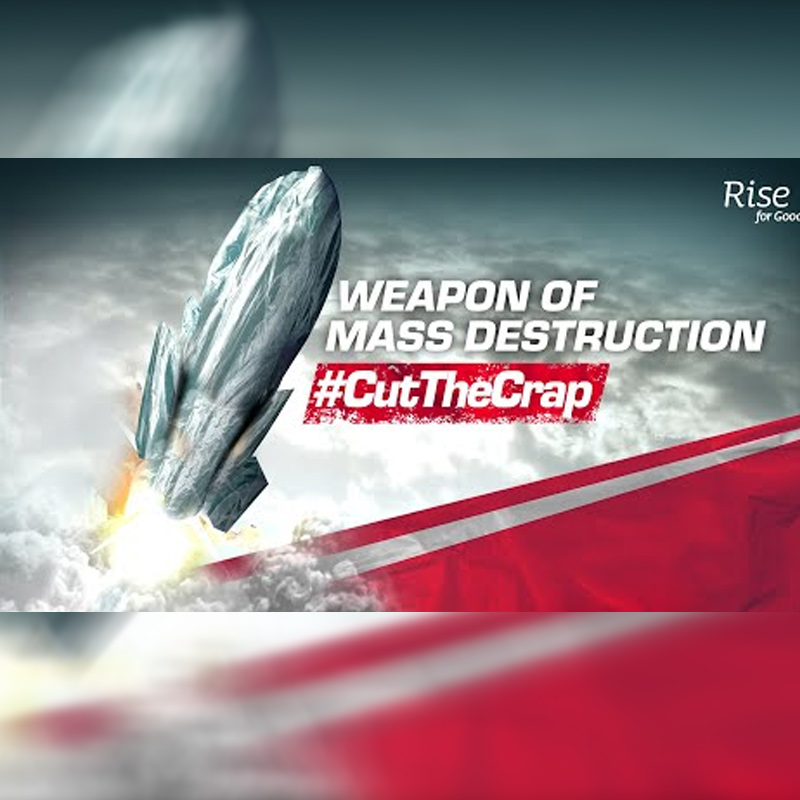
Mumbai: The Mahindra Group reinforced its long-term commitment towards the Environment through the launch of a new campaign that builds a case for waste management. Social listening revealed Environment to be among the top three concerns for millennials. More specifically, inadequate waste management and the damage from single use plastic usage emerged as the biggest worries. These key insights drove the Mahindra Group to launch its new #CutTheCrap campaign.
The campaign has been launched with afilmthat goes live today. Itequates the problemscaused by single use plastic bags to weapons of mass destruction. The film shows that a non-recyclable plastic bagchokes and clogs our oceans and landfills, and has very detrimental consequencesfor the environmentnow and over the long term.
A part of the#RiseForGood communication series, #CutTheCrap aims to alert viewers about the damaging effects of plastic and other forms of non-recyclable wasteand exhorts them to inculcate smart waste management practices. In the past, Mahindra has brought attention to social issues like girl child education and deforestation as part of the series.
Highlighting the purpose behindthis new campaign, Vivek Nayer, Chief Marketing Officer, Group Corporate Brand, Mahindra & Mahindra Ltd. said – “Through our new #CutTheCrap campaign, we are putting our Rise For Good philosophy into action to bring about greater environmental awareness and societal change. We have consistently focused on bringing issues concerning the environment to the fore, and waste management is a crucial topic within this. Our aim is not only to sensitize people but to also enable them towards behaviour change.”
Robby Mathew, Chief Creative Officer, FCB Interface said, "The idea was to help the viewer see the harmless looking plastic bag from a whole new perspective. By equating it with some of the deadliest weapons known to mankind, we drew attention to the looming threat that is already upon us. And who better than Mahindra, with their track record of relentlessly focusing on waste management, to take this message to the world."
This 360-degree campaign includespromotion across digital and social media, supported by select television and print media. Digital teasers have gone live ahead of today’s launch. The campaign will also include creatives to enable people to reduce, reuse and recyclewaste, combined with celebrating change makers. The campaign will also include content-based engagements to highlight the significant waste management efforts at Mahindra Group companies which are setting new industry benchmarks. To enable people to take action on the ground in the area of waste management, the company has identified and associated with specialized NGOs, log on to http://bit.ly/SiteCutTheCrapfor more details
In fact, 2019 marks a decade of commitment to the cause of Sustainability by the Mahindra Group. Some noteworthy milestones include:
– 1.4 lac tonnes of waste was reused, composted and recycled in 2018, which accounts for 80% of the total waste being generated
– Last year, Mahindra had 5 out of only 7 Zero-Waste-to-Landfill (ZWL) factories in the world with >99% diversion of waste (certified by Intertek). Today we have 9 ZWL plants, 1 Research Facility (MRV, Chennai) and 1 Club Mahindra Resort (Virajpet), with many more on the way.
– Additionally, the Bio CNG facility in Mahindra World City, Chennai is converting 100% of wet waste to power run CNG and vehicles within the city
– CERO, a JV between Mahindra Accelo and the Metal Scrap TradeCorporation Limited (MSTC) is India’s first authorized vehicle recycling facility that is focused on safely disposing of cars at the end of their lifecycle.
– Mahindra employees have disposed of single use plastic responsibly by being part of the Group's plastic disposal drive (2100 kgs so far in 2019, 1,700 kgs in 2018).
– Mahindra employees participate in periodic clean-up drives held across the country, covering public areas such as railway stations, beaches, schools, etc.
– Tech Mahindra has stopped using plastic bottles in all its campuses across the world and the remaining Mahindra group companies are doing the same
– Plastic in packaging is steadily being reduced and the proportion of recycled plastic is increasing where there is no alternative to plastic yet
Agency details:
• Chief Creative Officer – Robby Mathew, FCB Interface
• Group Creative Director – Ferzad Variyava, FCB Interface
• Film Production House – Adventure Films
• Director – Alok Kulkarni