iWorld
Netflix’s dependence on India for growth may see more innovative experiments

MUMBAI: In the course of its three-year journey in India, Netflix has recognised that the rule to win Indian consumers is different. After foraying into the Indian market in 2016, the California-based streaming giant gradually reshaped its business model deviating highly from the one it follows in the US. From announcing a mobile-only subscription package to making the first episode of the newly-launched series Bard of Blood available for free for non-members viewing on Android devices, the streaming giant is not leaving any stone unturned to woo Indian consumers.
Back in 2018, Netflix CEO Reed Hastings, in his India tour, said that the streamer’s next 100 million subscribers will be "coming from India" given the fast growth of internet connectivity and usage. Although the progress for that statistic has not been revealed, the platform has created an impressive local content slate over the year. But with the amount of cash it’s burning every year, the company needs a higher number of subscribers from India, especially at a time when its domestic subscriber growth is reaching a saturation point.
In a market dominated by AVOD and freemium models, this free-like model of offering an episode of Bard of Blood for free is definitely an interesting move. It will not only help more viewers to taste the platform but also to attract them towards paid subscription. However, it is not clear yet if they will consider doing the same experiment for other films and series in future.

While the Indian over-the-top market is growing quickly, Netflix has strong local competition here. Among Indian viewers, Hotstar seems the most popular platform according to several reports. Sports content available on the platform has largely driven its popularity but it also has a special package of Hotstar VIP for newly-launched original content which is priced at a lower rate. Two other popular services, ALTBalaji and ZEE5, have struck various content deals. Moreover, most of the domestic players work on the freemium model with a massive catch-up content library. Netflix’s international rival Amazon is also investing highly in local content with its existing prime benefits. Hence, the way to the next 100 million subscribers is not an easy game.
Netflix has done another unusual experiment in terms of pricing recently. The platform unveiled its cheapest plan – Rs 199 a month only for smartphones and tablets – to penetrate deeper into the market. Studies have found that India prefers smartphones to laptops more than any other country in the world. It seems the platform has started focusing on bigger audiences going beyond the tier I premium segment. In its Q1 earnings call also, Netflix added that a lower price tier will be important to adding members in India.
"We've been seeing nice steady increases in engagement with our Indian viewers that we think we can keep building on. Growth in that country is a marathon. So we're in it for the long haul," Netflix chief content officer Theodore Sarandos said in an analyst call after publishing the Q2 results.
In addition to that, Netflix is also expanding its team with Indian executives who already have knowledge of the market. Netflix recently hired Monika Shergill as head of its Indian original programming, who was associated with Viacom18’s Voot and Star India. The platform also tapped another Voot executive Tanya Bami very recently. Last year, Netflix appointed two experts with vast knowledge of the Indian market, Shrishti Behl and Swati Mohan.
In the second quarter, Netflix saw its first major loss in US subscribers last and a mere 2.7 million paid customers added globally. While the platform added almost all new subscribers from international markets this quarter, it believes there’s still plenty of room to grow there. Netflix executives also emphasised on the importance of India, where the company expects significant growth. Moreover, when its domestic market is seeing the entry of streaming services from the house of Disney and Apple, more innovative measures can be expected in India.






iWorld
Epic Company launches unified Epic Studio for films and OTT
Vivek Krishnani to head films business; Samar Khan leads OTT & Television.
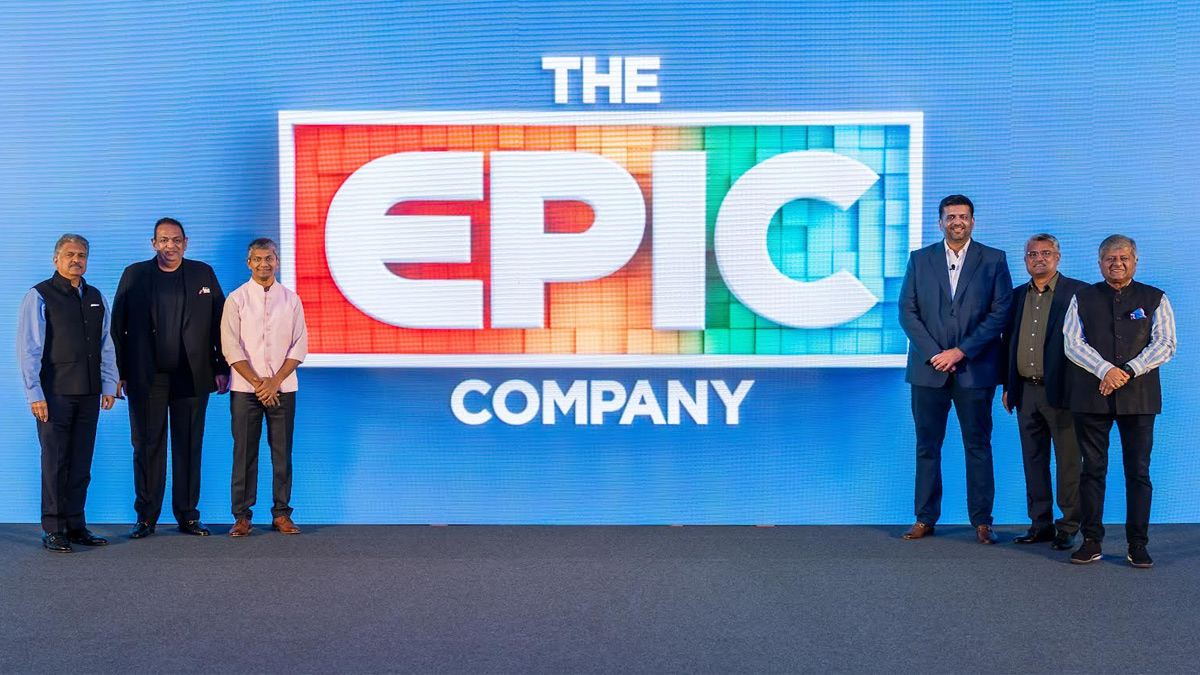
MUMBAI: Epic just merged its creative superheroes under one cape because when films and OTT need to fight for attention together, you don’t keep them in separate universes. The Epic Company has launched Epic Studio, a next-generation creative and production powerhouse that unites Juggernaut Productions and Movieverse Studio under a single banner. The move creates a streamlined, scalable platform for premium storytelling across theatrical films, OTT originals, television, digital-first formats and branded content.
Vivek Krishnani has been appointed chief executive officer, Epic Studio (Films), overseeing the theatrical and film business with a focus on culturally resonant narratives across Hindi, Telugu, Tamil, Gujarati and Malayalam cinema. Samar Khan continues as chief executive officer, Epic Studio (OTT & Television) and retains his role as chief content officer for Docubay and Epic On.
The Epic Company managing director Aditya Pittie said, “Epic Studio brings together our entire creative ecosystem under one unified studio vision. This is not just an integration of verticals, but the creation of a collaborative environment where writers, filmmakers, creators, and brand partners can seamlessly develop and scale stories across formats and screens.”
Vivek Krishnani added, “We are building an audience-focused mainstream film studio committed to delivering fresh, engaging, and innovative stories for both theatrical and streaming platforms.”
Samar Khan commented, “This alignment allows us to approach storytelling with a unified studio mindset. We are building IP under one creative umbrella, with scale and longevity in mind from inception.”
The unified structure eliminates silos, enabling ideas to flow fluidly from concept to screen while adapting to evolving audience behaviour. Epic Studio positions itself as a creator-led ecosystem championing purposeful, resonant storytelling with commercial strength.
In an entertainment landscape where stories now leap between screens faster than plot twists, Epic isn’t just building a studio, it’s crafting a single launchpad where every tale gets the best shot at soaring across every platform.