iWorld
ZEE5 and Wework host discussion on changing landscape of the digital world

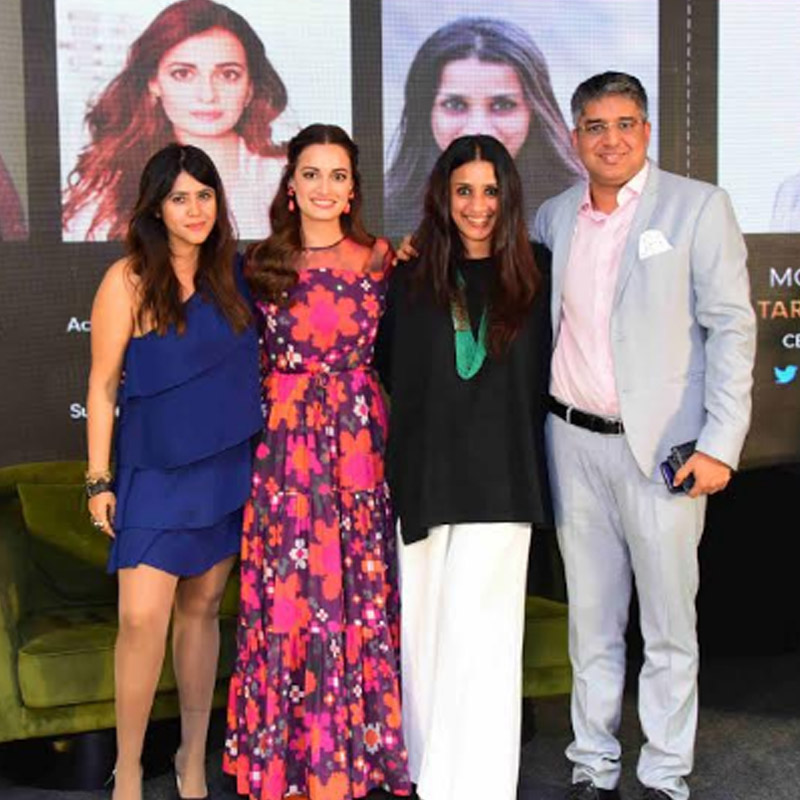
MUMBAI: Addressingthe rapidly evolving digital ecosystem in India, ZEE5 India and WeWork India today co-created an evening of discussions on the Changing Landscape of the Digital World.Tarun Katial, CEO – ZEE5 India, India’s fastest growing ConTech brand, and Ryan Bennett, CWeO of WeWork India, welcomed the guests present for the evening.Bringing forth expert voices from multiple sectors of the techno-sphere, the event was attended by content creators and enablers alike, making it an eclectic mix in the room.
The evening comprised of two separate panel discussionscentred on Technology and Content.
• Themed on ‘Transforming technologies in the digital media landscape’, the Technology-focussed discussion brought Deepak Pande, Associate Director – Vodafone Idea, Vijay Kolli, Head – Mobile Strategy, Akamai Technologies and Ashish Dhawan, Managing Director – Enterprise Business, Amazon Web Services on the panel, moderated by Tushar Vohra, Head – Technology, ZEE5 India.
• The Content discussion that revolved around ‘OTT: The golden age of screenagers | How digital video streaming has become a lifestyle!’ brought Ekta Kapoor, Joint Managing Director, Balaji Telefilms, renowned actress Dia Mirza,and Ashvini Yardi, Bollywood Producer together moderated by Tarun Katial.
ZEE5 and WeWork have been disruptors in their respective areas of business, and the digital ecosystem as a whole. Leveraging the synergies,the initiative aims to bring the community together to encourage industry-wide conversations around the evolution of digital world and how the players can collaborate to offer a valuable solution to the viewer.
Tarun Katial, CEO, ZEE5 India said,“The boom in digital infrastructure in the country today has enabled the man on the street to consume content in his preferred language anytime, anywhere. For the OTT industry to remain ahead of the game always, we believe that the industry needs to come together to chart out a growth trajectory which changes keeping country’s dynamic digital landscape in mind.WeWork and ZEE5 have been disruptors in their individual capacities, and we couldn’t have chosen a better partner to set forth on this journey. With thought leaders of the calibre we saw here today, this was certainly an interesting first of many such discussions we hope to spur in the ecosystem.”
Ryan Bennett, CWeO, WeWork India, “We are thrilled to host this interesting discussion on the changing landscape of the digital world. Such discussions help in bringing together young innovators and leverage their synergies to find solutions to relevant issues, while collaborating and developing long-lasting relationships amongst one another. Fostering this community-building spirit and encouraging industry-wide conversations is our passion as we are constantly undertaking initiatives that bring the community together.”
Ekta Kapoor, Joint Managing Director, Balaji Telefilms, “There are three faces to every viewer – the family face, the friend's face and the face when you are alone. In my view, digital viewing is for that third face – what you watch when you are alone. Different kinds of content work for different kinds of people in different places. Television has evolved over the past 20 years; storytelling has changed. I can tell you with confidence that no medium is dying, all of them are heading towards peaceful co-existence. For every user who is going digital in urban areas, there is one person who has bought a new TV in a village. There is no one size that fits all in content. Different communities are watching different things. So hyper-personalisation is the new normal.”
Dia Mirza, Actor, Producer, UN Environment Goodwill Ambassador & United Nations Secretary General Advocate for Sustainable Development Goals, “Social content is driving people to viewing a different kind of content – be it cinema, television or the web series. People are connecting with the stories that they see now. I believe that there is a larger purpose to story-telling and it is a powerful medium to change the way that people are thinking. Self-expression is key. The digital medium has democratised content, and this means an explosion of good content like never before bringing ample opportunity for the talented people out there who are struggling to find enough work in the industry today.”
Ashvini Yardi, Content Producer and Founder of Viniyard Films, “I have been in the industry for the longest time and have seen the industry change in these years. Content has always been the striving force for a successful project be it on GEC channels, Cinema or digital platforms. While I was working with one of the most popular channels, I realised I wanted to explore something new and that's when OMG (the movie) happened. Moving away from something I knew and enjoyed was not easy, but films – especially OMG – was something that fascinated me, and I took the chance to explore my passion. Today I look back and feel it was a good decision. OTT is a great platform to showcase one's creativity and to choose the right channel for the content. Each channel has a different target audience and one has the freedom to create success stories, if chosen wisely. I think the industry is only going to boom with amazing work and talent.”
Vijay Kolli, Head of Mobile Strategy, AKAMAI, “Hyper-personalisation is here to stay. Platforms are increasingly looking for the right kind of content to build viewer stickiness with the platform. We, at Akamai, carried out a survey to understand audiences’ emotional reactions to the content they were they consuming. The insights from this survey has helped us in laying out the philosophy for ad integration into OTT platforms and developing tools to gauge this effectively. As we inch towards 5G implementation, demand will rise for applications of Artificial Reality and its high interactivity component. Given Japan is moving closer to the year of hosting the Olympics, they are investing heavily into AR to elevate the entire experience; we are seeing a lot of movement there.”
Deepak Pande, Associate Director, IoT, Vodafone Business Services, “There are two stories to hyper-personalisation – besides the obvious, there is a set of people who are worried that in case of too much personalisation, they may miss out on some spectrum of content. Convergence of technologies is happening at an unprecedented level and this will have a profound impact on the experiences that consumers are seeking. Possibility of what can be achieved through implementation of 5G is enormous, the cost is what we have to ready to bear.”
Ashish Dhawan, Managing Director – Enterprise, Amazon Web Services, “Hyper-personalisation is complicated – applying all the tools to read and analyse the consumption trends generated by the viewerand then accessing the appropriate CX to present content to them. Difference between 4G and 5G is not just speed but the reduction in delay of response. Communication across time zones and across the ends of the planet will get lower. And with this, we will see an immediate benefit to sectors such as healthcare, education, entertainment and such.”