Connect with us

MAM

Rishi Khiani to step down from Ant Farm to build a startup in the Job-tech space

Published

on

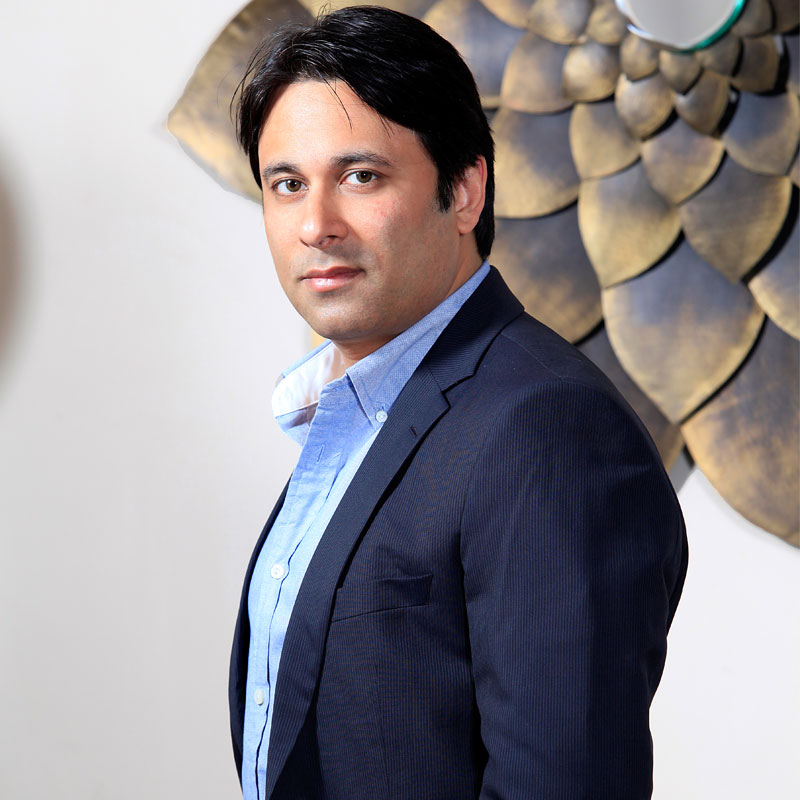
MUMBAI: Serial innovator Rishi Khiani has announced that he will be stepping down from day-to-day operations at Ant Farm, a digital innovation company that he founded in 2013. While he steps down from his operational role, Rishi will continue to be a promoter shareholder in Ant Farm and its downstream companies. The move is a planned one so that he can focus on his startup in the Job-tech space.

Ant Farm is a studio incubator that builds businesses and scales up disruptive ideas. The company had raised funding from funds such as Agnus & Bay Capital and counts prominent investors such as Ravi Dhariwal, Radhakishan Damani and Sat Pal Khattar on its cap table.

Some of it’s successful companies are Ad-tech and Content company Fork Media Group that owns and operates Curly Tales, Hauterfly, IGN, Mashable, FameFox and AskMen, multi-category delivery startup Scootsy that was recently acquired by Swiggy, mobile fitness platform RevoFit that is backed by Marico and Hello Green, a healthy and affordable meal delivery service. The management of parent company, Ant Farm, will be transitioned to co-founder Upen Roop Rai.

Advertisement

During the announcement, Rishi Khiani said “I founded Ant Farm back in 2013 when India had just seen a disruption in the startup space. The idea was to accelerate companies during their early-stage with an intensive hands-on approach backed by an experienced team in the given sector. It was a thrilling experience to build some great companies in the last eight years.”

Commenting on his career plans, Khiani added “Given the current scenario of the economy and the job market in our country, my next startup will focus on enabling the next billion jobs. Given that ambition and the opportunity it was important to clear my desk of all other responsibilities.

Stay tuned for some exciting updates!” Rishi Khiani, who is a seasoned entrepreneur and former CEO of Times Internet, has over 20 years of experience in media, consumer tech and enterprise space. He is known to have

Advertisement

launched some of India's iconic homegrown digital brands. Rishi sold his first startup UrbanEye Media to the Network18 group in 2006. Keeping up to his innovation skills, Rishi will be entering the job-tech industry, to bridge the gap between jobs and job seekers across various industries.

 

Click to comment

Leave a Reply

Your email address will not be published. Required fields are marked *

Digital

Content India 2026 opens with a copro pitch, a spice evangelist and a £10,000 prize for Indian storytelling

Dish TV and C21Media’s three-day summit puts seven ambitious projects before an international jury, and two walk away with serious development money

Published

on

MUMBAI: India’s content industry gathered in Mumbai this March for Content India 2026, a three-day summit organised by Dish TV in partnership with C21Media, and it wasted no time making a statement. The event opened with a Copro Pitch that put seven scripted and unscripted television concepts before an international panel of judges, and by the end of it, two projects had walked away with £10,000 each in marketing prize money from C21Media to support development and international promotion.

The jury, comprising Frank Spotnitz, Fiona Campbell, Rashmi Bajpai, Bal Samra and Rachel Glaister, evaluated a shortlist that ranged from a dark Mumbai comedy-drama about mental health (Dirty Minds, created by Sundar Aaron) to a Delhi coming-of-age mystery (Djinn Patrol, by Neha Sharma and Kilian Irwin), a techno-thriller about a teenage gaming prodigy (Kanpur X Satori, by Suchita Bhatia), an investigative crime drama blending mythology and modern thriller (The Age of Kali, by Shivani Bhatija), a documentary on India’s spice heritage (The Masala Quest, hosted by Sarina Kamini), a documentary on competitive gaming (Respawn: India’s Esports Revolution, by George Mangala Thomas and Sangram Mawari), and a reality-horror competition merging gaming and immersive fear (Scary Goose, by Samar Iqbal).

The session was hosted by Mayank Shekhar.

Advertisement

The two winners were Djinn Patrol, backed by Miura Kite, formerly of Participant Media and known for Chinatown and Keep Sweet: Pray & Obey, with Jaya Entertainment, producers of Real Kashmir Football Club, also attached; and The Masala Quest, created and hosted by Sarina Kamini, an Indian-Australian cook, author and self-described “spice evangelist.”

The summit also unveiled the Content India Trends Report, whose findings made for bracing reading. Daoud Jackson, senior analyst at OMDIA, set the tone: “By 2030, online video in India will nearly double the revenue of traditional TV, becoming the main driver of growth.” He noted that in 2025, India produced a quarter of all YouTube videos globally, overtaking the United States, while Indians collectively spend 117 years daily on YouTube and 72 years on Instagram. Traditional subscription TV is declining as free TV and connected TV gain ground, forcing broadcasters to innovate. “AI-generated content is just 2 per cent of engagement,” Jackson added, “highlighting the dominance of high-quality human content. The key for Indian media companies is scaling while monetising effectively from day one.”

Hannah Walsh, principal analyst at Ampere Analysis, added hard numbers to the picture. India produced over 24,000 titles in January 2026 alone, with 19,000 available internationally. The country now accounts for 12 per cent of Asia-Pacific content spend, up from 8 per cent in 2021, outpacing both Japan and China. Key exporters include JioStar, Zee Entertainment, Sony India, Amazon and Netflix, delivering over 7,500 Indian-produced titles abroad each year. The top importing markets are Saudi Arabia, the UAE, Egypt, the United States and the Philippines. Scripted content dominates globally at 88 per cent, with crime dramas and children’s and family titles performing particularly strongly.

Advertisement

Manoj Dobhal, chief executive and executive director of Dish TV India, framed the summit’s ambition squarely. “Stories don’t need translation. They need a platform, discovery, and reach, local or global,” he said. “India produces more movies than any country, our streaming platforms compete globally, and our tech and creators win international awards. Yet fragmentation slows growth. Producers, platforms, and tech move in different lanes. We need shared spaces, collaboration, and an ecosystem where ideas, technology, and people meet. That is why we built Content India.”

The data, the pitches and the prize money all pointed to the same conclusion: India is not waiting for the world to discover its stories. It is building the infrastructure to sell them.

Advertisement
Continue Reading

Advertisement News18
Advertisement All three Media
Advertisement Whtasapp
Advertisement Year Enders

Copyright © 2026 Indian Television Dot Com PVT LTD

This will close in 10 seconds