I&B Ministry
I&B secretary asks union ministries to clear ad dues of media cos
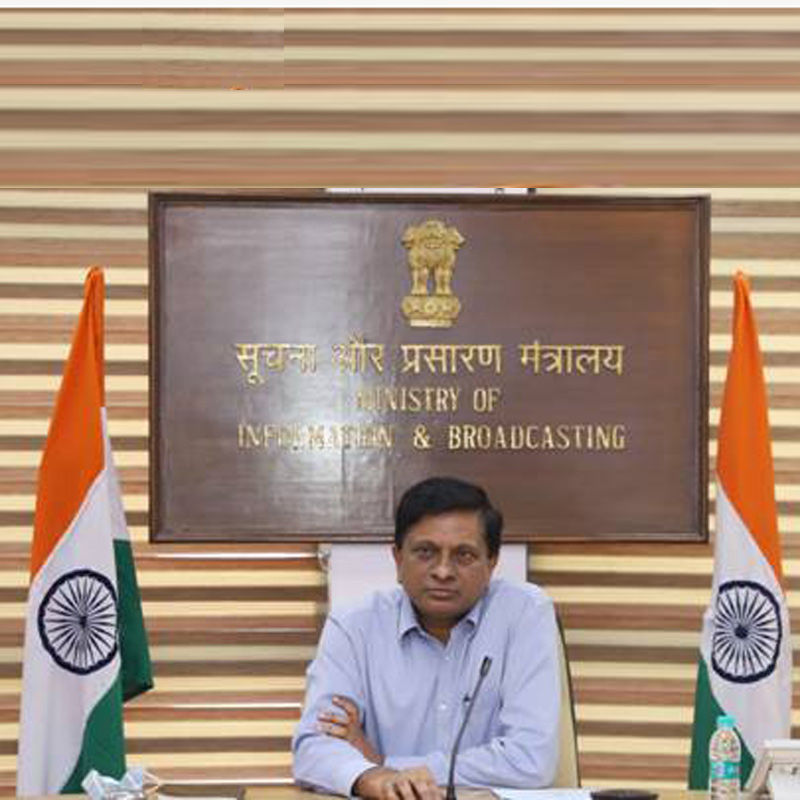
MUMBAI: Information & broadcasting (I&B) ministry secretary Ravi Mittal has contacted his counterparts in several other ministers asking them to clear the dues they owe several media companies, media reports suggest. Mittal has cited the financial pressure that the media companies are facing because of the ongoing lockdown as one of the reasons.
It is being highlighted that various union ministries including telecommunications, sports, youth affairs, the departments of posts, electronics and IT, and the NITI Aayog, among others, owe at least Rs 400 crore to several media companies.
According to a Hindustan Times report, which cites having Mittal’s letters in its possession, he has underlined that it is of vital importance that all payments due to the private media sector are made to enable them to pay their employees, keep their businesses afloat and prevent layoffs.
“As you would appreciate, these media houses are also supporting the government’s efforts to communicate with its citizens during the current crisis arising due to COVID-19,” he wrote.
Mittal’s intervention comes days after the Indian Newspaper Society (INS) communicated to Union finance minister Nirmala Sitharaman that they are in grave danger of losing monies.
Additionally, the Advertising Agencies Association of India has also written to the I&B ministry demanding tax relief.

I&B Ministry
Prasar Bharati sets EPG standards for DD Free Dish platform
New specs define 7-day guide, LCN mapping, and device compatibility.
MUMBAI: Your TV guide just got a backstage pass structured, scheduled, and far more in sync. Prasar Bharati has released detailed technical specifications for Electronic Programme Guide (EPG) services on DD Free Dish, laying down a standardised framework for how channels and programme information are organised and delivered. At the core of the update is a defined EPG data structure, covering genre-based categorisation, scheduling formats, and Logical Channel Numbering (LCN). The aim is simple: make navigation less guesswork and more guided experience across the platform’s over 40 million households.
The specifications also introduce a seven-day programme guide window for each channel, alongside clear rules for channel grouping and LCN mapping effectively deciding not just what you watch, but how easily you find it.
On the technical front, the document outlines requirements for Program Specific Information (PSI) and Service Information (SI), including descriptor usage across tables such as PAT, BAT and NIT. It further details service lists and network linkage parameters, giving OEMs and developers a clearer blueprint for integration.
Importantly, the framework is designed to work seamlessly with television sets equipped with in-built satellite tuners, enabling users to access DD Free Dish directly without additional hardware, an incremental but meaningful step towards simplifying access.
The platform will continue to operate on GSAT-15 transponders, using MPEG-4 compression and DVB-S2 transmission standards, ensuring continuity even as the interface evolves.
While largely technical, the move signals a broader push towards standardisation and user-friendly discovery in India’s free-to-air ecosystem because sometimes, the real upgrade isn’t what’s on screen, but how easily you get there.