Connect with us

MAM

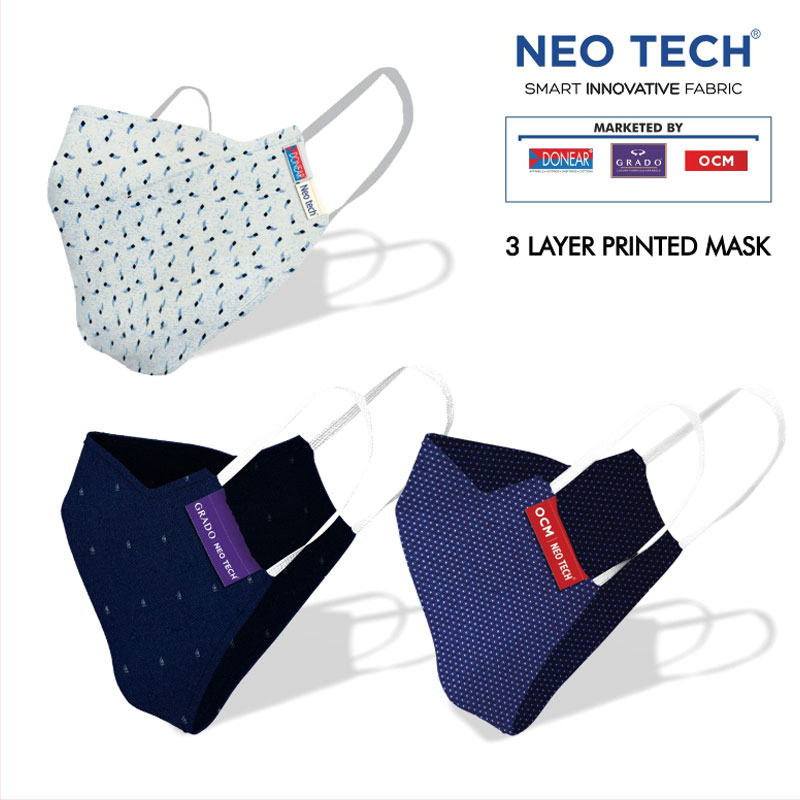
NEO TECH® is set to launch PPE kits and protective gear for frontline warriors with partner brands – Donear, Grado by GBTL & OCM

Published

on

Mumbai: With the Covid-19 pandemic making its presence felt globally, the frontline workers are diligently performing their duties towards the society. Being synonymous with product innovation since their inception and with the vision of contributing to the society, the Donear Group – Donear, GRADO by GBTL (GBTL was formerly known as GRASIM) and OCM – have ventured into manufacturing fabrics, garments and protective gear using NEO TECH® Technology, under their ranges – CARETEX, PROTEX and SHIELDTEX respectively offering PPE Kits, Masks, and healthcare apparels.

To quickly cater to the evolving need for Healthcare products, the group has invested in ‘heat seam sealing’ taping machines and has started producing PPE kits. These kits have been certified by renowned laboratories and agencies including SITRA and DRDO.

Understanding the need of the Healthcare segment and due pain points, the group has also developed specialized fabrics with Anti-microbial and Blood repellent finish. These fabrics are made with NEO TECH® Technology and especially for PPE coveralls. One of the USPs of these coveralls is that they are reusable.

Advertisement

Another USP is the comfort factor for the wearer, which is why the fabric is made with a breathable water-proof chemical.

With the primary aim of providing high quality, utilitarian, ready-to-wear products and catering to an array of industries such as Healthcare, Aviation, Defence, Banking, Police, NGOs, municipal workers, security agencies, Government bodies, etc. These products shield the frontline workers from viruses and bacterium, upholding the tenets of health, hygiene and comfort which are the need of the hour. These reusable coveralls will further help curb the challenges of waste management considerably.

These anti-bacterial fabrics have received wide acclaim from multiple industries, such as the major State Police Departments and Government bodies amongst others.

Advertisement

These fabrics are also being appreciated by people who commute daily (commuter suits), as aprons in Salons/ clinics – anywhere where a human touch could be involved.

NEO TECH® is a unique technology developed by the Donear Group companies, a culmination of extensive efforts in research and development, done with the intention of bringing a paradigm shift in the Indian Textile industry. In the wake of COVID-19, a team of industry stalwarts, illustrious chemical suppliers and technological institutions was formed, with the aim of developing fabrics that are high quality, utilitarian and have a shield against bacteria and viruses alike. Apart from other technologies such as moisture management, anti-odour, cool max and much more.

The product basket of CARETEX, PROTEX and SHIELDTEX comprise of PPE Kits, masks, and healthcare apparels and details are as follows-

Advertisement

·         PPE Kits comprise of :

o   Anti-microbial Reusable Coveralls customised for being waterproof and stain repellent

o   Disposable Coveralls (non-woven poly propylene fibre) which are dust-proof, fluid and blood resistant

Advertisement

o   3-Ply Face Masks

o   Nitrile Gloves

o   Shoe covers

Advertisement

o   Face Shields

o   Goggles

and much more

Advertisement

·         Specifically for masks, they are available as –

o   Anti-Microbial Reusable Mask made of 100% cotton fabrics, which are Fluid repellent, odourless, anti-fungal in nature

o   Disposable 3 ply non-woven masks, made out of ultra-fine fibre which is fluid resistant in nature

Advertisement

Pioneering in innovation, these brands have extended their product range by bringing in Anti-viral and Anti-microbial Reusable and Disposable healthcare apparels –

·         Reusable apparels constitute of scrubs, lab-coats, caps, aprons and Gowns made of Poly cotton & Poly Viscose and 100% Polyester with fluid repellent finish

·         Disposable category comprises of caps, shoe covers and aprons.

Advertisement

Apart from the range above, the NEO TECH Research & Development laboratory is constantly working on new products and innovations which will be rolled out in due course of time.

Rahul Agarwal (Director – Donear) said, “While the country is grappling with the Covid-19 pandemic and the front line warriors are taking the centre stage, it’s our responsibility to contribute and protect them. In doing so, we have successfully extended our product offerings for NABL certified NEO TECH®  range of protective gear inclusive of PPE kits, masks and apparels for healthcare, police, defence, municipal workers amongst others. We endeavour to provide our civilians and frontline warriors with the best quality protective gear while keeping them safe and sound and meet the evolving needs of tomorrow.”

Advertisement
Click to comment

Leave a Reply

Your email address will not be published. Required fields are marked *

Digital

Content India 2026 opens with a copro pitch, a spice evangelist and a £10,000 prize for Indian storytelling

Dish TV and C21Media’s three-day summit puts seven ambitious projects before an international jury, and two walk away with serious development money

Published

on

MUMBAI: India’s content industry gathered in Mumbai this March for Content India 2026, a three-day summit organised by Dish TV in partnership with C21Media, and it wasted no time making a statement. The event opened with a Copro Pitch that put seven scripted and unscripted television concepts before an international panel of judges, and by the end of it, two projects had walked away with £10,000 each in marketing prize money from C21Media to support development and international promotion.

The jury, comprising Frank Spotnitz, Fiona Campbell, Rashmi Bajpai, Bal Samra and Rachel Glaister, evaluated a shortlist that ranged from a dark Mumbai comedy-drama about mental health (Dirty Minds, created by Sundar Aaron) to a Delhi coming-of-age mystery (Djinn Patrol, by Neha Sharma and Kilian Irwin), a techno-thriller about a teenage gaming prodigy (Kanpur X Satori, by Suchita Bhatia), an investigative crime drama blending mythology and modern thriller (The Age of Kali, by Shivani Bhatija), a documentary on India’s spice heritage (The Masala Quest, hosted by Sarina Kamini), a documentary on competitive gaming (Respawn: India’s Esports Revolution, by George Mangala Thomas and Sangram Mawari), and a reality-horror competition merging gaming and immersive fear (Scary Goose, by Samar Iqbal).

The session was hosted by Mayank Shekhar.

Advertisement

The two winners were Djinn Patrol, backed by Miura Kite, formerly of Participant Media and known for Chinatown and Keep Sweet: Pray & Obey, with Jaya Entertainment, producers of Real Kashmir Football Club, also attached; and The Masala Quest, created and hosted by Sarina Kamini, an Indian-Australian cook, author and self-described “spice evangelist.”

The summit also unveiled the Content India Trends Report, whose findings made for bracing reading. Daoud Jackson, senior analyst at OMDIA, set the tone: “By 2030, online video in India will nearly double the revenue of traditional TV, becoming the main driver of growth.” He noted that in 2025, India produced a quarter of all YouTube videos globally, overtaking the United States, while Indians collectively spend 117 years daily on YouTube and 72 years on Instagram. Traditional subscription TV is declining as free TV and connected TV gain ground, forcing broadcasters to innovate. “AI-generated content is just 2 per cent of engagement,” Jackson added, “highlighting the dominance of high-quality human content. The key for Indian media companies is scaling while monetising effectively from day one.”

Hannah Walsh, principal analyst at Ampere Analysis, added hard numbers to the picture. India produced over 24,000 titles in January 2026 alone, with 19,000 available internationally. The country now accounts for 12 per cent of Asia-Pacific content spend, up from 8 per cent in 2021, outpacing both Japan and China. Key exporters include JioStar, Zee Entertainment, Sony India, Amazon and Netflix, delivering over 7,500 Indian-produced titles abroad each year. The top importing markets are Saudi Arabia, the UAE, Egypt, the United States and the Philippines. Scripted content dominates globally at 88 per cent, with crime dramas and children’s and family titles performing particularly strongly.

Advertisement

Manoj Dobhal, chief executive and executive director of Dish TV India, framed the summit’s ambition squarely. “Stories don’t need translation. They need a platform, discovery, and reach, local or global,” he said. “India produces more movies than any country, our streaming platforms compete globally, and our tech and creators win international awards. Yet fragmentation slows growth. Producers, platforms, and tech move in different lanes. We need shared spaces, collaboration, and an ecosystem where ideas, technology, and people meet. That is why we built Content India.”

The data, the pitches and the prize money all pointed to the same conclusion: India is not waiting for the world to discover its stories. It is building the infrastructure to sell them.

Advertisement
Continue Reading

Advertisement News18
Advertisement All three Media
Advertisement Whtasapp
Advertisement Year Enders

Copyright © 2026 Indian Television Dot Com PVT LTD

This will close in 10 seconds