Brands
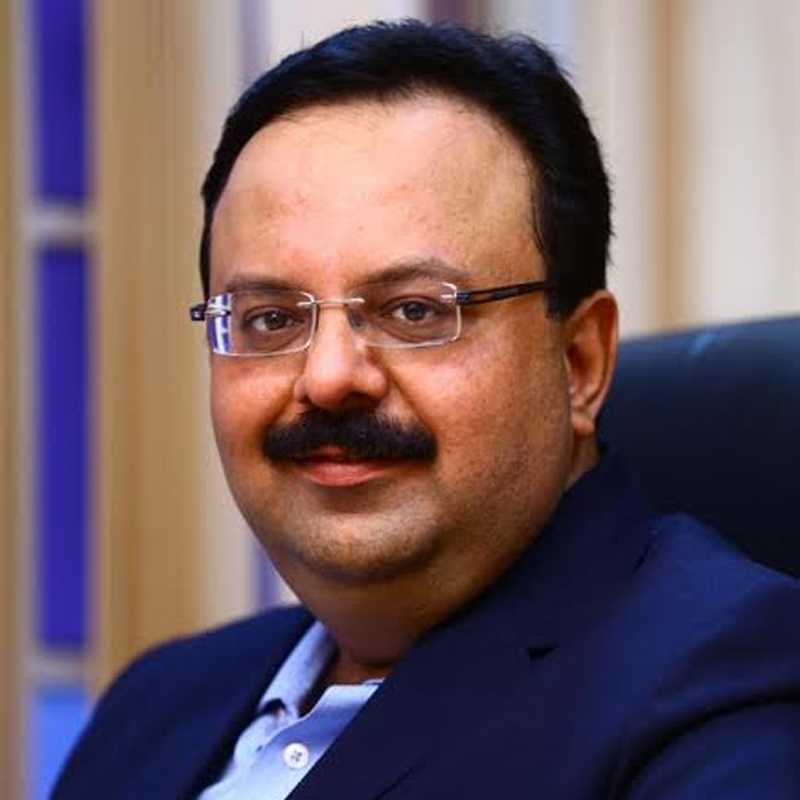
Brand image also impacts B2B marketing: JK Cement’s Pushp Raj Singh

NEW DELHI: Cement manufacturing brand JK Super Cement recently launched the campaign #YehPuccaHai to pay homage to construction workers, who have been continuously working during the pandemic. The campaign has already garnered 1.5 million views on YouTube and 25.5 million on Facebook and Instagram. It has also achieved 31 million impressions so far across social media platforms.
JK Cement Ltd (Grey Cement Business) president marketing Pushp Raj Singh says that the campaign has been launched keeping rural audiences as well in mind. “We saw that people from rural areas had a great engagement with the campaign on TikTok and made 600 videos using the Yeh Pucca Hai song which garnered a viewership of over 22 million.”
According to Singh, within the housing sector, rural housing may pick up faster than its urban counterpart while the latter will improve considerably in the coming months.
In a chat with Indiantelevision.com Singh discussed the constraints the cement industry is facing in the pandemic, and how it will evolve in the post-Covid2019 era. He also touched upon the shift the brand has seen in marketing the products.
Edited Excerpts: –
What is your outlook on how the cement industry is going to evolve in the Post-Covid2019 era?
The lockdown period was a definitely difficult period for us. However, with Unlock 1.0 announced by the government, construction activities have started and we have witnessed a good demand from the rural areas. The urban demand and the projects continue to remain subdued, which we hope will improve considerably in the coming months. With the easing of the lockdown restrictions, the transport sector is also improving and we hope that we are able to see a boost in our business for the upcoming months.
In the post-Covid2019 era, we are definitely expecting to see a greater demand in both the cement and housing sector. We hope to see that workers gain more employment and are able to return back to their workplaces and contribute to the economy. We also wish to see a revival of the cement industry, in terms of increasing operations and getting our business fully functioning again.
The government has put on hold all the big infrastructure projects due to financial constraints. Which sectors are going to drive the demand in the construction industry according to you?
Infrastructure and road projects will be the first ones to get up and running.
Do you think marketing strategies play a crucial role in a product like cement, where it caters more to B2B customers rather than B2C?
Yes, they do. Whether they are B2C or B2B customers or clients, marketing strategies always help in building our brand presence and recall value.
Today’s social customers and clients look for an understanding of what a brand stands for. The only way to accomplish this is with a strategic and consistent representation of the brand in every channel. Having a positive impression in the minds of our target audience and businesses translates directly into a lower cost of sales and a higher company valuation. A content strategy goes a long way in producing the kind of content that a B2B buyer seeks for. Also, in a B2B setup, the sales and purchase cycle lasts longer and the differences in products are complex, hence they need to be delivered using effective communication and marketing strategies.
What kind of shifts you’ve seen in the marketing due to the pandemic?
The biggest shift that we have witnessed in these times is the increased usage of digital marketing by all businesses, be it B2B or B2C. There could be permanent shifts in the supply chain and increased usage of e-commerce. Therefore, digital marketing strategies will play a crucial role in growing our business.
Among marketers, from the traditional ATL and OOH marketing strategies, digital marketing strategies such as digital promotion and campaigns are significantly rising.
Indian Cement industry consists mostly of regional players rather than national ones. What are the expansion plans of JK Super Cement?
JK Cement started operations in the year 1975 by putting up the first cement manufacturing facility in Nimbahera in Rajasthan. We have never looked back from that time and continued to expand in Mangrol ( Rajasthan), Jhajjar ( Haryana ), Fujairah ( UAE ), Muddapur ( Karnataka ) and recently added one unit in Aligarh (UP) to be followed by another in Balasinor ( Gujarat – Operational from October 2020 ) and thus taking our capacity to 14.7 million MT. We shall continue to expand and our aim is to cross 20 million MT in the next few years.
What is your marketing mix at this point in time?
Our marketing mix consists of digital and rural marketing strategies. We have focused our efforts greatly on rural marketing and identified the strategies that work with the target audience. With this lockdown, digital penetration has also increased in rural areas and we are aligning our marketing strategies to cater to the same.
According to a report by Kotak Institutional Equities (KIE), rural and pent-up demand has led to higher-than-expected volumes in May-June 2020 and segment-wise, housing is the largest contributor (about 60 per cent) followed by infrastructure and commercial projects. Within the housing sector, rural housing may pick up faster than its urban counterpart. This substantiates our efforts towards rural marketing strategies. We have also employed an SMS and WhatsApp campaign with our channel partners through which we are trying to reach out to more and more people.