MAM
eBikeGO ropes in cricketer Harbhajan Singh as its brand ambassador


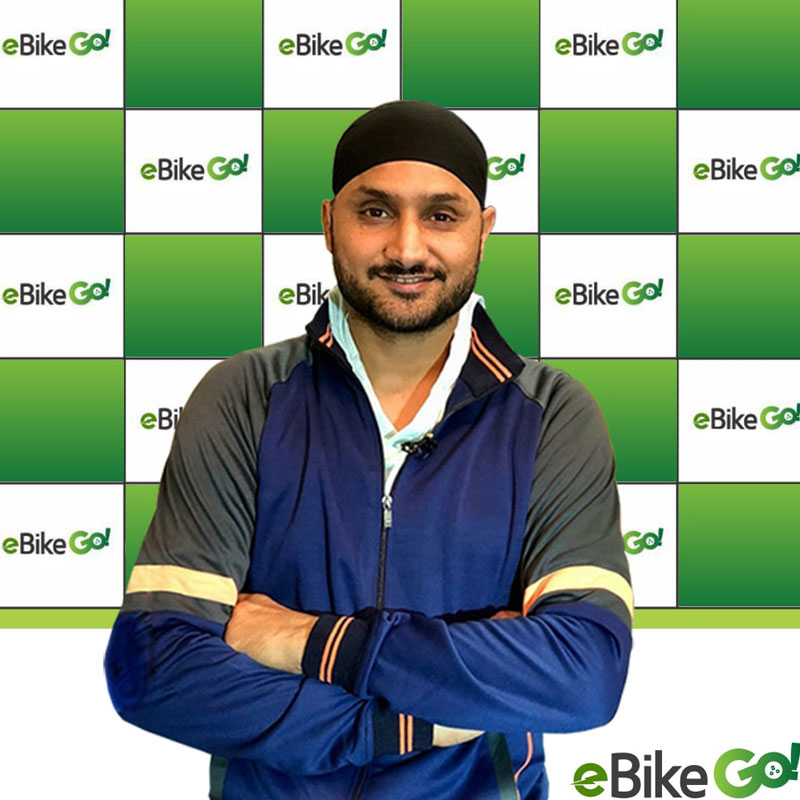
NEW DELHI: AI and IoT powered electric mobility start-up eBikeGO has roped in Indian cricketer Harbhajan Singh as its brand ambassador. With this association and the recently announced government’s new EV policy, the company is aiming to build mass appeal, positive voice and widespread adoption for electric mobility thereby looking to capture 10% of electric two-wheeler market share by 2022. With existing operations spanning Mumbai, Bengaluru, Delhi, Amritsar, Jaipur and Hyderabad, Harbhajan’s onboarding will help the company create a more ambitious presence and focus on expansion to newer markets like Chennai and Pune. Creating a larger geographical footprint, the company will tap into customer segments, and look at generating more business use cases where a need for e-mobility is most felt.
Industry reports predict an unprecedented global demand for sustainable mobility. While Indian demand to pent up by CAGR of over 44% during the period 2019 to2025 and to meet this demand growth, ebikeGO is looking to expand its fleet to 5000 smart bikes by the end of the year 2020.
Founded in the year 2017, eBikeGO was born out of Amritsar and now based in Mumbai, with the commitment to promote e-mobility as the new alternate clean mode of travel, adapting quickly to the fast-changing consumer lifestyle and preferences The young EV start-up, in last three years has successfully offered pollution-free and low- cost rides to commuters through its large fleet of 1000+ electric bikes, across eight cities of the country. eBikeGO has been a strong player in the B2B segment offering electric mobility, powering big E-commerce businesses such as Big Basket, Zomato, Myntra, Burger King, Nandos, Grab.in, Delhivery, Fasoos and many more.
Building a complete eco-system for clean and green energy, the company is redefining the mobility landscape by reaching out to both business-to-consumer (B2C), through its subscription-based model ) by freeing the consumer of the burden of ownership, responsibility and liability) and business-to-business (B2B) by creating last-mile delivery efficiencies and economics (facilitating and designing an intelligent vehicle), where existed none.
Talking about his new role as the brand ambassador of eBikeGO, Indian cricketer and youth icon Harbhajan exclaims, “eBikeGO is a new-age mobility companion, and its efforts in the area of clean and green commute are commendable. I look at this association as a great opportunity and as my own way of contributing towards sustainable mobility and a cleaner environment in our country. Months of lockdown in India has led to a drastic drop in the levels of pollution. For the first time in 30 years, people from Jalandhar could see the Himalayas, and my dream is that this is our future too !”
Enthused about this valuable association for the company, eBikeGO Founder and CEO T Irfan Khan adds, “Harbhajan is a youth icon yet his appeal cuts across age groups. We are excited to collaborate with him as his persona fits well with the brand. Not many know that the cricketer is a bike enthusiast and loves to travel too. He also shares his roots and culture with the company that was also born out of Punjab. His concern about the environment, go-getter attitude and a unique ability to deliver all-round performance resonate deeply with our brand. We are in the middle of scaling-up our operations and looking to capture 10% of the electric two-wheeler market by 2022. We are continuously evaluating various business models for both our B2B and B2C customer segments. At such a critical juncture, we believe our association with Harbhajan will play a big role in helping achieve the goal of taking e-mobility to masses.”
It has been two to three years of relentless effort that the company has put forth with various state governments in drafting EV policies. eBikeGO is happy to have humbly contributed to the Delhi Government's recent initiative of bringing in a new EV policy and acknowledges and appreciates the Delhi CM Shri Arvind Kejriwal’s leadership. The company looks at this milestone as a joyous moment for the sector. eBikeGO is hopeful that financial incentives and infrastructure support pledged by the government will provide a fillip to the EV industry and further accelerate and promote wider adoption of electric mobility and vehicles.
eBikeGO has witnessed an encouraging growth, despite the COVID pandemic, it has responded to every evolving market problem with innovative solutions. In recent times during the nationwide lockdown and continued social distancing norms, the demand for delivery across e-commerce platforms grew exponentially, completely paralyzing the delivery ecosystem. E-commerce players struggled with the shortage of delivery executives with most of the drivers migrating back to their homes. At this time, eBikeGO stepped up its efforts and introduced the ‘eBikeGO Rider model’ – a first-ever end-to-end delivery solution offering IoT enabled e-bikes with trained riders. The move has been hugely appreciated by e-commerce stakeholders. Right from the start, the company has invested in a fleet and offered product-market fit by servicing the delivery ecosystem. This strategy has paid off well and helped it strengthen partnerships with BigBasket, Myntra, Delhivery, and Zomato. To build on the direct to consumer segment, the company has made electric mobility accessible for the common man at a click on www.ebikego.com – no EMI, no registration, no maintenance, no fuel – just click and drive whenever you need it at an easy monthly subscription. The ability to evolve their product offering has helped the company enable greater adoption of e-mobility solutions even in these tough times.
eBikeGO’s is committed to its vision and larger social responsibility of making the world a better place by reducing pollution and freeing our planet Earth from fossil fuel usage and dependence. As natural resources stand on the verge of depletion, the company is committed to restoring the environment and improving sustainability.
Follow Tellychakkar for the consumer facing news & entertainment