Brands
BharatPe banks on cricket for next growth phase

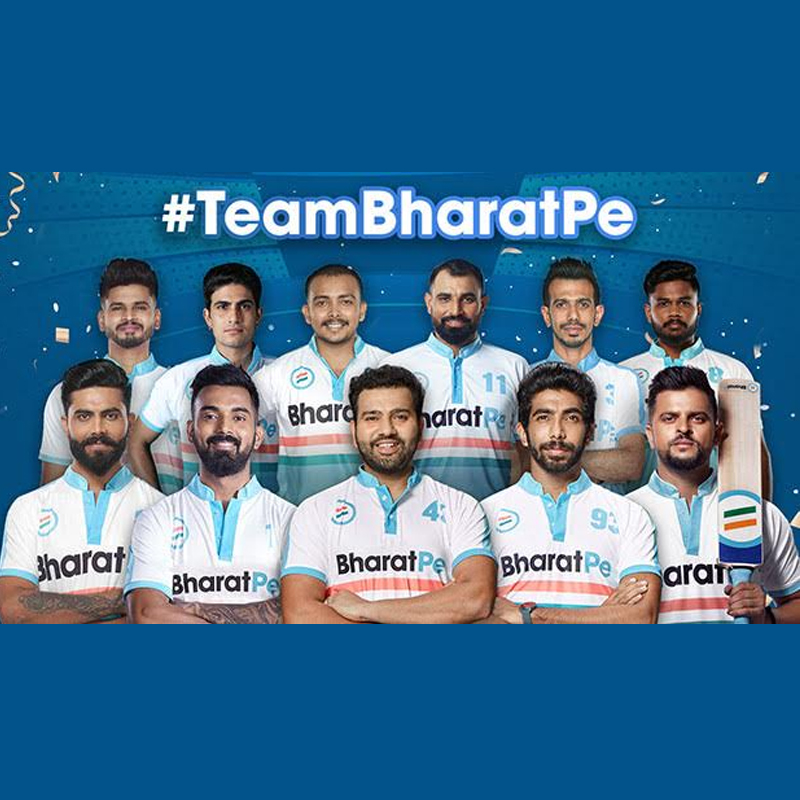
NEW DELHI: From Bollywood to cricket. That’s the path fintech brand BharatPe is taking. Bharat Pe, which is positioned as the one stop shop for the payment as well as capital needs of India’s large retailer network, has signed up 11 top cricketers as its brand ambassadors. Among them figure: Rohit Sharma, Jasprit Bumrah, KL Rahul, Mohammed Shami, Ravindra Jadeja, and Suresh Raina.
The 11 cricketers will be featuring in an ad campaign which is being directed by a top Hindi film director. The purpose: build BharatPe’s brand identity, apart from explaining its unique features, positioning and thought process to merchants. The sportsmen have been banded under a group which has been called BharatPe XI. The ad campaign is set to be unfurled closer to the festival period and will encompass TV, radio, OOH, digital, as well as print media.
The company, which is heavily funded by top investors like Sequoia, Beenext, Insight Partners, Steadview Capital management, Ribbit Capital, Coatue and Amplo, had earlier roped in Bollywood A-lister Salman Khan for its launch campaign #AbDukandarJitega.

BharatPe group president Suhail Sameer, who got on board the fintech firm as recently as August 2020, points out that the Salman association helped the brand get noticed, and connect with the merchant community who were loathe to use digital payment options.
“We decided to go ahead with cricket this year as it is one sport that brings Indians together, irrespective of their region, religion, or financial status,” he explains.
Co-founded by Ashneer Grover and Shashvat Nakrani, BharatPe’s mission is to make financial inclusion a reality for Indian merchants, especially across tier 1, 2 and 3 cities. BharatPe, since its launch, has been empowering shop owners with a single zero MDR UPI based QR code which allows them to accept payments from any app – like PayTm, PhonePe, Google Pay, BHIM and 150+ other UPI apps – at no cost to them. The cash goes directly into the retailer’s bank account and he or she can earn interest on it and even take loans if the need arises.
Sameer shares that the initial task for BharatPe was to create awareness amongst the merchant community and educate them about how digital payments work. Says he: “We have invested time and effort to educate the merchants and built trust with them. We offered them the convenience of accepting digital payments, irrespective of the consumer’s preferred choice of digital payment.”
The Salman campaign helped the company on board merchants in tier-1 and tier-2 towns and cities. As of early 2020, it had managed to rope in close to three million retailers. Average transaction values which were Rs 500 earlier rose by 60-65 per cent in early 2020.

AND CRICKET ACT AS UNIFIERS
Covid2019 and the lockdown hit BharatPe hard, with transactions dipping in the first few weeks. But with the country unlocking, these have been picking up pace. Even merchant signups have ballooned to five million, and the target is to take that number to six million by end this fiscal. BharatPe is present in 35 cities and processes five crore plus monthly UPI transactions.
“In September, we are already at 50 per cent above the pre-Covid2019 levels in the value of the transactions we process (at $4 billion annually). We aim to close the year at a run rate of $5 billion in annual total payment value,” reveals Sameer.
Currently 15-20 per cent of the total transactions come from tier-2 areas and the next wave of growth will come from tier-2 and 3 markets, Sameer reveals Covid2019, which accelerated digitisation in the country has benefited BharatPe, like many other digital first brands, as consumers are choosing to go in for contactless transaction with the pandemic still raging.
The company is on an expansion spree even on the lending side – an activity which was kickstarted a year ago. So far, it has disbursed loans in excess of Rs 250 crore, despite the Covid2019 related slowdown. It has set a target to disburse around Rs 700 crore in the next six months. “We did consciously slow down on our lending during the lockdown months, but have scaled well since July 2020,” highlights Sameer. “We are confident we will surpass Rs. 700 crore for the rest of the year, and are internally gearing for higher numbers.”
He is also sanguine that the cricketer-led advertising campaign will redefine how fintech marketing can be done. In the process, it will help BharatPe get closer to its goals.







Brands
33 per cent of women believe the salary scale is rigged: Naukri report
Voices @ Work study finds rising calls for equal pay audits and lingering bias

MUMBAI: Progress may be visible in India’s workplaces, but many women still feel the need to tread carefully. A new report by Naukri reveals that one in two women hesitate to disclose marriage or maternity plans during job interviews, worried that such information could influence hiring decisions.
The findings come from the second edition of Naukri’s annual Voices @ Work International Women’s Day report, titled “What Women Professionals Want.” Drawing insights from more than 50,000 women across over 50 industries, the survey sheds light on evolving workplace aspirations alongside the biases that continue to hold women back.
One of the report’s most striking insights is the growing demand for equal pay audits. The share of women calling for regular pay parity checks has climbed to 27 per cent this year, up from 19 per cent a year ago. The demand now stands alongside menstrual leave as the most sought after workplace policy.
Interestingly, the call for pay transparency grows louder higher up the income ladder. Nearly half of women earning between Rs 50 lakh and Rs 1 crore annually say equal pay audits are a priority, suggesting that pay gaps become more visible as women move up the career ladder.
At the same time, confidence and ambition appear to be rising. About 83 per cent of women say they feel encouraged to pursue leadership roles, a significant jump from 66 per cent last year. Cities in southern India appear particularly supportive, with Hyderabad leading the way as 86 per cent of respondents there reported encouragement to step into leadership positions. The education sector recorded the highest sense of encouragement at 87 per cent.
Yet the report also highlights a growing trust deficit around pay equity. Nearly one in three women, or 33 per cent, say they do not believe men and women are paid equally at their workplace. That figure has risen from 25 per cent last year, pointing to widening perceptions of disparity as careers progress.
Bias in hiring and promotions continues to be the biggest hurdle. About 42 per cent of respondents say workplace bias is the main challenge for women from diverse backgrounds. The concern is consistent across major metros, with Chennai and Delhi NCR reporting similar levels.
Reluctance to discuss personal milestones during hiring processes is also widespread. While 34 per cent overall said they hesitate to share marriage or maternity plans in interviews, the anxiety increases with experience. Among professionals with 10 to 15 years of work experience, the figure rises to 40 per cent.
Info Edge group CMO Sumeet Singh, said the data reflects both progress and unfinished work. “Behind every data point in this report is a woman who is ambitious. The fact that 83 per cent feel encouraged to lead is something to celebrate. However, the fact that one in two still hide their marriage or maternity plans in interviews tells us the work is far from done. As India’s leading career platform, it felt not just important but necessary for us to shine a light on these gaps through the second edition of our report,” he said.
The report suggests that while ambition among women professionals is growing, structural changes around pay transparency, fair hiring and supportive policies will be key if workplaces hope to keep pace.