Fiction
Films, TV & OTT should actively further the LGBTQ+ cause

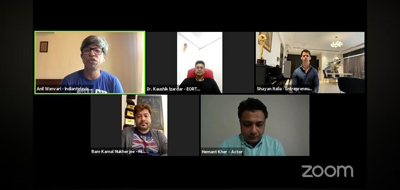
NEW DELHI: How many of you know about the LGBTQ community? This was the first and the basic question put Indiantelevision.com founder and editor-in-chief Anil Wanvari during the session titled ‘Finding the Rainbow in the Indian Creative Industry.’ Panellists included filmmaker Ram Kamal Mukherjee, EORTV media executive director Kaushik Izardar, actor Hemant Kher, and renowned entrepreneur, pianist, songwriter and musician Shayan Italia.
Mukherjee opened the session by stating that they stand for free and equal rights for everybody. “They are not they and us, and it’s the beginning of the conversation. We should stop discriminating,” he said.
Echoing the sentiment, Italia compared the situation in India and the USA. “In the USA, the LGBTQ community contributes massively to the economy. In India, it is not much. The government cannot allow this community to be segregated community. It has a monetary value in it. We are a little behind and are coming up.”
Kher shared that there are a lot of members of this community working in the film industry, especially make up people and actors, and he has never had cause to feel awkward and uncomfortable – because irrespective of sexuality or the gender they identify with, they feel the same emotions equally and every day. “People need to understand it from a spiritual perspective,” he remarked.
Wanvari then delved deeper into the subject of inclusivity and enquired how people from different walks of life were accepting people who identified themselves as LGBTQ+.
Izardar started off with a quote – ‘First they will hate you and then they will start speaking about you and then follow you.’ He further believes that LGBTQ is a misnomer and the word should not exist. Since there’s no word like MPMHF, putting a label like that automatically creates a sense of ‘otherness’.
“When these words are not levelled at us then why them? The vision and mission of my platform is to not show a struggle or depressing life of LGBTQ, but a plain story where if someone is showing their sexual preference it is not to be taken as a surprise or in another light,” he declared.
Three years ago, the Supreme Court struck down section 377, giving the country's LGBTQ+ community the freedom to safely express their sexual orientation. But it’s a fact that they encounter harassment and social stigma even today. Is a truly inclusive society a distant dream?
Mukherjee, who recently created an original on the subject, said that when the government legalised same-sex relationships, he could see how happy LGBTQ people were, that they could live, breathe and talk freely. It is important for them to have an official stamp for them to live freely in the country.
Kher shared that in metros, people have started accepting them and the wall is broken. “When you go to small towns, people have stopped talking about this issue anymore as they know they have to accept it because it’s a law. There can be a transformation where people accept them.”
However, change doesn’t happen overnight – it does take time to understand and make notions long considered taboo a part of peoples’ daily lives and it needs a lot of education, stressed Mukherjee. “I remember the rigidities that we used to witness 15-20 years ago, those things have almost gone. People understand that its legal.”
He further added that today if a guy gets up and tells his parents that he has a boyfriend and wants to marry him, the parents won’t be as shocked as they would have been 15 years ago.
Things like coming out also depend on the mindsets and outlook that parents have and the same reflects in the society at large, observed Izardar. If parents find out that their child is inclined towards the same sex, it could result in hostility and alienation. “It happens in rural more and people abandon their child. A lot of cases are there in Mumbai also. It happens at different ages. Most gay men are identified after their marriages and it leads to exclusion from the village. I have seen this kind of prejudice in many educated families as well,” he elaborated.
The panellists then lowered the lens on how Indian mainstream cinema has portrayed the LGBTQ community on the big screen.
Mukherjee noted that things are changing – actors like Ayushmann Khurrana, Rajkummar Rao, Sonam Kapoor are not playing a caricature when they take on such projects.
It was agreed that if big Bollywood actors come forward and play solid roles that are not stereotypical, then the message would percolate to the remotest corners of the country.
Taking the discussion a notch forward, Italia mentioned that LGBTQ community is accepted in outside countries because its heroes are true contributors to mankind. The minute India would have such heroes and you cannot deny their contribution to the country, I think that would be able to change the mindset more than any Bollywood actor or movie.
Kher strongly vouched for teaching the values of acceptance and inclusivity at the grassroots. “In schools we are taught what is religion, we need to teach them about LGBTQ, sexual preferences of the people, and how they live,” he asserted.
Wanvari added that one of the good ways to educate is via cinema, television and OTT. In India, there are not many OTT shows focusing on or even featuring LGBTQ characters available, and he was not sure that the industry has tackled it well.
Mukherjee towards the end mentioned that the moment you are not doing something that is not a routine in the world it becomes difficult to raise money for that. “The moment you say that the platform is about LGBTQ community, then the investors will say that it will be niche, no family audience. But it should not deter you from what you want to do in life,” added Mukherjee.
Kher concluded that the film fraternity is more aware about this subject and is more open than others. “People are not coming out because of this social burden. It stops us from saying and doing what we want to do. The social fabric needs to understand the sensitivity of the subject and that they are human beings.”