Gaming
Madras HC refuses to stay Tamil Nadu’s ordinance banning online gambling
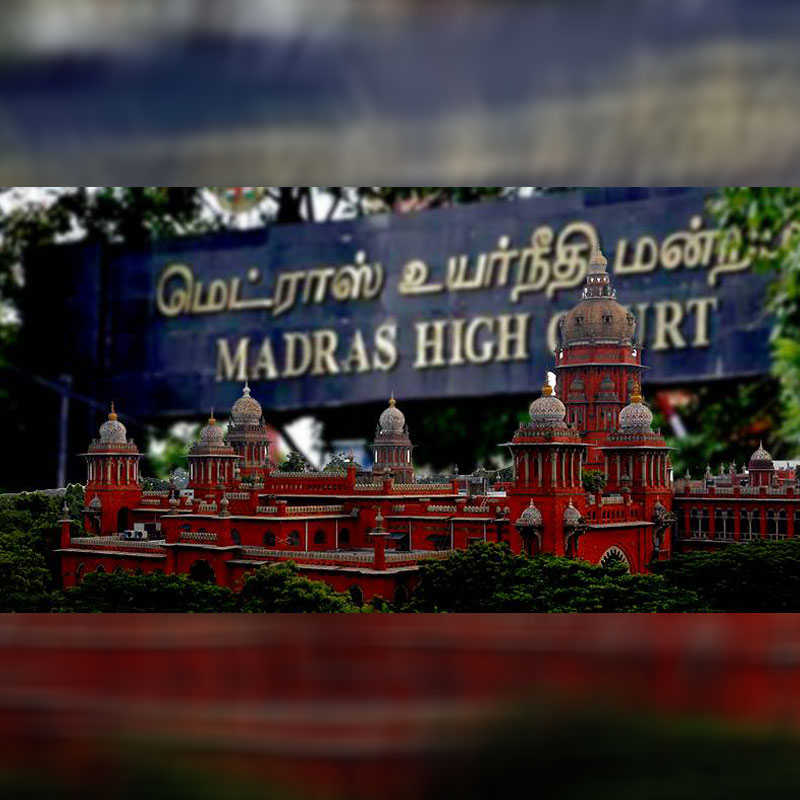
NEW DELHI: The Madras high court has declined to grant an interim stay on the Tamil Nadu government’s ordinance banning online gambling and games, including online rummy.
Appearing for the state, advocate general Vijay Narayan today sought more time and urged the court to adjourn the matter till after Pongal. He also mentioned that there is a possibility that an act against online gambling may be presented in the legislative assembly in January, which may or may not be in the same form as the ordinance. However, the court clarified that no further extension would be given in the matter to file the counter.
He argued that children are playing online rummy using their parents' credit card and the ordinance would nearly have any effect on the operations of the petitioners given that only two states – Tamil Nadu and Andhra Pradesh – have banned online rummy.
Previously, the court had refused to stay the ordinance on a petition moved by online gaming platform Junglee.
Appearing for Junglee, senior advocate Mukul Rohatgi argued that the petitioners wanted an early resolution of the matter, adding that they can establish that online rummy is safer than rummy played in other places. He claimed that the business is getting impacted as it wrongly stopped.
Meanwhile, Gameskraft Technologies also joined in the challenge mounted against the ordinance, in so far as it relates to online rummy. Advocate Mohan Parasaran, the counsel appearing for Gameskraft, urged the court to at least pass orders that no coercive action be taken against the petitioners in the interim.
However, the bench refused to grant any interim relief save for the filing of a counter-affidavit by the state, and fixed the matter for further hearing on 18 January.
Last month, Tamil Nadu became the third state in India to enforce a ban on online games and gambling after governor Banwarilal Purohit promulgated an ordinance on the same. The move came in the wake of a spate of suicides in the state by gamblers who lost money playing these online betting games.

Gaming
Dream Sports sees 100 plus exits after gaming ban forces overhaul
Company splits into eight units as real money gaming law hits revenue.
MUMBAI: For a company built on fantasy leagues, reality has suddenly rewritten the rulebook. More than 100 employees have exited Dream Sports, the parent of Dream11, after the company reorganised its operations following India’s ban on real money online gaming. The shake up came after the Promotion and Regulation of Online Gaming Act, 2025 came into force in August 2025, prohibiting games where users deposit money expecting winnings. The regulation struck at the heart of the fantasy gaming industry and dramatically affected Dream Sports’ core business, wiping out about 95 percent of its revenue and all of its profits.
In response, the Mumbai based company shifted into what chief executive officer Harsh Jain described as “startup mode”, splitting its operations into eight independent business units in December.
Around 700 employees were reassigned across these newly formed ventures based on their experience and interests. However, roughly 15 percent opted to leave the company.
A spokesperson for Dream Sports said many of those who exited were experienced professionals accustomed to running scaled businesses rather than early stage ventures.
“Since some of these employees were experienced with running high scale businesses and not startups, around 15 percent chose to leave and join other scaled companies or start ventures of their own,” the spokesperson said.
Despite the departures, the company noted that the attrition rate is only slightly higher than its earlier level of around 10 percent before the ban. Dream Sports now has close to 950 employees and is not currently hiring, choosing instead to focus on stabilising its existing workforce.
The restructuring has transformed Dream Sports from a fantasy gaming company into a broader sports entertainment platform. The eight units now operate independently, each focusing on different segments of the sports and technology ecosystem.
These include Dream11, sports streaming platform Fancode, sports travel service DreamSetGo, mobile game Dream Cricket and artificial intelligence initiative Dream Sports AI, which includes sports analytics platform Dream Play.
Other ventures include fintech product Dream Money, open source initiative Dream Horizon and the philanthropic arm Dream Sports Foundation.
As part of cost saving efforts, Dream Sports also relocated its headquarters from Bandra Kurla Complex to Worli earlier this year. The new office, called Dream Sports Stadium, brings teams from its various brands together under one roof to improve collaboration and operational efficiency.
Jain had earlier said the company removed bonus lock in timelines for employees hired in recent years, allowing those who wished to leave to exit with pro rata payouts.
“We want people who are fully into the startup mode and willing to work for it, and we will share that reward if it comes,” he said.
Founded in 2008 by Harsh Jain and Bhavit Sheth, Dream Sports was last valued at 8 billion dollars after raising 840 million dollars in 2021 from investors including Falcon Edge Capital, DST Global, D1 Capital Partners, RedBird Capital Partners, Tiger Global Management, TPG and Footpath Ventures.
The new gaming law has forced several companies in the fantasy gaming sector to either shut down or pivot their business models, signalling a significant reset for one of India’s fastest growing digital entertainment industries.