Brands
Beauty brand La Pink tackles skin pH with microplastic-free breakthrough
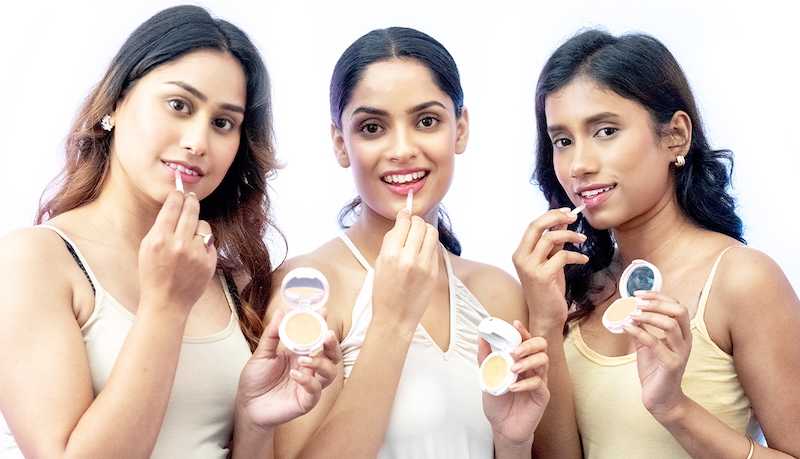
MUMBAI: India’s beauty landscape is getting a pH-tastic makeover. La Pink, the country’s first beauty brand boasting 100 per cent microplastic-free formulations, has launched its #InsideYourSkin campaign, promising to decode the mysteries of Indian skin.
Founder Nitin Jain isn’t mincing words: “We’re not just selling products; we’re starting a skin health movement.”
Inspired by his wife, Jain’s brand is taking on the beauty industry’s dirty little secret – microplastics.
The brand’s hero lineup includes face wash, toner, serum, sunscreen, and lip balm, packed with globally sourced ingredients that sound more like a gourmet menu than skincare: white haldi from India, cactus flower from Australia, and Kakadu plum from the US.
” Maintaining healthy skin is imperative,” Jain quips. ” I feel that if we are able to raise awareness about how important it is to understand how pH levels function Inside our skin, it’ll be easier to understand how our skin responds better. “
The products promise to balance pH levels, tackle pigmentation, control oil, and hydrate – all while being kinder to the planet.
The #InsideYourSkin campaign is more than marketing – it’s a rallying cry for skincare that understands the unique needs of Indian skin, says the beauty brand.

Brands
Abhinav Rastogi named global marketing director for YouTube Shopping
Google veteran to scale creator commerce and expand shopping across global markets
SINGAPORE: Abhinav Rastogi has stepped into a new role as global marketing director for YouTube Shopping, marking the latest chapter in a more than decade-long career at Google.
Rastogi, who took on the position in February and is based in Singapore, will lead global marketing for YouTube Shopping, a platform designed to connect creators, viewers and merchants in a single ecosystem. His remit includes expanding the service into new markets and strengthening its positioning as a growth channel for both creators and brands.
In a reflective note on the transition, Rastogi pointed to a simple but powerful idea driving the role. For years, creators have quietly built trust with audiences through consistent and authentic content, and that trust often shapes purchasing decisions. What is changing now, he said, is the infrastructure around that behaviour. YouTube Shopping aims to make it easier for viewers to discover and buy products recommended by creators they already follow.
The scale is already significant. More than half a million creators have joined the programme, with recent expansion into Japan through a partnership with Rakuten signalling further global ambitions.
Rastogi believes the future of shopping on YouTube will be driven by a blend of creators, content and communities. In his view, it is the human voice behind the screen, not just the product, that ultimately builds trust and drives discovery.
Prior to this role, he served as director of marketing, YouTube Asia Pacific, where he led regional marketing across creator engagement, brand building and reputation. During that time, he played a key role in launching and scaling YouTube Shopping across eight markets in the region.
Earlier stints at Google include group product marketing manager, consumer apps, overseeing growth for products such as Search, Maps and Assistant across India and Southeast Asia, and product marketing manager roles spanning consumer apps and YouTube, where he contributed to launches including YouTube Music, YouTube Originals and YouTube Shorts.
Rastogi began his career in consulting with Boston Consulting Group and A.T. Kearney, before moving into the technology sector. He is an alumnus of Indian Institute of Management Calcutta and Indian Institute of Technology Kanpur.
Alongside his corporate role, he is also an active angel investor, backing early-stage startups in consumer technology and electric mobility across India and Southeast Asia.
As he settles into the new role, Rastogi is betting on a future where every video can double up as a storefront, and where commerce feels less like a transaction and more like a recommendation from a trusted voice.