Brands
A billion journeys, countless stories: How India Ubered through 2024

MUMBAI: The year 2024 raced by like a city cab weaving through rush-hour traffic, filled with moments of highs and lows, triumphs and challenges.
Yet, amidst the chaos, millions of Indians found their sanctuary in the backseat of an Uber, trusting the app to take them home safely, no matter the hour or occasion. From early morning commutes that witnessed dreams in the making to late-night rides after celebrations under city lights, Uber became the silent witness to India’s stories.
With 9.2 billion kilometres covered, Uber’s wheels spun across highways and alleys, connecting lives and destinations. Each trip carried the essence of urban India—its resilience, ambition, and zest for life—cementing Uber’s role as more than a ride-hailing app, but a part of the nation’s daily pulse.
This is the story of How India Ubered in 2024, a data-rich narrative of the trends, journeys, and choices that defined a year of movement and momentum.
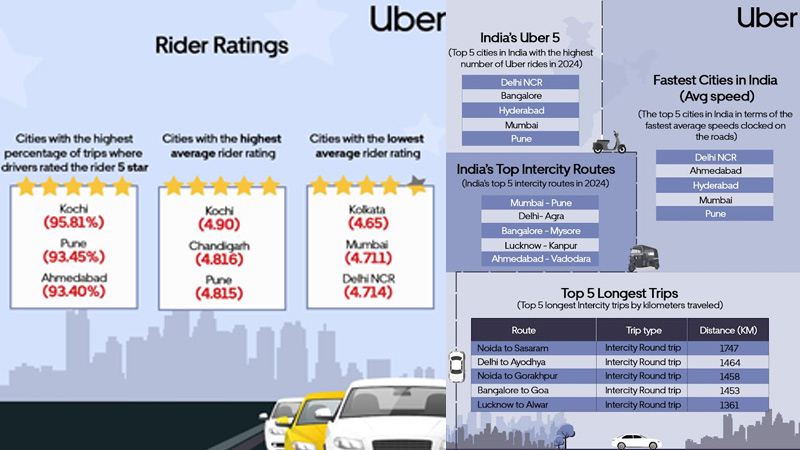
Uber trips covered a distance equivalent to the time it would take 8,752 years to traverse at 120 km/h – the same time humans evolved from the Stone Age to the AI era. Kochi riders emerged as the nation’s most loved, receiving an impressive average rating of 4.90, while Delhi-NCR topped the charts for total trips.
Key highlights from 2024:
Rider preferences and patterns:
-
Most popular products: Uber Auto and Uber Go.
-
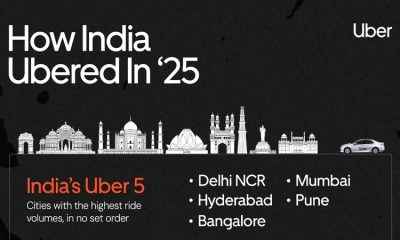
Most active cities: Delhi-NCR, Bengaluru, Hyderabad, Mumbai, Pune, and Kolkata.
-
Peak travel time: 6 PM to 7 PM.
-
Top day for rides: Friday.
-
Busiest month: December.
-
Highest single-day trips: October 9, during Durga Puja and Navratri.
Rider Ratings (Citywise)
|
City |
Average Rider Rating |
|
Kochi |
4.90 |
|
Chandigarh |
4.816 |
|
Pune |
4.815 |
|
Ahmedabad |
4.810 |
|
Jaipur |
4.784 |
|
Bangalore |
4.781 |
|
Hyderabad |
4.779 |
|
Chennai |
4.744 |
|
National Average |
4.74 |
|
Lucknow |
4.739 |
|
Delhi NCR |
4.714 |
|
Mumbai |
4.711 |
|
Kolkata |
4.649 |
Late-night trends
-
Mumbai recorded the most late-night rides, surpassing Delhi-NCR.
Work commutes
-
Bengaluru had the highest number of office-hour rides.
India’s intercity highlights:
Top routes:
-
Mumbai – Pune.
-
Delhi – Agra.
-
Bangalore – Mysore.
-
Lucknow – Kanpur.
-
Ahmedabad – Vadodara.
Longest trips:
-
Noida-Sasaram-Noida (1747 km).
-
Delhi-Ayodhya-Delhi (1464 km).
Green mobility and new products
-
EV travel: Riders covered 170 million kilometres in electric vehicles, saving 8.5 million hours and contributing to reduced carbon emissions.
-
Innovative launches:
-
Uber Black (premium service).
-
Uber Shuttle (licensed app-based bus service).
-
Uber Pet (for domesticated animals).
-
Uber Shikara (Dal Lake rides in Srinagar).
-
Most visited tourist spot:
-
The Taj Mahal in Agra topped the charts for Uber Intercity rides.
Unique milestones:
-
Uber Courier completed the highest deliveries at lunch hour (1 PM), with one user booking 2,900 courier trips.
-
Uber Bus introduced 432,000 first-time users to app-based mass transit.
Speaking about the report, Uber India country head, Himanshu Tandon said, “2024 was a landmark year for Uber India. Our data underscores the evolving needs of riders across the country, and we are thrilled to have played a pivotal role in their journeys. From green mobility to innovative services, Uber remains committed to redefining urban mobility while fostering sustainable development.”
Uber’s report paints a vivid picture of how Indians embraced ridesharing to stay connected, marking 2024 as a transformative year for mobility.