News Headline
Double trouble for broadcasters as Supreme Court green-lights twin tax hit


MUMBAI: The Supreme Court has delivered a one-two punch to India’s broadcasters, ruling on Thursday that they must cough up both service tax and entertainment tax on their activities. The decision ends years of legal wrangling over whether television companies could dodge the double whammy.
A bench led by justice B V Nagarathna and justice N K Singh declared that parliament and state legislatures both have the constitutional chops to levy their respective taxes. The 321-page judgment—longer than most television programmes—essentially told broadcasters they cannot have their cake and eat it too.
“The two taxes target different aspects of the same activity,” the court explained, rather like taxing both the recipe and the meal. Parliament’s service tax under the Finance Act hits the broadcasting service itself, whilst states’ entertainment tax treats television as a luxury under Entry 62 of the Constitution’s List II.

The judges were having none of the broadcasters’ arguments that they should pay only service tax to the central government. “No entertainment can reach viewers unless broadcasters transmit signals,” justice Nagarathna noted. “There are two aspects: transmitting signals and providing entertainment through set-top boxes that decrypt them.”
This legal drama began with a clutch of cases from various high courts, with Kerala versus Asianet Satellite Communications taking the starring role. Broadcasters had argued they were merely in the signal-transmission business, not the entertainment game. The Supreme Court was not buying this technicality.
The ruling overturns a 2012 Kerala high court decision that had favoured cable operators over DTH (direct-to-home) providers, calling such discrimination unconstitutional. The Supreme Court said this earlier judgment got it wrong—both cable and DTH operators are in the entertainment business and should be taxed accordingly.
For India’s broadcasting industry, already grappling with cord-cutting and streaming competition, this represents yet another headache. The ruling makes clear that technological differences in how entertainment is delivered do not exempt anyone from the taxman’s reach.
The court’s message is unambiguous: whether you beam signals from satellites or snake cables through neighbourhoods, if you are in the business of keeping Indians glued to their screens, you will pay through the nose for the privilege.







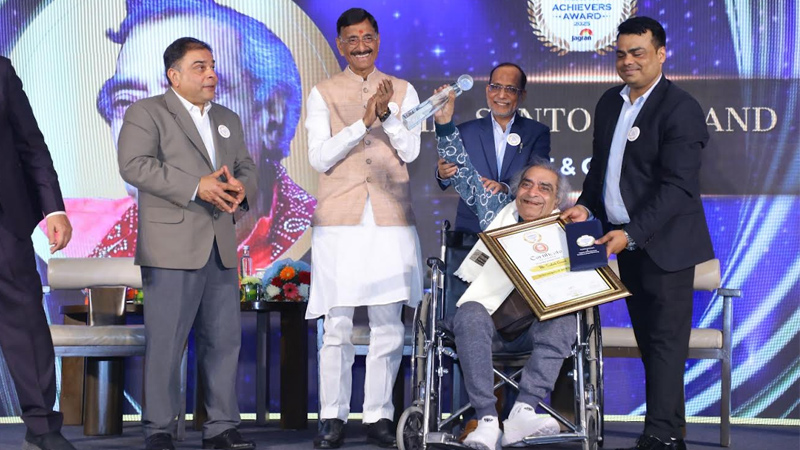
NEW DELHI: Hamdard Laboratories gathered a cross-section of India’s achievers in New Delhi on Friday, handing out the Hakeem Abdul Hameed Excellence Awards to figures who have left their mark across healthcare, education, sport, public service and the arts.
The ceremony, attended by minister of state for defence Sanjay Seth and senior officials from the ministry of Ayush, celebrated individuals whose work blends professional success with a sense of public purpose. It was as much a roll call of achievement as it was a reminder that influence is not measured only in profits or podiums, but in people reached and lives improved.
Among the headline awardees was Alakh Pandey, founder and chief executive of PhysicsWallah, recognised for turning affordable digital learning into a mass movement. On the sporting front, Arjuna Awardee and kabaddi player Sakshi Puniya was honoured for her contribution to the game and for pushing women’s participation onto bigger stages.
The cultural spotlight fell on veteran lyricist and poet Santosh Anand, whose songs have echoed across generations of Hindi cinema. At 97, Anand accepted the honour with characteristic humility, reflecting on a life shaped by perseverance and hope.
Healthcare honours spanned both modern and traditional systems. Manoj N. Nesari was recognised for strengthening Ayurveda’s place in national and global health frameworks. Padma shri Mohammed Abdul Waheed was honoured for his research-backed work in Unani medicine, while padma shri Mohsin Wali received recognition for his long-standing contribution to patient-centred care.
Education and social development also featured prominently. Padma shri Zahir Ishaq Kazi was honoured for decades of work in education, while former Meghalaya superintendent of Police T. C. Chacko was recognised for public service. Goonj founder Anshu Gupta received an award for his dignity-centred rural development initiatives, and the Hunar Shakti Foundation was honoured for empowering women and young girls through skill development.
The Lifetime Achievement Award went to former IAS officer Shailaja Chandra for her long career in public healthcare and governance, particularly in the traditional systems under Ayush.
Speaking at the event, Hamdard chairman Abdul Majeed said the awards were a tribute to those who combine excellence with empathy. “These awardees reflect Hakeem Sahib’s belief that healthcare, education and public service must ultimately serve humanity,” he said.
Minister Seth struck a forward-looking note, saying India’s young population gives the country a unique opportunity to become a global destination for learning, health and wellness by 2047.
The ceremony also featured the trailer launch of Unani Ki Kahaani, an upcoming documentary starring actor Jim Sarbh, set to premiere on Discovery on 11 February.
Instituted in memory of Unani scholar and educationist Hakeem Abdul Hameed, the awards have grown into a national platform that celebrates those building a more inclusive and resilient India. For one evening at least, the spotlight was not just on success, but on service with substance.