Connect with us

Comment

Remembering Pritish Nandy – the poet, journalist, filmmaker, painter and a humanist

Published

on

MUMBAI: Around two years and eight months ago, the following post appeared on Pritish Nandy’s timeline on social media.

“You relax on a plane, even if you don’t know the pilot. You relax on a ship even if you don’t know the captain. You relax on a bus even if you don’t know the driver. Why don’t you relax in life knowing that the universe is in control?”

To which Pritish  responded. 

Advertisement

Loved this post by @malini_ramani Perhaps I am trying to tell myself this as well. I have lived my whole life chasing stress. Stress brought forth poetry. Stress inspired my journalism. Stress informs all my creative work. Yet I yearn to relax, to switch off and go on a long vacation. Someday perhaps… when life expects less from me.”

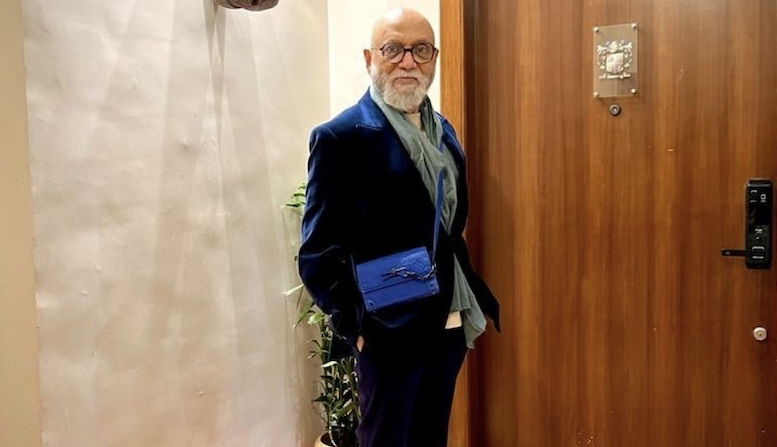
Pritish Nandy did realise his dream to go for a vacation five months later after that post when he got a chance to travel through Italy. He roamed the streets of Rome like a commoner, visited Harry’s Bar, soaked in the sights, the Vatican, appreciating and admiring art and the sculpting finesse of Michaelangelo’s David and the unknown Pieta. He looked relaxed and like he was having a good time. But the trip was relatively short and his thoughts kept him busy and they were probably racing a hundred a dozen through that vast and deep mind of his.

And that’s exactly how Pritish Nandy lived his life:  busy.  He kept himself busy, as a poet in his younger days in Calcutta, a city he fled from around 40 years ago for the city of dreams. He published his own works and translated the works of other great poets – altogether more than 40 of them.  

Advertisement

In Mumbai, he kept himself pre-occupied as publishing director of Bennett Coleman & Co between 1982-91 working on all its magazines but he got the most known for what he did as the editor of The Illustrated Weekly, which he transformed into a publication that stood out and made every one stand up too. Whether they were authors or politicians or  painters or film stars or beauty queens or musicians.

Pritish Nandy in Italy

President Gen Zia ul Haq invited him to his residence in Pakistan and gave him an explosive interview just a short while before he was assassinated. Then he and Rajat Sharma secretly recorded an off the record interview with the godman Chandraswami in London, which led to political explosions in India. Actress Neena Gupta  never forgave him for picking up Masaba Gupta’s birth certificate and identifying Viv Richards as the father of their love child. 

Pritish did a stint with the Observer of Politics & Business, which was Reliance Industries’ Anil Ambani’s attempt at getting into media with his father Dhirubhai’s blessings. It floundered soon, despite first Prem Shankar Jha’s initial editorial guidance and then Pritish’s but it gave him an impetus to launch his own company which he set up in the offices of OBP, if I remember correctly.

Advertisement

Thus Pritish Nandy Communications (PNC) was born. Which then again kep him busy as it went on to make television shows for Doordarshan, Zee TV, Star and Sony. Among them were current affairs shows, business chat shows, comedies, daily entertainment bulletins, Marathi dramas, Hindi dramas. Some of these he hosted himself. 

From television PNC transitioned to films making some memorable titles like Jhankar Beats,  Kaante, Sur, Hazaaron Khwaishein Aisi., Pyaar ke side effects, Chameli and  Mastizaade. Some of the biggest names worked with him Amitabh Bachchan, Juhi Chawla, Sanjay Dutt, Kareena Kapoor, Aishwarya Rai in his films.
 
And then of course came the era of streaming.  That got him busy again, it got his creative juices flowing. He, along with his daughters Rangita and Ishita, ploughed right in. Their first original approved by Prime Video Four More Shots Please was among the top shows of the year, in terms of viewership. It also went to get nominated for an international Emmy, which pleased Pritish no end.  Of course, what gave him a lot of pride was that his was amongst the first few production companies to be listed on the stock exchanges, way back in 2000.  And that the company was celebrating 25 years of its listing in 2025.

Pritish got recognition very early at the age of 26 when he was given the Padma Shri. And he did hobnob with the powers that be. Indira Gandhi the then prime minister came to the release of his book of poems Lonesong Street and appreciated his work. This was much before he became a power house courtesy his journalistic endeavors.
Pritish with his Pet

He  has been a recipient of many awards: the EM Forster Literary Award, the Unesco Asia Pacific Heritage Award, the International Association Award from the Humane Society of the United States, the Friends of Liberation War Honour from Bangladesh, and hundreds  of award nominations for the films PNC has produced, from all over the world.

Advertisement

A lot has been written about Pritish’s  caring for animals and how he along with Maneka Gandhi set up People for Animals much before its time. For him his pets were his children. His caring for strays on the street led him to strike a friendship with Ratan Tata who also shared with him his love for animals. In fact, so close was their friendship that Ratan Tata also picked up a chunk of  PNC shares from the open  stock market.

Pritish was elected to the Rajya Sabha on a Shiv Sena ticket in 1998 from Maharashtra with the support  from both Sena and the BJP members without either of them knowing it.

His pen shall write no more. Nor will his brush make the strokes on canvas. Pritish Nandy wielded both strongly. As a poet. As an editor. As a painter. As the script doctor or writer of the shows or flms that he gave his creative inputs for. With his passing away following a cardiac arrest, all that has been silenced.  He breathed his last on 8 January 2025 at the age of 73 at his south Mumbai residence, leaving behind his  two daughters who he doted on – Ishita and Rangita – his son Kushan, his pets and many a stray on the streets of Mumbai. 

Advertisement

(Even as this piece is being written another Bennett, Coleman & Co legend Bhaskar Das continues to be critical in a Mumbai hospital. His family is counting down the days as the doctors have given up, surrendered to the cancer that has spread and ravaged his body)

Click to comment

Leave a Reply

Your email address will not be published. Required fields are marked *

Comment

GUEST COLUMN: The year OTT grew up and micro-drama took over India’s screens

Published

on

MUMBAI: 2025 will be remembered as the year India’s OTT industry stopped chasing scale for its own sake and began reckoning with how audiences actually consume content. Completion rates fell, patience wore thin and the limits of long-form excess became impossible to ignore. In this guest column, Pratap Jain, founder and CEO of ChanaJor, traces how micro-drama moved from the fringes to the centre of viewing behaviour, why short-form fiction emerged as a retention engine rather than a trend, and how platforms that respected time, habit and emotional payoff were the ones that truly grew up in 2025. 

If there is one thing 2025 will be remembered for in the Indian OTT industry, it’s this: the industry finally stopped pretending.
Stopped pretending that bigger automatically meant better.
Stopped pretending that viewers had endless time.
Stopped pretending that scale without retention was success.

What began as a quiet reset in 2023 and a cautious correction in 2024 turned into a very visible shift in 2025. Business models matured. Content strategies tightened. And most importantly, platforms started aligning themselves with how Indians actually watch content, not how the industry wished they would.

Advertisement

At the centre of this shift was micro-drama—not as a trend, but as a behavioural inevitability.

When OTT finally understood the time problem

For years, long episodes were treated as a marker of seriousness. A 45–60 minute runtime was almost a badge of credibility. Shorter formats were pushed to the margins, labelled as “snack content” or “mobile-only.”

Advertisement

That belief quietly collapsed in 2025.

What platform data showed very clearly was not a drop in interest—but a drop in patience. Viewers weren’t rejecting stories. They were rejecting commitment.

Across platforms, the same patterns appeared:

Advertisement

*  First-episode drop-offs on long-form shows kept increasing

*   Completion rates continued to slide

*  Viewers were sampling more titles but finishing fewer

Advertisement

At the same time, shows with episodes in the six to 10 minute range started showing the opposite behaviour: higher completion, higher repeat viewing, and stronger daily habit formation.

Micro-drama didn’t win because it was short. It won because it respected time.

Micro-Drama didn’t arrive loudly. It took over quietly.

Advertisement

There was no single moment when micro-drama “launched” in India. It crept in through dashboards and retention charts.

By mid-2025, it was clear that viewers were happy watching four, five, sometimes six short episodes in one sitting—even when they wouldn’t finish a single long episode. Romance, relationship drama, slice-of-life conflict, and grounded comedy worked especially well.

This wasn’t disposable content. It was compressed storytelling.

Advertisement

In shorter formats, there was no room for indulgence. Every episode had to move the story forward. Weak writing was punished faster. Strong writing was rewarded immediately.

Micro-drama raised the bar instead of lowering it.

Where ChanaJor naturally fit into this shift

Advertisement

ChanaJor didn’t pivot to micro-drama in 2025 because the market demanded it. In many ways, the platform was already built around the same viewing behaviour.

From the beginning, ChanaJor focused on short-to-mid-length fictional stories that felt close to everyday Indian life—hostels, rented flats, office romances, small-town relationships, young people figuring things out. Stories that didn’t need heavy context or cinematic scale to connect.

What worked in ChanaJor’s favour in 2025 was clarity:

Advertisement

*   A clearly defined audience
*   Tight episode lengths
*   Storytelling that prioritised emotion and pace over spectacle

While several platforms rushed to copy global micro-drama formats, ChanaJor stayed rooted in familiar Indian settings and conflicts. That familiarity mattered. Viewers didn’t have to “enter” the world of the show—it already felt like theirs.

Why audiences started responding differently

Advertisement

One of the biggest misconceptions going into 2025 was that audiences wanted shorter content because their attention spans had reduced. That wasn’t entirely true.

What viewers actually wanted was meaningful payoff per minute.

On platforms like ChanaJor, episodes didn’t waste time setting the mood for ten minutes. Conflicts arrived early. Characters were recognisable within moments. Emotional hooks landed fast.

Advertisement

A typical consumption pattern looked like real life:

* One episode during a break
* Two more before sleeping
*  A few the next day

This is how viewing habits are built—not through marketing spends, but through comfort and consistency.

Advertisement

Viewers came back not because every show was a blockbuster, but because they knew what kind of experience to expect.

2025 was also the year OTT faced business reality

The other big change in 2025 was on the business side. Subscriber growth slowed. Discounts stopped hiding churn. Customer acquisition costs rose.

Advertisement

Platforms were forced to ask harder questions:

 *  Are viewers finishing what they start?
*   Are they returning without reminders?
*    Is this content worth what we’re spending on it?

This is where micro-drama began outperforming expectations. A well-written short series could deliver sustained engagement without massive budgets. It didn’t peak for one weekend and disappear—it stayed alive through repeat viewing.

Advertisement

Platforms like ChanaJor benefited because they weren’t chasing inflated launch numbers. The focus was on consistency and retention, not noise.

Failures Became Visible Faster

2025 also exposed weaknesses brutally.

Advertisement

Several platforms assumed micro-drama was a shortcut—short episodes, quick shoots, instant traction. What they discovered was that bad writing fails faster in short formats than in long ones.

Viewers dropped off within minutes. Episodes were abandoned mid-way. Weak stories had nowhere to hide.

Micro-drama didn’t forgive laziness. It amplified it.

Advertisement

The platforms that survived were the ones that treated short storytelling with the same seriousness as long-form—sometimes more.

OTT Stopped Chasing Prestige and Started Chasing Habit

Perhaps the most important shift in 2025 wasn’t technical or creative—it was psychological.

Advertisement

OTT stopped trying to look like cinema. It stopped chasing validation through scale and awards alone. It began behaving like what it actually is in people’s lives: a daily companion.

Platforms like ChanaJor found their space here because that mindset was already baked in. The goal wasn’t to dominate a weekend launch. It was to quietly become part of someone’s everyday viewing routine.

That shift changed everything—from release strategies to how success was measured.

Advertisement

What 2025 Ultimately Taught the Industry

By the end of the year, three truths were impossible to ignore:

*    Time is the most valuable thing a viewer gives you
*     Retention matters more than reach
*      Format must follow behaviour, not ego

Advertisement

Micro-drama didn’t take over because it was fashionable. It took over because it fit real life.

Looking Ahead

Micro-drama is not replacing long-form storytelling. It is redefining the baseline of engagement.

Advertisement

Longer shows will survive—but only when they earn their length. Short-form fiction will continue to evolve, becoming sharper, more emotionally confident, and better written.

Platforms like ChanaJor have shown that it’s possible to grow without shouting—by understanding the audience, respecting their time, and telling stories that feel real.

2025 wasn’t the year OTT became smaller. It was the year it became smarter.

Advertisement

Note: The views expressed in this article are solely the author’s and do not necessarily reflect our own.

Continue Reading

Advertisement News18
Advertisement All three Media
Advertisement Whtasapp
Advertisement Year Enders

Copyright © 2026 Indian Television Dot Com PVT LTD

This will close in 10 seconds