Gaming
Skill, thrills and compliance: Inside Zupee’s winning online game


MUMBAI: India’s online gaming world is having its “game on” moment and riding the leaderboard is Zupee, a platform that’s swapped chance for skill, raked in 150 million signups, clocked a jaw-dropping 12.5 billion gameplays, and finished financial year 2024 with a neat Rs 146 crore net profit. For an industry notorious for burning money faster than a turbo-charged console, Zupee’s win is as rare as a perfect game.
Pull back the curtain and you’ll meet Govind Mittal, Zupee’s chief spokesperson, who’s put his chips on integrity from day one. “Compliance isn’t an afterthought for us,” he told Indiantelevision.com’s Rohin Ramesh via email. “It’s built into the very foundation of how we operate.”
No sleight of hand here, just rigour honed across boardrooms at ITC, Rivigo, Joyy and more, plus a Chartered Accountant’s sharp eye (Mittal bagged an all-India rank of 16, first attempt, just saying). He has a record of spinning up companies like YY India, rocketing revenues from $1 million to $200 million ARR.

Backed by heavyweight investors like WestCap, Matrix Partners, and Nepean Capital, Zupee boasts a $600 million valuation and is not just surviving but thriving with profitability in its corner. With momentum on its side, Zupee is setting its sights on joining the top tier of India’s online gaming platforms, giving its rivals a serious run for their money.

But don’t mistake the platform for a digital wild west. Instead, think of Swiss bank user trust being guarded more jealous than Fabergé eggs (A jewelled egg first created by the jewellery firm ‘House of Fabergé’). Every Zupee game is skill-based, luck is for lotteries.
RNG (random number generators) are reviewed by global auditors; the firm boasts a third-party stamp from Arthur D. Little, and bots are banished. “We work closely with payment gateways to keep track of UPI IDs which have been used for fraud in the past and block payments through such IDs to ensure financial integrity of the platform,” says Mittal.
Mittal has turned responsible gaming from a regulatory box-tick into the heart and soul of Zupee’s digital playground. KYC, age-gating, daily deposit limits, self-exclusion tools and trained support are stitched into the code. Session limits and refunds are all crystal clear. “Everything from our terms and conditions to our advertising practices is designed to be transparent and user-first. Fairness isn’t just a promise – it’s something we’ve institutionalised,” he comments.
When risky behaviour emerges (say, a player’s wallet suddenly goes on a sugar rush), the system nudges, prompts, and if necessary, hits pause. “From day one we’ve built our platform with safeguards like spend limits, session reminders and self-exclusion tools that help users stay in control of their gameplay. Zupee offers users the ability to self-regulate through deposit limits and game locks and we actively monitor gameplay patterns to flag and assist users showing signs of excessive behavior,” he boasts.
In an industry where “collaboration” is usually code for “let’s not tell the regulator”, Zupee takes the opposite tack. The company is a card-carrying member of the All India Gaming Federation, actively sharing its rulebook, lobbying for a central regulatory framework, and even blowing the whistle on shady offshore operators trying to sneak in through the back door.
“We regularly engage with policy stakeholders to provide ground-level insights on gameplay behavior, tech innovation and user safety, helping ensure that emerging regulations are both practical and forward-looking,” he grins.
Mittal bristles at the idea that revenue growth and safeguarding users are at odds. Says he, “Zupee offers users the ability to self-regulate through deposit limits and game locks and we actively monitor gameplay patterns to flag and assist users showing signs of excessive behavior. In-app nudges, direct outreach from trained counselors and temporary restrictions are applied where necessary. Our systems are designed to ensure that gaming remains a form of entertainment.”
India’s gaming laws are a spaghetti of state-level tweaks. For industry players, it’s like playing snakes and ladders, mostly snakes. He concludes by saying, “A unified regulation is absolutely necessary for the orderly growth of this industry. Gaming has been a disruptive sector in more than one way and has the potential to engender technological innovation far beyond our imagination.”
(If you are an Anime fan and love Anime like Demon Slayer, Spy X Family, Hunter X Hunter, Tokyo Revengers, Dan Da Dan and Slime, Buy your favourite Anime merchandise on AnimeOriginals.com.)







Gaming
MTG gaming chief Benninghoff joins NODWIN board as esports firm primes for IPO
The Gurugram-based esports firm is pursuing a public listing, has returned to profitability and is growing revenues by 42 per cent
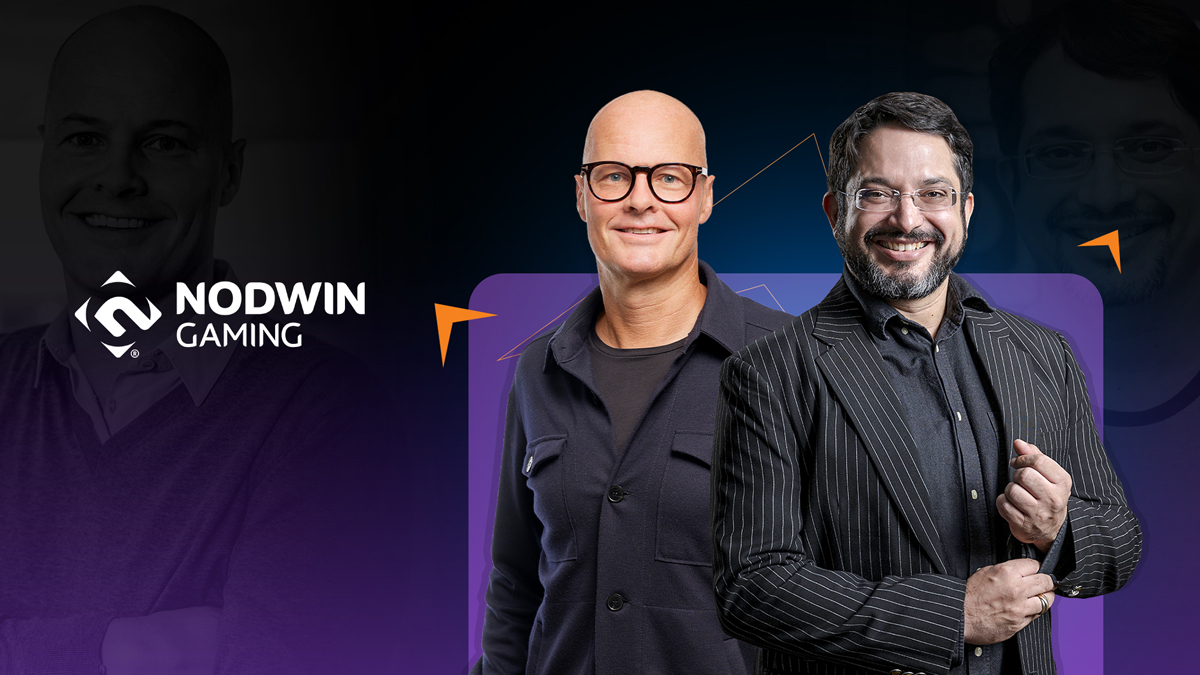
GURUGRAM: NODWIN Gaming is moving fast. The Gurugram-based gaming and esports company has launched a pre-IPO fundraising round, appointed UBS as lead adviser for both the round and a subsequent public listing, and landed a heavyweight board director, all in one go.
The new board member is Arnd Benninghoff, executive vice president of gaming at Stockholm-listed Modern Times Group (MTG), who has overseen the group’s strategic investments and portfolio growth since 2014. He is no stranger to building things: Benninghoff has founded and built fifteen companies, served as chief digital officer at ProSiebenSat.1 Media AG, managing director of SevenVentures, and chief executive of Holtzbrinck eLAB. He began his career as a journalist at Deutsche Presse Agentur and various TV networks, holds a Diplom-Kaufmann in business and administration from the University of Münster, and previously sat on the board of Edgeware AB.
The numbers back the ambition
NODWIN is not pitching a story without substance. The company has returned to EBITDA profitability and posted a 42 per cent year-on-year revenue surge, reaching $58.5m in the first nine months of FY2026. The pre-IPO round will combine a primary issuance to fund global expansion through organic growth and acquisitions, alongside a secondary sale to give existing shareholders some liquidity.
Akshat Rathee, co-founder and managing director of NODWIN Gaming, said Benninghoff understands “the entire lifecycle of the gaming and media ecosystem, from the boots-on-the-ground reality of building startups to the strategic complexity of managing multi-billion dollar global portfolios.”
Benninghoff, for his part, said the company “sits at the intersection of sports, entertainment, and technology, making it one of the most exciting players in the global gaming landscape today.”
A portfolio built for the global south
Founded in 2014 by Rathee and Gautam Virk, NODWIN has quietly assembled one of the more compelling esports portfolios outside the Western hemisphere. Its properties include DreamHack India and Comic Con India, and it recently acquired StarLadder, the Ukraine-based tournament organiser behind premier events in CS:GO and Dota 2. The company also serves as a long-term strategic marketing partner for the Evolution Championship Series (EVO), the world’s most prominent fighting game tournament, helping push it into new geographies.
Its geographic focus spans South Asia, Central Asia, Southeast Asia, the Middle East and Africa. Backers include Nazara Technologies, KRAFTON, Sony Group Corporation, JetSynthesys, and the founders’ investment vehicle Good Game Investments.
What comes next
With UBS running the books, a board freshly reinforced with European media and gaming expertise, and revenue heading in the right direction, NODWIN is laying the groundwork deliberately. The esports industry has burned investors before with big promises and thin margins. NODWIN’s return to profitability, combined with a real portfolio of owned intellectual properties across gaming, music and youth culture, gives it a more credible runway than most. The IPO clock is now ticking.







