Applications
Rode and Vortex team up to redefine remote audio

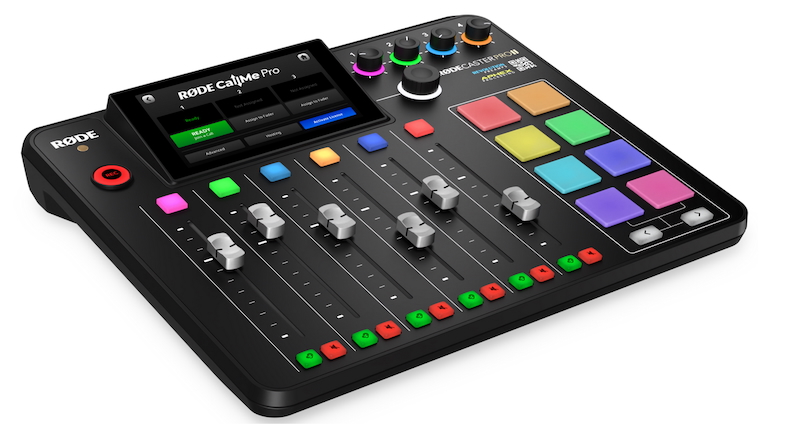
AMSTERDAM: Audio specialist Rode and British codec maker Vortex Communications have collaborated in a technology partnership that could change the way creators work remotely.
The collaboration integrates Vortex’s proprietary CallMe codec directly into Rode’s flagship production consoles — the RodeCaster Pro II and its smaller sibling, the RodeCaster Duo. The result is seamless, ultra-low-latency connectivity over WiFi or Ethernet, allowing creators to link up in real time without leaning on third-party software, external hardware or complex setup.
According to Vortex, CallMe’s secure SIP IP audio connectivity effectively erases geographic boundaries. Users can connect console-to-console anywhere in the world or patch in a guest through a web browser, with a simple invite dispatched via email or QR code. The goal: to deliver clean, broadcast-quality sound with virtually no delay — something that broadcasters, podcasters, internet radio producers and voice-over professionals have long demanded.

For Rode the integration marks a strategic leap. The company has pitched the RodeCaster range as all-in-one studios for the new wave of independent content makers, but until now remote contribution has been the Achilles heel of many setups. By embedding CallMe at firmware level, Rode is betting it can lure professionals who want plug-and-play reliability without the baggage of expensive ISDN lines, flaky conferencing apps or heavy post-production clean-up.
The service rolls out via a free firmware update branded Rode CallMe Lite, offering one remote contributor, up to 10 hours of RodeCaster-to-RodeCaster audio per month and five hours of web-to-console calls. Power users can graduate to paid CallMe and CallMe Pro tiers, unlocking multiple guests and extended call time.
Industry observers say the deal underscores a broader trend: pro-grade broadcast technology is increasingly being miniaturised, simplified and pushed into the hands of independent creators. Just as video conferencing apps democratised face-to-face meetings, Rode and Vortex are betting audio production can leap the same gap — with the quality standards of live radio and network television intact.
Vortex is exhibiting at stand number 8.F60 during IBC which is to be held from 12-15 September at Rai in Amsterdam.







Applications
With 57 per cent single new users, Ashley Madison rebrands as discreet dating platform
Platform says majority of new members now identify as single

INDIA: Ashley Madison is shedding the “married-dating” label that defined it for two decades, repositioning itself as a platform for discreet dating in what it calls the post-social media age.
The rebrand, unveiled in India on 27 February, 2026, marks a structural shift in business model and identity. Once synonymous with married dating, the company now describes itself as the “premier destination for discreet dating” under a new tagline: Where Desire Meets Discretion.
The pivot is data-driven. Internal figures show that 57 per cent of global sign-ups between 1 January and 31 December, 2025 identified as single: a notable departure from the platform’s married core. The company argues that its community has already evolved beyond its original positioning.
“In an age where our lives have been constantly put on public display, privacy has become the new luxury,” said Ashley Madison chief strategy officer Paul Keable. He framed the platform’s offering as “ethical discretion” for singles, separated, divorced and non-monogamous users seeking private connections.
The shift also taps into wider digital fatigue. A global survey conducted by YouGov for Ashley Madison, covering 13,071 adults across Australia, Brazil, Canada, Germany, India, Italy, Mexico, Spain, Switzerland, the UK and the US, found mounting discomfort with hyper-public online lives.
Among dating app users, 30 per cent cited constant swiping and messaging as a source of fatigue, while 24 per cent pointed to pressure to curate public-facing profiles and early personal disclosure. Some 27 per cent said fears of screenshots or information being shared contributed to exhaustion; an equal share cited unwanted attention.
The retreat from oversharing appears broader. According to the survey, 46 per cent of adults actively try to keep most aspects of their life private online. Only 8 per cent feel comfortable sharing most aspects publicly, while 35 per cent say they are becoming more selective about what they disclose.
Ashley Madison is betting that this cultural recalibration towards controlled visibility can be monetised. By doubling down on privacy infrastructure and reframing itself around discretion rather than infidelity, the company is attempting to convert reputational baggage into a premium proposition.