Connect with us

Brands

Reckitt expands gender pay reporting to 70% of its global workforce

Published

on

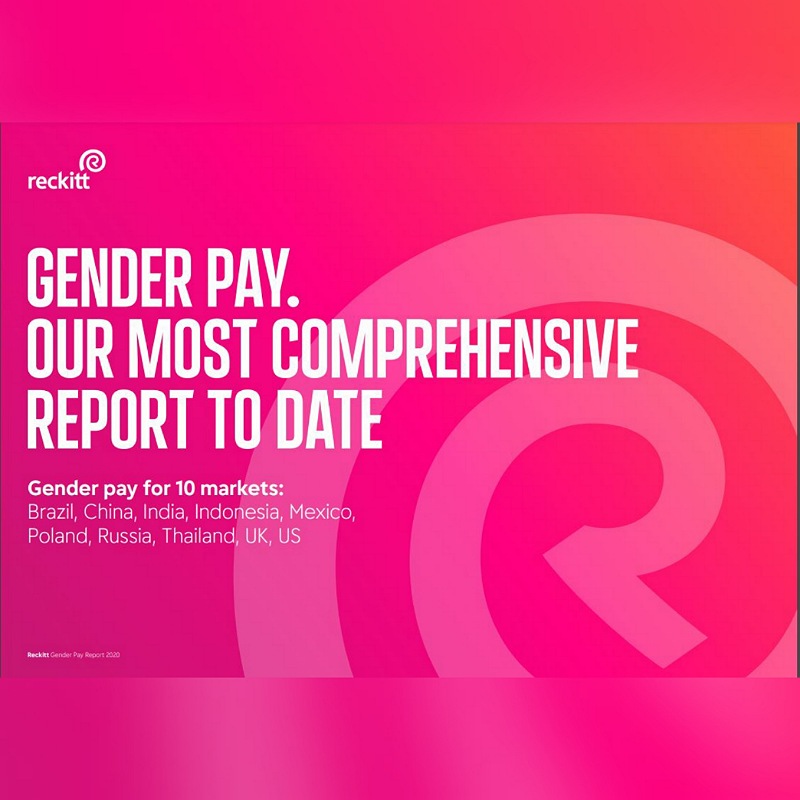
MUMBAI: FMCG giant Reckitt has published its most comprehensive gender pay report [Link: reckitt-gender-pay-report-2020-final.pdf] to date, providing data for ten of its major markets, representing 70 per cent of Reckitt employees across the world.

Reckitt, which recently underwent a branding makeover, went beyond UK gender pay reporting requirements last year, increasing its scope to five markets including China, India, Mexico, the UK and the US. This year, Reckitt has doubled the number of markets covered by the report by also adding Brazil, Indonesia, Poland, Russia and Thailand.

Reckitt’s global ambition is to achieve gender balanced management at all levels by 2030. As part of this ambition, the UK-based company is committed to working hard to improve diversity and inclusion across the business. This includes how the brand recruits new people, treats its suppliers, seeks new partners, and gives its employees an equal chance to be the best they can be.

Advertisement

The data sets used in the report have been assured under ISAE (UK) 3000 by independent provider KPMG and reflect the position as at April 2020.

Reckitt’s chief human resources officer Ranjay Radhakrishnan commented: “Our expanded voluntary gender pay gap reporting reflects our willingness to be more transparent and fosters greater trust with our stakeholders. Diversity and Inclusion is at the heart of Reckitt’s purpose. We aspire to a workplace where everyone has room to be themselves. Our ambition is that our teams represent the diverse consumers we serve”.


Advertisement
Click to comment

Leave a Reply

Your email address will not be published. Required fields are marked *

Brands

Trump announces $300bn Texas oil refinery with Reliance, calls it the biggest in US history

First new US refinery in 50 years planned at Brownsville port with Reliance

Published

on

WASHINGTON: The United States may soon see the first brand-new oil refinery built on its soil in half a century.

Donald Trump announced a proposed $300 billion refinery project in Texas, calling it a landmark moment for American energy production and jobs.

Posting on Truth Social on 10 March, Trump said the facility would be built at the Port of Brownsville and developed by a company called America First Refining, with major investment from India’s Reliance Industries.

Advertisement

The announcement frames the project as a centrepiece of the administration’s push for “energy dominance”, with Trump claiming it would deliver thousands of jobs and billions of dollars in economic activity to South Texas.

If realised, the plant would mark the first all-new major refinery constructed in the United States since the 1970s. In recent decades, oil companies have largely chosen to expand existing facilities rather than build new ones, citing high costs, regulatory hurdles and environmental scrutiny.

Trump described the proposed investment as the “biggest in US history”, positioning it as proof that policy changes such as streamlined permits and lower taxes are drawing large-scale energy investments back into the country.

Advertisement

The refinery is planned for the Port of Brownsville, a strategic Gulf Coast location that provides easy access to shipping routes and export markets.

A key partner in the project is Reliance Industries, controlled by billionaire industrialist Mukesh Ambani. The company already runs the world’s largest refining complex in Jamnagar, India, making it one of the most experienced operators in large-scale petroleum processing.

The Texas venture would mark a significant step for the group into America’s domestic refining sector, potentially strengthening industrial ties between the US and India.

Advertisement

The proposed refinery is being promoted as a next-generation facility capable of processing American shale oil while maintaining high environmental standards. Trump said it would be “the cleanest refinery in the world”, although the specific technologies behind that claim have not yet been detailed.

Industry observers also note that the $300 billion figure is unusually large for a refinery project, and analysts are waiting for more clarity on whether the number reflects total construction costs, long-term infrastructure investment, or broader economic impact estimates.

As of 11 March, Reliance Industries had not publicly confirmed the investment size or the structure of its involvement.

Advertisement

For now, the announcement has sparked equal parts excitement and curiosity in energy markets. If the plan moves from promise to pouring concrete, the refinery could reshape the Gulf Coast energy landscape, and reopen a chapter in American refining that has been quiet for nearly fifty years.

Continue Reading

Advertisement News18
Advertisement All three Media
Advertisement Whtasapp
Advertisement Year Enders

Copyright © 2026 Indian Television Dot Com PVT LTD

This will close in 20 seconds