Brands
PepsiCo Foundation initiates community vaccination drives

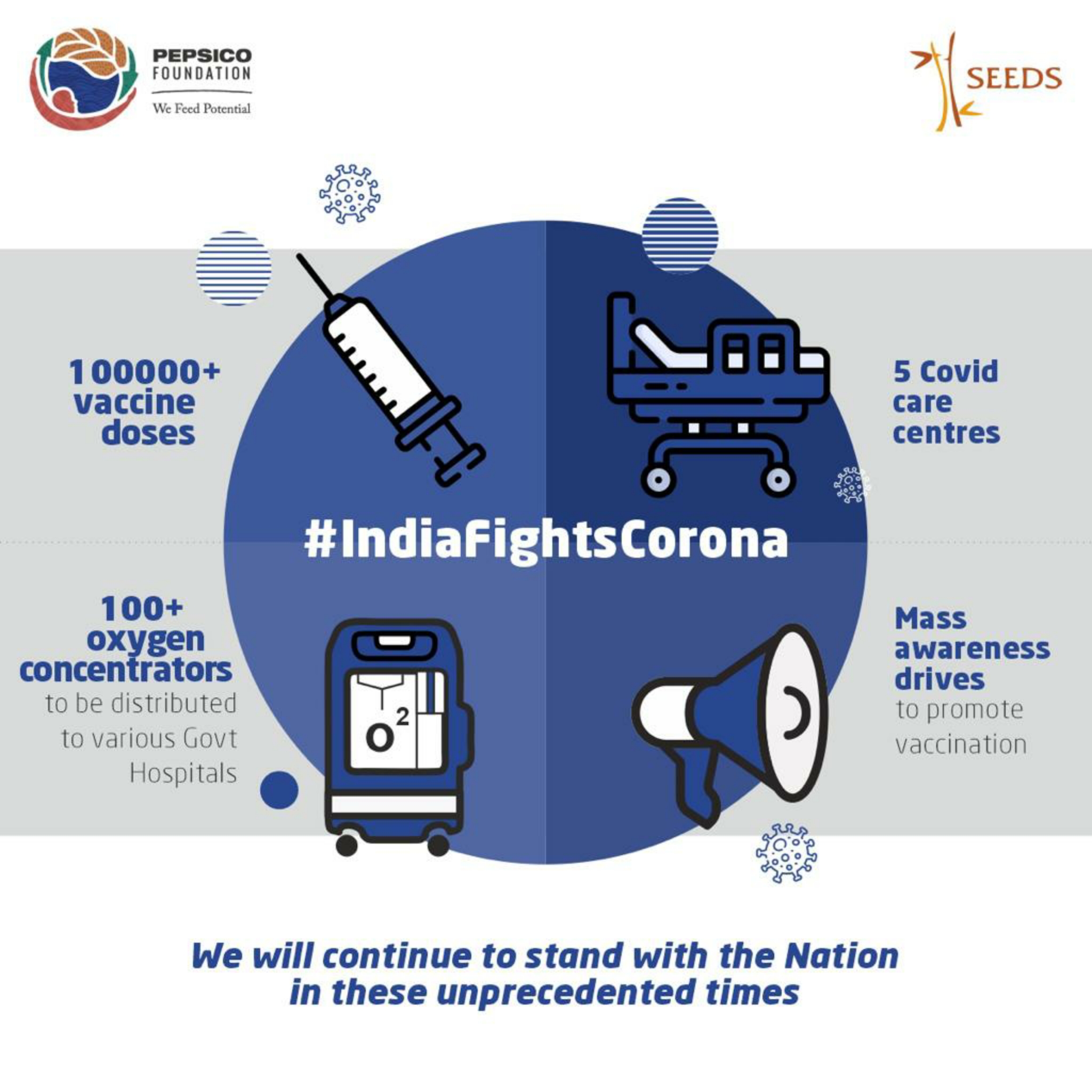
MUMBAI: The PepsiCo Foundation has partnered with non-profit organisation Sustainable Environment and Ecological Development Society (SEEDS) to roll out an extensive community relief outreach program to support the Indian government’s ongoing efforts against Covid2019.
As part of the partnership, SEEDS will drive Covid2019 vaccinations for the community at large, set up Covid care centres equipped with beds and medical facilities including oxygen cylinders. Additionally, oxygen concentrators will also be provided to central government for distribution to various government hospitals. The entire community relief program will be rolled out across the country with a special focus on five states — Maharashtra, Punjab, West Bengal, Uttar Pradesh, and Telangana.
As part of the initiative, extensive awareness drives will also be organised across various states to promote vaccination amongst the population at large. These sessions will be conducted in partnership with NGOs including SEEDS along with the local Government authorities.
In the first phase of the program, over one lakh vaccine doses will be provided to communities at large administered through the local healthcare system. Further, five Covid care centers would also be set up in key states for three months. Each centre will be equipped with beds and will have all key medical facilities including oxygen cylinders for emergency use, medical equipment, provision of meals among others. Additionally, over 100 state-of-the-art oxygen concentrators are also being procured and will be provided to various state government authorities to support their on-ground requirements.
In the second phase, the PepsiCo Foundation will be rolling out partnerships with other NGOs to support the frontline Covid warriors with PPE kits, N95 and surgical three-ply masks, pulse oximeters, sanitisers, etc.
PepsiCo India president Ahmed ElSheikh said, “India is embattling the second wave of the pandemic and we all are facing a challenging situation. In these difficult times, it becomes even more important for businesses to come together and partner with the Centre and state governments, civil society, NGOs, and healthcare institutions to support communities in need. Vaccination is one way which can help us combat Covid-19 and we are thankful to have partners like SEEDS to front-end the community vaccination drives and set up Covid care centres.”
In addition to community care initiatives, PepsiCo India has also committed to cover the cost of vaccination for its employees and their spouses. As part of the same initiative, vaccinations drives are being organised in partnership with leading healthcare providers.
Since the onset of the pandemic last year, PepsiCo India has been actively stepping up its community support programs. The company has provided over 10 million meals to the underserved communities and has made available over 35,000 Covid2019 test kits to various government labs and hospitals. The company also provided hygiene kits to farmers and truck drivers across states to ensure their well-being and safety during the pandemic.