News Headline
Right time for the LCO ecosystem to reinvent itself: Jio Platforms’ Saurabh Sancheti

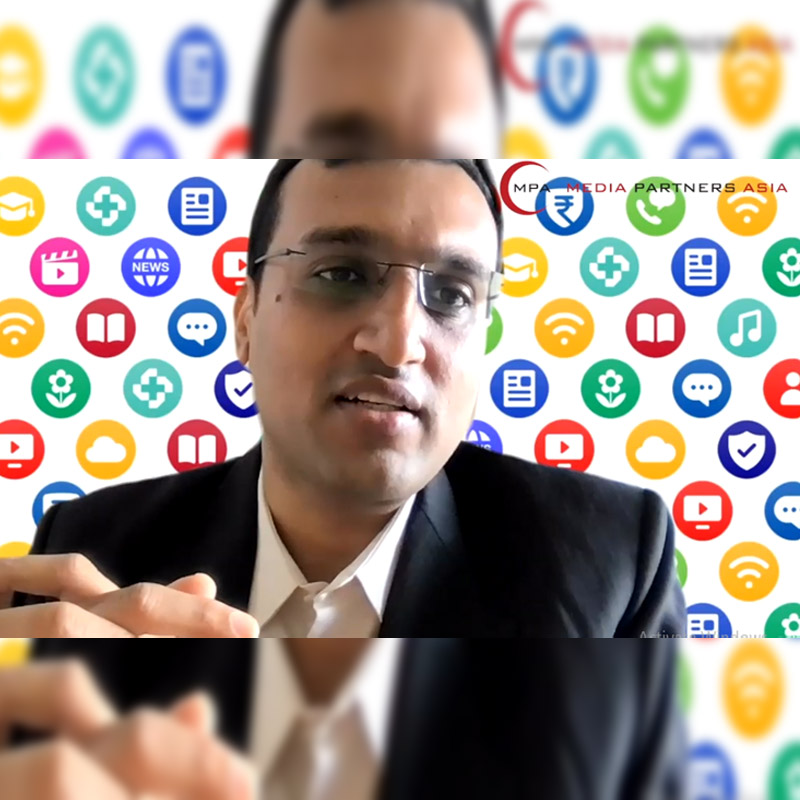
Mumbai: Saurabh Sancheti, the young and dynamic CFO of Jio Platfroms, and one of Fortune India’s 40 under 40 has been instrumental in scripting the success story of Reliance’s Cable business post its acquisition of two largest cable TV and broadband companies in the country – Hathway Cable & Datacom and DEN Networks for a sum of Rs 5,230 crore in October of 2018.
At the recently concluded Apos India Summit, Sancheti discussed the transformative journey of the two acquired assets, and the challenges and opportunities for Pay TV distribution industry in the light of regulatory and technological changes.
At the time of acquisition, and much after that as well, Reliance’s Cable business was running at an operating loss. Tasked with bringing about a disruption, Sancheti went on a brainstorming spree to figure out its strengths and problems areas. After several talks with top executives, Local Cable Operators (LCOs) as well as customers, he concluded that the one thing Cable needed was operating cash flows to be positive.
“That is fundamental, because if you scale up a business which is losing on a unit basis, then you are only scaling up the losses,” he said. “The singular problem that I could pinpoint here was that we were not collecting whatever we billed. And if we could do that, we were home. No one disputes the bill per se; it was all about collection. That’s where I suggested moving Cable to prepaid – a rather ‘blasphemous’ idea for that time.”
The impact was such that operating cash flows swung from a negative territory to a positive Rs 800 crore per year. Within six months most of the competition also turned to the prepaid model, bringing about a systemic change in the ecosystem.
Since then industry players have collaborated on various initiatives and models. “The sector which was plagued with a lot of trust issues and fights has, today, come together under the umbrella of the All India Digital Cable Federation (AIDCF) which has become a de-facto platform for constructive discussions. The AIDCF is also playing a proactive role in conveying our concerns to the government and regulatory bodies,” shared Sancheti.
Elaborating on the regulatory challenges and their impact on the business currently as well as in the coming years, he remarked, “While a lot of changes in regulations have taken place in the past few years, the crux of it all is that the Trai is advancing in a direction which is more pro-consumer; whether it’s more consumer choice, more a-la-carte, or lesser bundling, the underlying intent is the same. This brings a lot of complexity for the business.”
Giving a perspective in numbers, he added, “Any large e-commerce company which is handling Stock keeping units (SKUs) from multiple businesses and industries tops out a 100-150,000 SKUs. Today we are serving more than one million unique combination or SKUs to our customers at Den, Hathway, and GTPL. This is coming from an industry which until two years back (before the acquisition) was serving less than 100 SKUs. So, there has been a sea change in offerings as well as technology.”
But even as the regulator works towards bringing the customer back in focus, there are apprehensions about the mindset and workings of the industry leadership which doesn’t seem to have been very customer-centric historically. Sancheti contended that the situation is changing, and today, not just the top leadership and MSOs, but many LCOs too have a customer friendly and progressive outlook.
The advent of OTT and the allegedly predatory expansion of DD Free dish universe have posed major challenges to Pay TV distribution in the past couple of years. Current realities notwithstanding, Sancheti believes that there exists a huge opportunity.
“Out of the country’s 280 million households, nearly 200 million own TV. Of the 200 million, only about 120 million have Pay TV. So, clearly no other market has such potential as India. The problem is that this base has largely remained stagnant over the years primarily because of two factors. At the higher tier it is the advent of OTT, and at the lower, it’s DD Free Dish which has grown rapidly in last four-five years,” he added.
There’s also a third challenge that he recognises as needing quick intervention – the dismally low earnings of Cable operators. “In the prevailing circumstances where not just competition from new technology, but even regulatory hurdles like NCF cap are working against them, an LCO takes home on an average Rs. 15000, which is just slightly above the minimum wages. Again, this is just a fraction of what they used to earn previously.”
The good thing is that all players in the industry are now aware of these challenges, and what needs to be done. The question is ‘how’.
Sharing his approach and vision for tackling these issues, Sancheti stated, “As an MSO we are trying to work on a low-cost rural market product and the idea is that ‘can we have a price point which can truly challenge Free Dish’. The North Star here is ‘rupee-a-day’ product. If we can have it, we can get at least 40-50 million homes into the Pay TV base.”
One of the ways of getting to it is reinventing the entire LCO ecosystem as a ‘reseller of services’, he observed. “Our biggest strength as MSOs and LCOs is the ‘last-mile access’. As distributors we ‘own that home’ and the trust and relationship shared with it, has in many cases, been built over decades. If we can leverage it to become resellers of services like OTT and broadband, the market potential of 40-50 million can be unlocked.”
In addition to solving the problem of LCO incomes, this ‘integrated platform play’ will help the industry to achieve the bigger objective of collectively arriving at the hypothesised challenger product to take on Free Dish.
“Live TV on a standalone basis is not practicable anymore. So, we clearly need to act as distributors of more services. This will divide costs between businesses, thus making a lot of under-connected and unconnected homes more viable. Ultimately, all of this will tie back to our ‘rupee-a-day’ product,” elaborated Sancheti.
Signing off on a very positive note he said, “We are standing at an inflection point where the entire LCO model is at the right stage to be reinvented. There’s no market more attractive than India. I strongly believe that it has a long-term potential of at least 170-180 million Pay TV base; it’s doable. An 80 million broadband base is also doable, all within three years.”