Connect with us

MAM

Go Cheese collabs with Bigg Boss season 18

Published

on

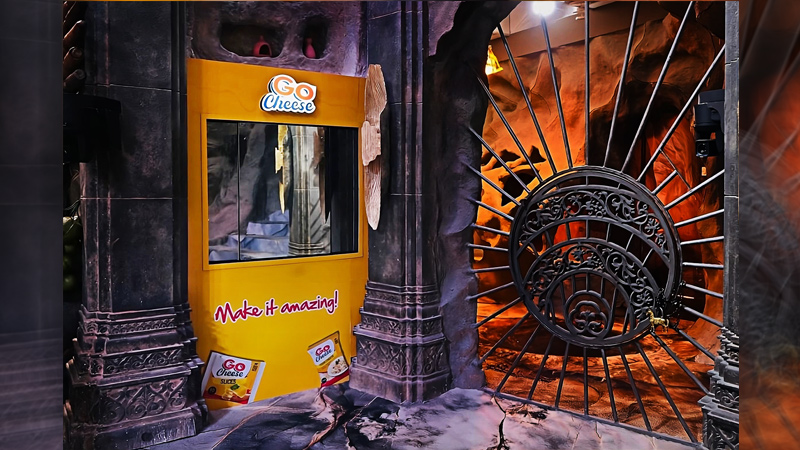
Mumbai: Parag Milk Foods’ brand Go Cheese has announced its collaboration with Bigg Boss season 18. This partnership will see Go Cheese integrated into the daily lives of contestants within the iconic Bigg Boss house, showcasing the brand’s diverse range of cheese products in a dynamic and engaging setting.

As part of the collaboration, Go Cheese will have a dedicated space called the ‘Greed Corner’ inside the Bigg Boss house, where contestants will indulge in Go Cheese products. This integration not only amplifies visibility throughout the 107-day season, but also ensures that the brand remains top-of-mind for viewers at home. Additionally, exclusive hampers filled with a wide range of Go Cheese products will be offered to the housemates.

Parag Milk Foods executive director Akshali Shah expressed her enthusiasm for the partnership, stating, “Collaborating with Bigg Boss presents an exciting opportunity for us to showcase our products in a highly engaging and memorable way. By integrating Go Cheese into the everyday lives of both contestants and viewers, we aim to highlight our offerings across diverse culinary experiences. This collaboration marks another successful venture with a popular reality show on a general entertainment platform, reaffirming our commitment to engaging audiences across India.”

Advertisement

“Bigg Boss’ popularity across television, digital and social media ensures that our partner brands enjoy unparallel reach and engagement across consumer demographics and content distribution platforms. Additionally, through our smart integrations we ensure that the brand is seamlessly woven into the storytelling of the show, thereby greatly reducing ad-fatigue and ensuring the saliency of brand messaging,” Viacom18 head – network sales, Mahesh Shetty said adding “ We’d like to welcome Go Cheese to their inaugural Bigg Boss as our first ever cheese category partner.”

As Bigg Boss continues to connect with audiences across both urban and rural markets, this partnership signifies a pivotal moment in Go Cheese’s mission to deliver distinctive food experiences, driving substantial growth during and beyond the collaboration period.


Advertisement
Click to comment

Leave a Reply

Your email address will not be published. Required fields are marked *

MAM

Deepfakes target women in 93 per cent of cases, report finds

Pi-labs study shows 900 per cent rise in female-focused synthetic media; India sees 60 per cent jump in cybercrime complaints.

Published

on

MUMBAI: Deepfakes aren’t just fooling cameras, they’re hitting women hardest, turning pixels into a new kind of weapon. A new report from creator intelligence platform Pi-labs has revealed that nearly 93 per cent of deepfake victims are women, with deepfake content targeting females surging 900% in recent years. The findings paint synthetic media as a fast-escalating digital threat with a stark gendered impact.

In India, cybercrime complaints involving women rose from about 50,000 in 2024 to nearly 80,000 by 2026, an increase of roughly 60 per cent in just two years. Almost 98 per cent of deepfake pornography is aimed at women, often powered by face-swapping apps and bot networks that disproportionately target females, including school-age girls. Victims typically fall in the 18–30 age group, with Bengaluru reporting a growing share of cases.

Globally, 62 per cent of deepfake abuse cases involving women go unreported due to stigma, in India, over one-third of women facing online harassment take no action, and many reduce their digital presence after abuse. Close to 33 per cent of women remain unaware of protective laws.

Advertisement

City-level trends show Bengaluru leading with nearly 30 per cent of complaints, followed by Hyderabad (14 per cent), Mumbai (13 per cent), Chennai and Kolkata (5 per cent each), and Delhi (3 per cent).

Pi-labs, CEO and founder Anukush Tiwari said, “AI is one of the most powerful technologies of our time, but like every powerful tool, it reflects the intent of those who use it. We are witnessing a growing trust deficit in digital spaces, where identity can be manipulated within minutes and reputations can be damaged overnight.”

Image morphing and deepfake videos remain the most common forms of misuse. The report also notes a new trend: fully AI-generated female personas (not based on real individuals) gaining high engagement on social platforms, raising questions about digital credibility.

Advertisement

Detection remains challenging due to widespread generative tools and rogue creators. Industry estimates suggest over 5,000 face-swap tools and more than 1,000 voice-cloning applications are accessible online.

pi-labs offers pi-authentify, an AI-driven detection system that scans media for generative markers and provides authenticity scores, as well as Namokavach, a verification portal delivering confidential assessments within two working days. The Payal gaming case was resolved using pi-authentify’s forensic analysis.

The report urges minimising digital footprints and adopting detection tools to limit replication risks. It frames the gendered impact of synthetic media as an urgent digital safety issue requiring coordinated action from individuals, platforms and technology providers.

Advertisement

In a world where faces can be borrowed in seconds, the real crime isn’t just creation, it’s the silence that follows, and women are paying the heaviest price.

Continue Reading

Advertisement News18
Advertisement All three Media
Advertisement Whtasapp
Advertisement Year Enders

Copyright © 2026 Indian Television Dot Com PVT LTD

This will close in 20 seconds