Ad Campaigns
Uber auto and moto set to generate Rs 36,000 crores in economic activity
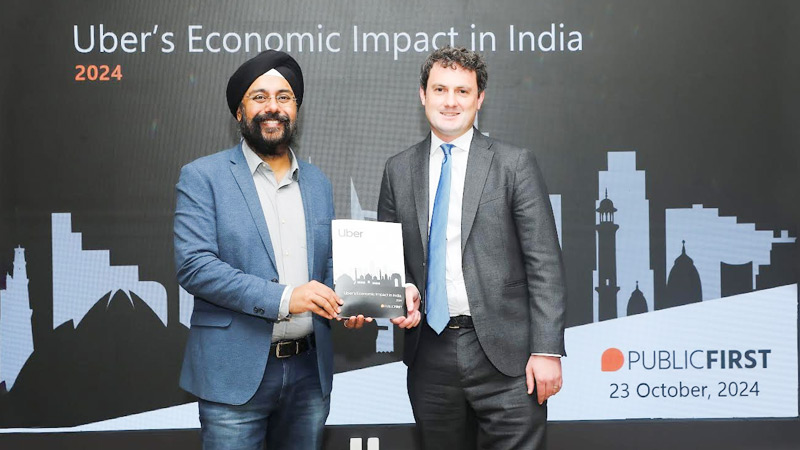
Mumbai: Uber announces its 2024 India economic impact report, prepared by Public First, showcasing the company’s transformative contributions to the on-demand economy in India. With over a decade of operations, Uber adapts to meet diverse travel needs, from local rides to intercity journeys and bus travel.
As two- and three-wheeler transport gains popularity for last-mile connectivity, Uber Auto and Uber Moto emerge as essential services, projected to support Rs 36,000 crores in economic activity in 2024. These services not only provide convenient options for commuters but also significantly contribute to the growth of the economy by connecting individuals to jobs and opportunities.

Key Findings:
– Earning Opportunities: In 2024, driver-partners earn an estimated 60 per cent more annually through Uber compared to alternative work.
– Local Exploration: 70 per cent of riders find it easier to discover new restaurants and bars, enriching their local experiences.
– Higher Earnings: Uber boosts driver earnings by approximately 24 per cent compared to working without a platform.
– Increased Opportunity: 65 per cent of Uber drivers feel they have more opportunities thanks to the platform.
– Women’s Safety: 95 per cent of female riders cite safety as their primary reason for using Uber, with 84 per cent believing it is the safest way to get home.
– Transforming Urban Mobility: 84 per cent of Indians say the Uber app enhances the quality of transportation in the country.
– Congestion and Pollution: In Delhi, 74 per cent of riders prefer electric vehicles, while 56 per cent are willing to pay more for an EV option.
– Bengaluru Insights: 93 per cent of riders in Bengaluru prioritize time savings, with 80 per cent believing Uber improves travel speed.
Commenting on the report, Uber India and South Asia president, Prabhjeet Singh states, “We are committed to transforming the mobility landscape in India while driving economic growth. Our 2024 Economic Impact report highlights our role in supporting drivers, improving the travel experience of riders, and promoting sustainable options. We are proud to have made a significant contribution to India’s economy, showing our commitment to connecting communities and creating livelihoods.”

Ad Campaigns
Amazon Ads maps 2026 as AI and streaming rewrite ad playbooks
NATIONAL: Amazon Ads has laid out a sharply tech-led vision for the advertising industry in 2026, arguing that artificial intelligence, streaming TV and creator partnerships will combine to turn brand building into a more precise, performance-driven business.
At the heart of the shift, the company says, is the fusion of AI with Amazon’s vast trove of shopping, browsing and streaming signals, allowing advertisers to move beyond blunt reach metrics to campaigns designed around real customer behaviour.
“The future of advertising is not about reaching more people, but the right people with messages that resonate,” said Amazon Ads India head and vice president Girish Prabhu. “By combining AI with deep customer insights, we help brands move from broadcasting campaigns to having meaningful conversations wherever audiences spend their time.”
One of the biggest changes, according to Amazon Ads, will be the collapse of the wall between media planning and creative development. Retail media, powered by first-party data, is increasingly shaping everything from brand discovery to final purchase, pushing marketers to design campaigns around audience insight rather than internal instinct.
AI is also moving from a support tool to a creative engine. Agentic AI, which automates and accelerates production, is expected to make high-quality creative accessible even to small businesses, compressing weeks of work into hours and giving challengers the ability to compete with larger brands on speed and scale.
Behind the scenes, AI-driven analytics will take on a bigger role in campaign optimisation, identifying patterns, spotting opportunities and recommending actions that would previously have required teams of analysts.
Streaming TV is another big battleground. With India’s video streaming audience now above 600 million and connected TV users at 129.2 million in 2025, advertisers are set to treat streaming not just as a branding channel but as a performance engine, measured increasingly by sales, sign-ups and bookings rather than just reach.
Finally, Amazon Ads sees creators and contextual advertising reshaping how brands tell stories. Creators will act less like influencers and more like long-term partners, while scene-aware ads on streaming platforms will allow brands to insert hyper-relevant offers into the flow of what viewers are watching.
Taken together, Amazon Ads argues, these shifts mark a move towards advertising that is both more human and more measurable, where AI handles the complexity, and creativity does the persuading.