News Broadcasting
During the Chandrayaan-3 launch, ONTV provided a seamless viewing experience for commuters across Mumbai, Kolkata, and Bangalore


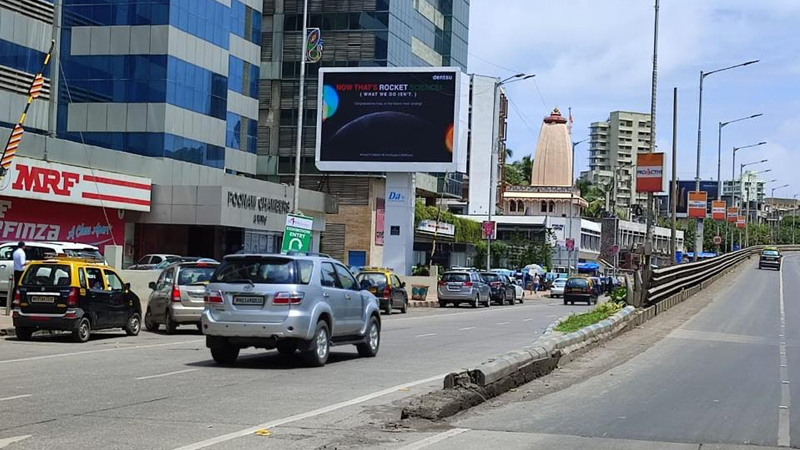
Mumbai: ONTV, India’s leading transit media advertisement brand, has announced the successful live streaming of the highly anticipated Chandrayaan-3 launch. As the exclusive live-streaming partner for the event, ONTV provided a seamless viewing experience for commuters across Mumbai, Kolkata, and Bangalore, enabling them to witness this historic moment in India’s lunar exploration.
Chandrayaan-3, a follow-on mission to Chandrayaan-2, aimed to demonstrate end-to-end capabilities in safe landing and roving on the lunar surface. The launch took place at 2.35 PM IST on Friday, July 14, from the Satish Dhawan Space Centre (SDSC) SHAR in Sriharikota, Andhra Pradesh.
ISRO Chairman S Somanath arrived at the mission control to oversee the launch, as the countdown began for India’s second attempt to soft-land on the Moon. If ISRO pulls off this mission successfully, India will join an exclusive list of just three other countries that have managed a soft landing on the Moon—the United States, the erstwhile Soviet Union, and most recently, China. Both the United States and the Soviet Union crashed many spacecraft before they successfully landed on the Moon. China was the only country to succeed in its first attempt with the Chang’e-3 mission in 2013.

ONTV’s extensive network and technological expertise allowed audiences to be part of this momentous occasion. Commuters could conveniently watch the live stream showcasing India’s remarkable achievements in space exploration.
ONTV, India’s only transit media advertisement brand, takes pride in offering unique and engaging content while fostering a sense of national pride among its audience.
“We are delighted to have provided commuters nationwide with the opportunity to witness the Chandrayaan-3 launch through our exclusive live-streaming services,” said ONTV founder & managing director Tarun Pugalia. “Our goal is to connect with the masses and bring significant moments like this directly to their daily lives. By showcasing India’s advancements in space exploration, we aim to inspire and instill a sense of awe and wonder among our viewers.”



News Broadcasting
News18 India to air Sabse Bada Dangal on 4 May counting day
Channel promises fastest results, live trends and analysis across five states.

MUMBAI: Ballots will do the talking and screens will do the shouting. As counting day approaches for high-stakes Assembly elections across West Bengal, Tamil Nadu, Kerala, Assam and Puducherry, News18 India is gearing up for an all-day broadcast of its flagship election show, Sabse Bada Dangal, on 4 May from 6 am onwards. The Hindi news channel plans to deliver continuous, real-time updates as votes are tallied, combining live counting data with on-ground reporting and studio analysis. With political fortunes set to shift through the day, the coverage will track every swing, surge and surprise as trends turn into results.
The broadcast will feature a mix of senior political leaders, analysts and experts, offering instant reactions and decoding the evolving electoral picture. Expect heated debates, quick takes and detailed breakdowns as the numbers settle across all five states.
For News18 India, counting day has long been a high-visibility moment. The network is banking on its reporting reach, editorial bandwidth and technology-driven coverage to stay ahead in what is often a fiercely competitive news cycle.
With multiple battlegrounds and shifting narratives, the day promises both drama and data in equal measure. And if all goes to plan, Sabse Bada Dangal will once again turn the counting of votes into prime-time spectacle.