Ad Campaigns
Find out ‘What’s new on the menu’ with the Philips Airfryer’s latest campaign

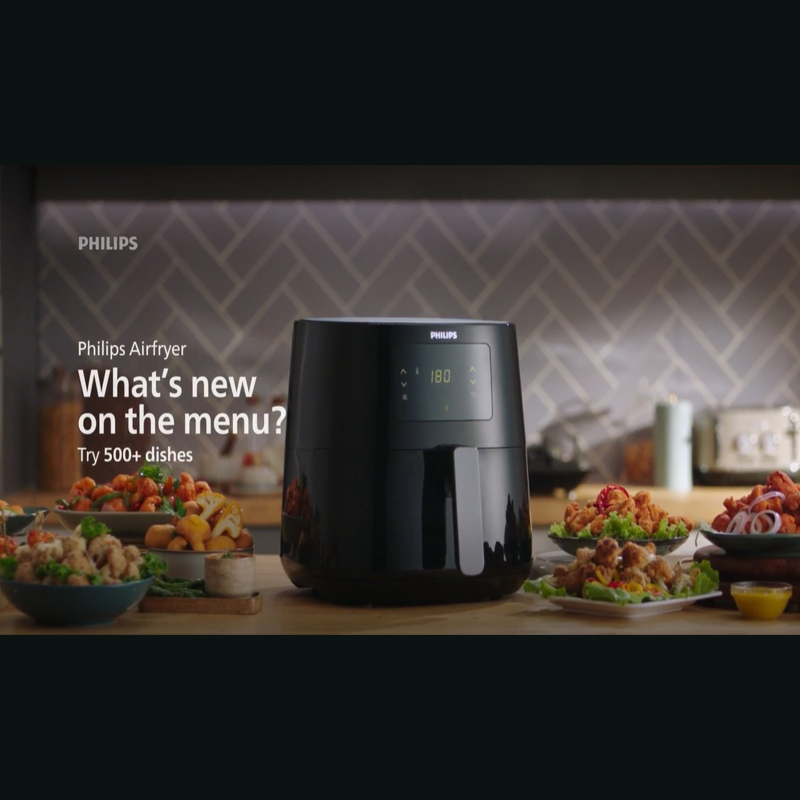
Mumbai: Airfryer brand- Philips Airfryer has launched its new campaign ‘What’s new on the menu’ challenging the common misconception about the limited usage of the gadget when it comes to creating Indian recipes. The campaign emphasises on the appliance’s versatility in the Indian setting, showcasing a variety of traditional, everyday dishes that can be expertly and easily prepared using the Philips Airfryer.
The campaign comprises three films which have been pivoted around some of the most basic ingredients like ‘besan’ (chickpea flour), chicken and readily available vegetables such as ‘gobi’ (cauliflower) that can be found in today’s kitchen and Philips Airfryer’s ability to turn them into appetising recipes. While the first film depicts two girls at the supermarket being amazed at the amount of recipes that can be churned out using ‘Gobi’ (cauliflower), the second commercial captures flatmates discussing the variety of dishes that can be made with leftover ‘besan’ (chickpea flour) and the last one showcasing a couple awakened by a hen’s clucking sound when the half-asleep husband begins with a monologue on chicken based munchies. All the flavours culminate into the Philips Airfryer, transforming everyday cooking into a wholesome experience.
The films conceptualised by Lowe Lintas, also captures the Philips Airfryer’s unique rapid air technology which provides 360-degree cooking results, allowing users to explore a variety of dishes while cooking with up to 90 per cent less fat.

Commenting on the new campaign, Versuni India Home Solutions Ltd (formerly known as Philips Domestic Appliances) chief marketing officer Pooja Baid said, “The essence of our campaign lies in inspiring more and more Indian households to use the Philips Airfryer in everyday cooking. The idea was to showcase its versatility even with the most ordinary ingredients that can be found in our kitchen’s today along with encouraging our consumers to explore a wide array of homegrown delicacies from crispy snacks to hearty meals, prepared in a healthier and a more convenient way. Our endeavour continues to be to establish Philips Airfryer as the new way of cooking for Indians.”
Lowe Lintas regional creative officer Vasudha Misra added, “These commercials could have easily been for a food delivery service, or for a flavour-enhancing masala. Which is actually the point! An Aifryer commercial that breaks the codes of a typical Airfryer commercial. Whether it be showing college-going girls, or mouth-watering non-vegetarian dishes being prepared. Which we hope will help Philips Airfryer reach out to new and old audiences by making them look at the product in a new light. Of course, that the commercials also make you giggle, or chuckle, or (dare we hope) laugh, doesn’t hurt either.”
The campaign will go live across digital, TV, and OTT platforms.