Brands
From ‘Paytm Karo’ to AI: Vijay Shekhar Sharma’s next bet for Paytm
The approach that helped simplify mobile payments is now being applied to AI across merchant services, consumer engagement and engineering


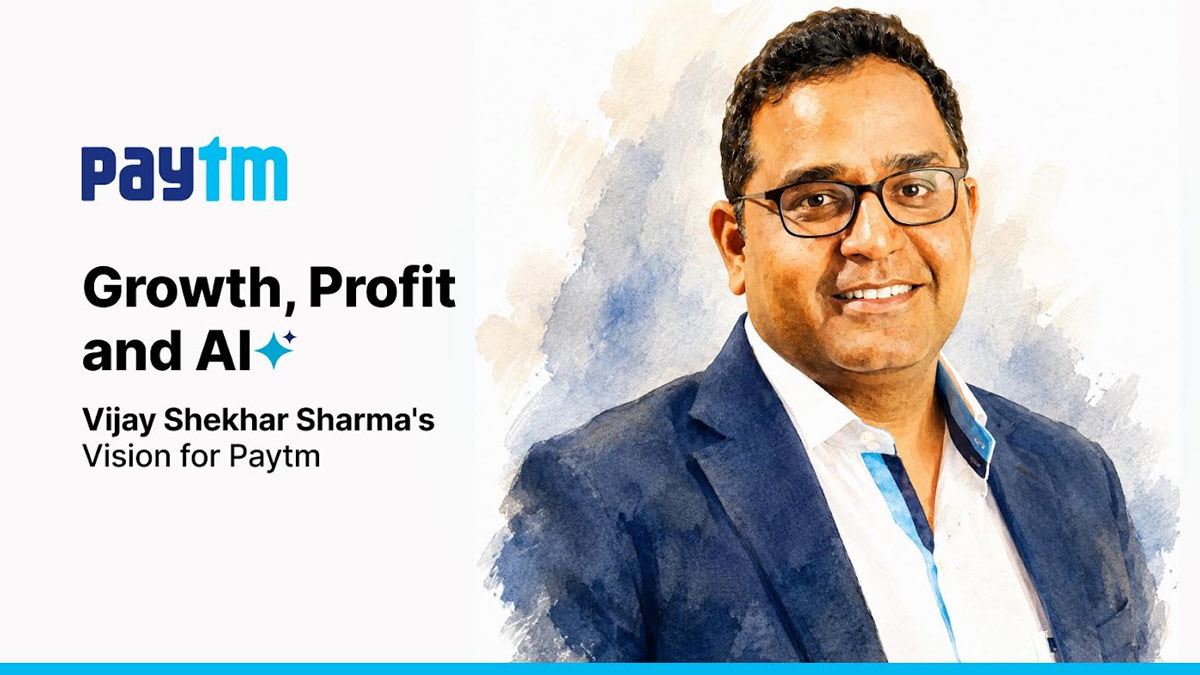
MUMBAI: Ask Vijay Shekhar Sharma how much money it takes to live well and he will tell you, as he did on national television, roughly ₹1 to 2 lakh a month. Coming from the founder of a brand worth tens of thousands of crores, the answer stood out for its simplicity. Either way, it captures the pragmatic instinct that has defined Paytm since its earliest days, and it is the same instinct the company is now pointing at artificial intelligence.
Sharma’s journey from a Hindi-medium school in Aligarh to building Paytm has been widely documented. Raised in a schoolteacher’s family, he entered Delhi College of Engineering at 15, struggled initially with English and taught himself about technology through books and magazines at a time when internet access remained limited for most Indians. That outsider’s perspective would later influence the way Paytm approached technology, focusing on practical, everyday friction rather than building technology for its own sake.
The early playbook was straightforward. Mobile recharges moved from queues to phone screens. Utility bill payments went digital. And over time, “Paytm Karo” stopped being a marketing line and became something closer to a verb in India’s daily vocabulary. QR codes found their way into kirana stores, street vendors and local transport. Soundbox gave small merchants an audible, real-time confirmation that money had actually landed, providing instant audio payment confirmation in 11 languages, helping merchants verify payments without repeatedly checking a screen. Digital Gold extended the app beyond payments by enabling small-ticket gold purchases through a familiar mobile platform.
What connected these products was not technology alone, but the behaviour they simplified. Paytm did not always require people or merchants to learn an entirely new habit. Instead, it used technology to make familiar activities such as paying a bill, accepting money or buying gold easier to complete through a mobile device.
That same approach is now being applied to AI. The company’s latest earnings release carries the theme, “Strong Growth. Sustained Momentum. Accelerating Monetisation. Powered by AI,” signalling that artificial intelligence is becoming a core part of its next phase of growth. Rather than building large foundational models, Paytm says it is developing function-specific AI models and agents by fine-tuning open source models to improve efficiency and productivity across the business.
For merchants, Paytm is positioning Soundbox as more than a payment confirmation device. The company sees it developing into an AI-powered distribution layer that can provide instant summaries, business insights, customer notifications and merchant support through a device already familiar to businesses.
For consumers, Paytm says AI-led improvements are helping lower acquisition costs, improve retention and deepen personalisation, while its models are also strengthening fraud prevention and risk intelligence. The company has further said that AI-led personalisation is driving higher engagement and revenue per active customer across equity broking, margin trade funding and wealth products.
The broader context is a fintech sector increasingly focused on sustainable growth, retention, monetisation and operating efficiency. Paytm’s AI push fits within that shift, with the company using AI across merchant onboarding, servicing, consumer acquisition, risk intelligence and software development. Whether AI becomes as significant to Paytm as QR codes or Soundbox will depend on execution and adoption. For now, the approach remains consistent with its earlier product journey: applying technology to familiar activities and making it useful within everyday commerce.