Television
Streaming reshuffle: Music booms, TV originals shrink as fandom becomes entertainment’s new currency
Luminate’s Midyear Report 2026 finds music streaming still hitting the right notes while film and television pivot towards libraries, documentaries and superfans in an increasingly converged entertainment economy.

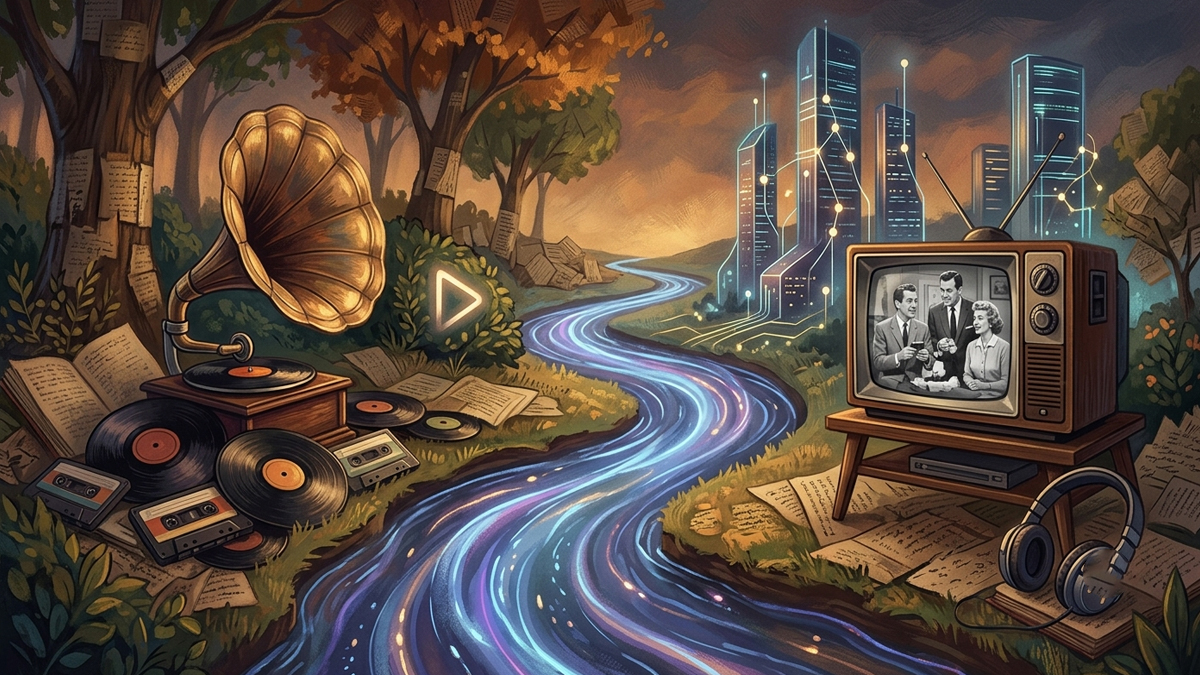
MUMBAI: Entertainment’s playbook is being rewritten. Streaming is still surging, but the winners are changing, genres are shifting, physical music is staging an unlikely comeback, AI is finding its audience, and television is quietly becoming more dependent on old favourites than shiny new originals.
Those are among the headline findings from research company Luminate’s inaugural Midyear Report 2026, which, for the first time, combines insights from the music, film and television industries into a single report. The message is clear: the walls separating the sectors are crumbling, and today’s entertainment business is increasingly one interconnected ecosystem.
Global on-demand audio streaming continues to march ahead, growing 9.8 per cent during the first half of 2026. Outside the US, the pace is even brisker, with streaming expanding 11.8 per cent, underlining that international markets are now driving much of the industry’s momentum.
But the real story lies beneath the numbers.
Genre wars gather pace
While R&B/Hip-Hop continues to command roughly one in every four US audio streams, its dominance is beginning to loosen. Luminate’s analysis of the Billboard 200 reveals that the genre’s share of chart consumption has slipped to 30 per cent, down sharply from 41 per cent in the first half of 2023.
Stepping into the spotlight are Latin, Country and Dance/Electronic, signalling a broader diversification of listener tastes.
Latin music, in particular, struck a high note after Bad Bunny’s February album release and Super Bowl performance helped propel US on-demand audio streaming for the genre to a record 2.74 billion streams in a single week.
CDs refuse to fade away
Just when the industry thought compact discs had become museum pieces, they spun back into relevance.
CD sales climbed 16 per cent to 16.3 million units, comfortably outperforming vinyl’s comparatively modest 2.4 per cent growth.
The resurgence was powered largely by BTS’ ARIRANG, although even excluding BTS and the wider K-pop catalogue, CD sales still posted a healthy 6.7 per cent increase.
Nostalgia is proving a potent commercial force. Around 60 per cent of Gen Z listeners now say they primarily listen to music released in the 1990s or earlier, up dramatically from just 18 per cent in 2021.
The K-pop wave also helped propel South Korea to third place in Luminate’s Export Power Rankings.
AI music starts finding its own audience
Artificial intelligence is no longer merely experimenting on the fringes.
Luminate notes that AI-generated music is beginning to establish genuine consumer traction. The AI act Breaking Rust, with its track Livin’ on Borrowed Time, derives 58.7 per cent of its activity from US listeners, suggesting audiences are embracing AI-created music on its own merit rather than as an imported curiosity.
Superfans become the industry’s power brokers
Not all fans are created equal.
Luminate’s research shows K-pop continues to boast the industry’s most commercially valuable fan communities, leading both purchase behaviour and engagement.
Indie Rock and EDM also generate highly engaged audiences, while Country and Pop attract larger but comparatively passive listener bases, reinforcing the growing importance of superfans in driving monetisation.
TV originals lose steam as libraries steal the show
On the film and television front, the streaming wars have entered a new phase.
According to Luminate, Netflix still commands 57 per cent of US original viewing time, but its grip continues to ease compared with the first half of 2025.
The bigger winner is library programming.
Major streaming platforms now collectively offer around 19,000 catalogue titles compared with roughly 7,000 originals, with older content generating almost four times the viewing hours.
Meanwhile, television production continues to contract. US TV premieres have fallen to 517 during the first half of 2026, down from 930 in 2022, although free ad-supported streaming platforms are beginning to offset part of the slowdown.
Documentaries become the bridge between screens and streams
Perhaps the clearest sign that entertainment is becoming one business rather than many comes from documentaries.
Luminate cites The Rise of the Red Hot Chili Peppers: Our Brother, Hillel, whose Netflix debut triggered an 11 per cent increase in the band’s US music streams and an 8 per cent rise globally during the week of release.
The finding underlines how success on streaming video increasingly fuels music consumption, while artists’ chart performance can, in turn, amplify film and television engagement.
As Rob Jonas, chief executive of Luminate, argues, music, film and television are no longer parallel industries they are feeding each other in real time.
The verdict? Whether it’s an AI track, a decades-old TV series, a K-pop blockbuster or a music documentary, entertainment is no longer playing in separate lanes. In the streaming era, every screen has become a stage and every hit can echo far beyond its home turf.