iWorld
Meta tests Pocket app for AI generated interactive experiences
Experimental app lets users build playable gizmos using simple text prompts

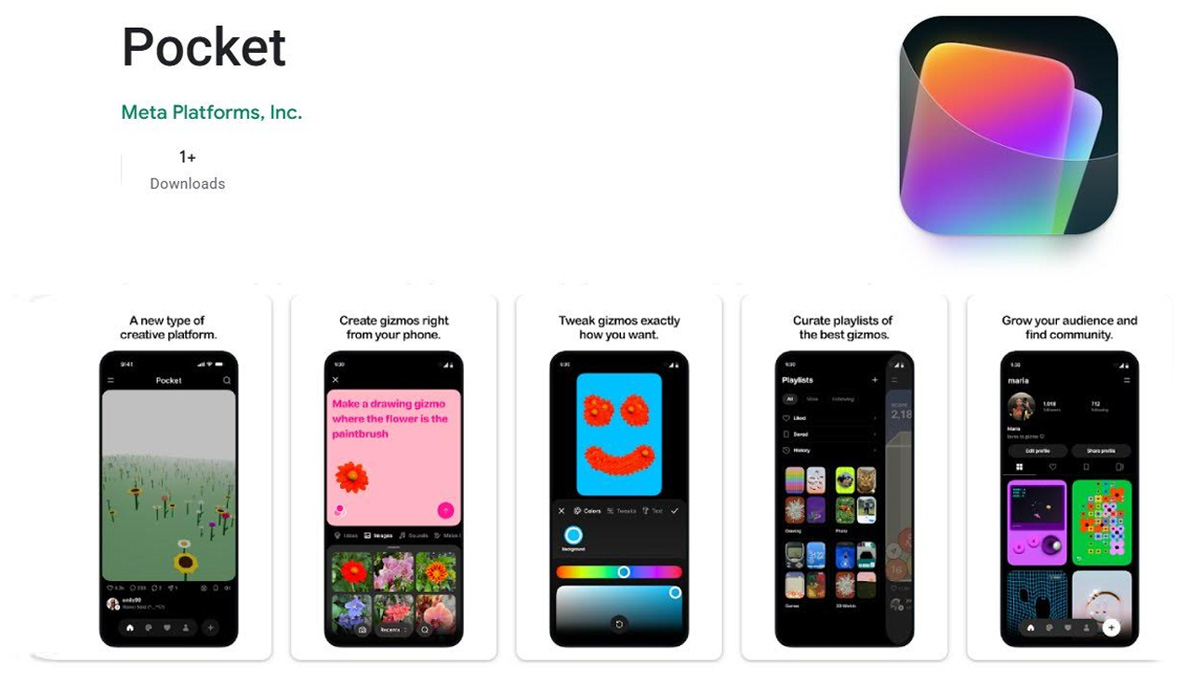
NEW DELHI: The next viral app might not be coded, it might simply be described. Meta is quietly testing Pocket, an experimental artificial intelligence app that allows users to create, play and share AI-generated interactive experiences using nothing more than text prompts, signalling the company’s latest push beyond AI chatbots, images and videos into interactive entertainment.
Currently rolling out in select markets via the Google Play Store and Apple App Store, Pocket enables users to generate what Meta calls “gizmos” interactive experiences that require no programming knowledge. Instead of writing code, users simply describe what they want, and the app uses AI to build it.
According to Meta’s Help Centre, gizmos can range from simple games and drawing tools to music soundboards and other interactive experiences. Depending on the type of creation, users can interact by tapping, swiping and dragging objects, tilting or shaking their phones, or using their device’s camera and microphone, subject to user permission.
Pocket also includes editing tools that allow creators to refine their projects before publishing. Users can choose whether their creations can be remixed by others, enabling the community to modify and share new versions while ensuring existing remixes remain available even if the original gizmo is removed.
Beyond creation, the app functions as a discovery platform. Users can browse a feed of community-built gizmos, save favourites into playlists and build upon existing creations, reflecting Meta’s broader strategy of combining AI generation with social engagement.
Access to Pocket requires a Meta account. The company says it uses account information including profile details, age, usernames and account status relating to Community Standards and intellectual property violations to personalise the experience and help maintain platform safety.
Meta also confirmed that interactions with gizmos may be used to improve its AI models. If Meta AI cannot answer a query, prompts and general information, such as a user’s region, may be shared with selected partners to improve future responses. Depending on local regulations, user interactions may also be used to personalise AI experiences, content and advertising, although users can opt out of AI training through Meta’s privacy settings.
As with its other platforms, content created through Pocket remains subject to Meta’s Community Standards and Terms of Service. Content that breaches these policies may be removed, while users responsible for repeated violations could face restrictions or account suspension.
The app first came to light after mobile developer and reverse engineer Alessandro Paluzzi spotted it on app stores and shared details online. Meta has yet to formally announce Pocket or outline a broader roadmap, suggesting the platform is currently undergoing limited testing.
The experimental launch expands Meta’s growing AI ecosystem, which already includes image generation, video creation and editing tools across Facebook, Instagram and WhatsApp. With Pocket, the company is testing whether the next frontier of generative AI lies not just in creating content but in letting anyone build interactive digital experiences simply by describing them.