iWorld
Government to review WhatsApp usernames over impersonation concerns
MeitY examines legal safeguards as privacy update raises fraud and identity risks

MUMBAI: A new identity may promise more privacy, but it is also raising fresh questions about trust. The Indian government is set to examine WhatsApp’s upcoming username feature over concerns that it could inadvertently make identity fraud and impersonation easier, even as the Meta-owned platform positions the update as a major privacy enhancement.
According to official sources cited by PTI, the Ministry of Electronics and Information Technology (MeitY) is reviewing the legal implications of the feature before its wider rollout in India. Authorities are assessing whether additional safeguards may be required to prevent misuse, particularly by fraudsters creating usernames resembling those of public figures, government agencies, banks or well-known brands.
WhatsApp announced on 29 June that users would soon be able to reserve unique usernames ahead of a phased global rollout later this year. The feature marks one of the platform’s biggest identity changes since launch, allowing users to connect without sharing their mobile numbers.
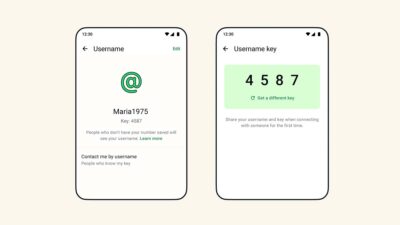
Under the new system, users can create usernames between three and 35 characters, using lowercase letters, numbers, periods and underscores. Once activated, usernames can be shared instead of phone numbers, enabling users to receive messages and calls from new contacts while keeping their personal numbers private.
Unlike social media platforms, however, WhatsApp said usernames are designed primarily as a privacy tool rather than a discovery feature. The platform will not offer a public directory, searchable database or autocomplete suggestions, meaning users must know a person’s exact username before initiating contact. Users will also be able to change their usernames within the app.
Despite these restrictions, government officials are examining whether handle-based identities could create fresh opportunities for impersonation scams. According to The Economic Times, authorities are reviewing existing legal frameworks and exploring whether additional provisions may be required if current laws prove inadequate to tackle potential abuse.
The concerns echo those raised by several technology leaders. Entrepreneur Ankur Warikoo recently warned that scammers could exploit lookalike usernames to impersonate creators, professionals and brands, while Paytm founder Vijay Shekhar Sharma cautioned that handle-based identities have already fuelled impersonation problems across multiple digital platforms.
In response, WhatsApp has outlined several safeguards. The company said usernames linked to celebrities, verified Meta accounts and government organisations will be reserved so only legitimate owners can claim them. It also plans to deploy automated abuse-detection systems and take action against accounts involved in fraud or impersonation.
Officials told The Economic Times that messaging platforms could face scrutiny if new features contribute to fraud or online abuse. While acknowledging the privacy benefits of usernames, they indicated that the government’s assessment would ultimately depend on how effectively platforms prevent misuse rather than on promised safeguards alone.
The review comes as WhatsApp prepares for the phased introduction of usernames later this year, a feature the company describes as one of its most significant privacy updates in recent years. Whether it becomes a privacy breakthrough or a fresh challenge for digital safety may now depend as much on regulation as on technology.