iWorld
Creators score big at FIFA World Cup 2026
Comscore data shows opening day racked up 88.7 million social actions 38 per cent more than Qatar 2022 as influencers, not just players, drive the digital conversation.

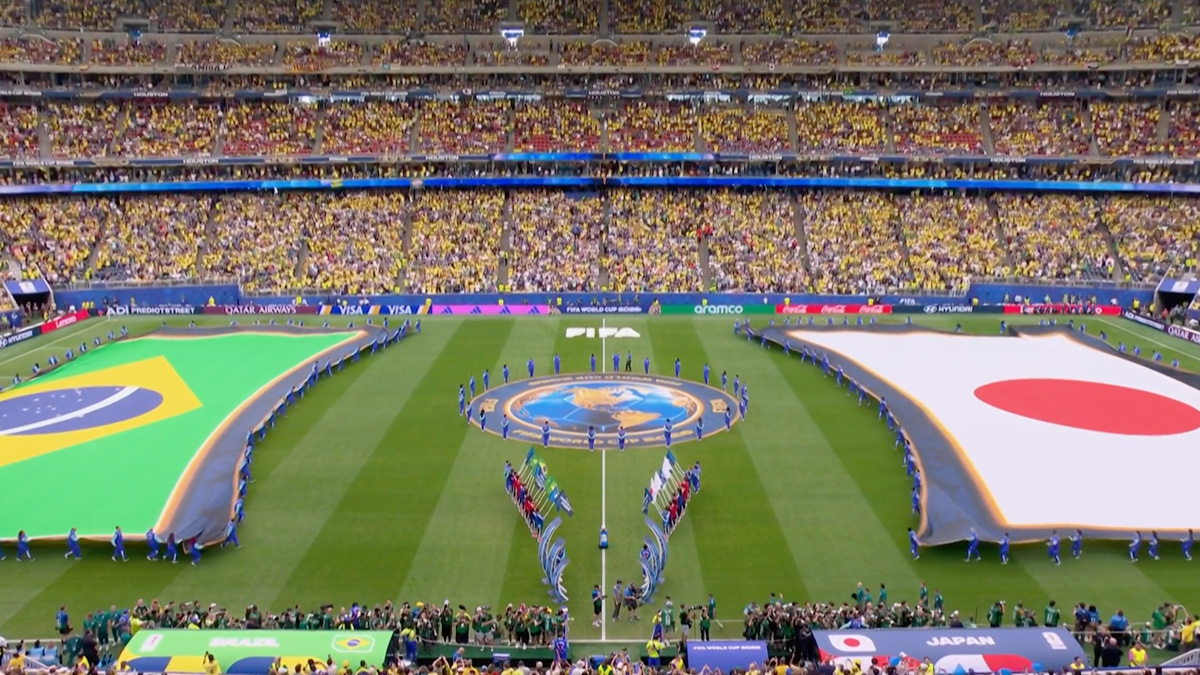
MUMBAI: Nobody told the internet to wait for the opening whistle. Long before the 2026 FIFA Men’s World Cup kicked off in North America on 11 June, the social media stands were already heaving and by the time the first ball was kicked, the tournament had already generated a digital roar that made Qatar 2022 look like a library. Welcome to the creator economy’s World Cup.
According to media intelligence firm Comscore, opening ceremony day on 11 June generated 88.7 million total social actions across Instagram, Facebook, X and TikTok, a 38 per cent jump on the equivalent figure for Qatar 2022. The pre-match buzz was equally striking: in just the first 10 days of June alone, the #FIFAWorldCup hashtag had already clocked 39 per cent of its entire January-to-June engagement total.
“Social media is a core part of the football experience,” says Maite Azkuna, senior analyst, marketing content & insights at Comscore. “It is where fans keep up with the latest news, enjoy the key moments and engage with creator-built communities. At the 2026 World Cup, the creator economy forms an essential part of the digital conversation.”
If you thought content creators were merely cheerleaders for the real action on the pitch, think again. Brands and broadcasters have quietly built their entire World Cup strategies around influencers this time, and the results are already making traditional media sit up.
DAZN has deployed its DAZN48 initiative, one creator from each of the 48 qualified nations, telling the tournament’s story through local voices. TikTok has assembled 30 creator correspondents from 11 countries, roaming fan zones, training sessions and queues to deliver ground-level colour that no studio pundit could replicate. YouTube, meanwhile, has recruited a global network of creators who will attend matches throughout the competition and, alongside FIFA, is hosting the YouTube FIFA Creator Cup — a creators-versus-athletes football match streaming worldwide from New York on 12 July 2026.
Perhaps the most audacious play comes from Brazil’s CazéTV, a creator-led media platform that has secured actual World Cup broadcast rights and is competing head-to-head with traditional broadcasters. By marrying creator talent with live sports rights, CazéTV is not just nibbling at the edges of sports media, it is taking a large, noisy bite out of the middle.
“Creators are moving from amplifying tournaments to becoming a key part of how brands and media companies connect with fans,” Azkuna notes. “At the 2026 World Cup, they are being built into strategies from the very start.”
Comscore’s influencer engagement data for opening day throws up a few surprises. Latin America dominated: Brazil’s influencers generated 28 per cent of total creator-driven engagement, ahead of Mexico (16 per cent) and Colombia (9 per cent). The US came fourth with 8 per cent.
Then it gets interesting. Italy, which did not qualify, still managed 7 per cent of influencer engagement proof that passion and population can outweigh a tournament passport. Bangladesh, also absent from the pitch, grabbed 6 per cent largely on the back of singer Sanjoy’s performance at the opening ceremony. Football, it turns out, does not care much for squad lists when it comes to social media.
Top 15 countries by influencer engagement, opening ceremony day, 11 June 2026
| # | Country | Engagement |
| 1 | Brazil | 28 per cent |
| 2 | Mexico | 16 per cent |
| 3 | Colombia | 9 per cent |
| 4 | US | 8 per cent |
| 5 | Italy | 7 per cent |
| 6 | Bangladesh | 6 per cent |
| 7 | Germany | 5 per cent |
| 8 | Venezuela | 4 per cent |
| 9 | Nigeria | 3 per cent |
| 10 | Argentina | 2 per cent |
| 11 | Turkey | 2 per cent |
| 12 | Portugal | 1 per cent |
| 13 | Spain | 1 per cent |
| 14 | France | 1 per cent |
| 15 | Chile | 1 per cent |
Source: Comscore Social, Content Pulse. Platforms: Instagram, Facebook, X, TikTok and YouTube. Influencers-All, 11 June 2026. Extraction date: 15 June 2026.
If you want a single story that captures how the creator economy has changed sport, look no further than New Zealand defender Tim Payne. On 26 May, Payne’s Instagram account was a quiet personal profile with roughly 4,000 followers. Then Argentinian creator Valentín Scarsini labelled him the “least-known World Cup player” and urged his audience to show the lad some love.
By opening day, Payne had 5.6 million followers, more than the entire population of New Zealand. His thank-you video generated 3.6 million total actions and attracted organic cameos from Google, McDonald’s and Duolingo (Payne credited Duolingo with helping him learn Spanish, which rather made their day). No media buy. No agency brief. Just the creator economy doing what it does.
“Creator-driven audiences move fast and behave differently across platforms and contexts,” says Azkuna. “Those dynamics are hard to predict but measurable. For brands looking to maximise their World Cup investment, a cross-platform view that includes creators is essential for understanding where audiences are and how they engage across today’s media mix.
The 2026 World Cup is nearly at its halfway stage, but the verdict on who is winning the off-pitch game is already in. It is not the broadcasters, it is not the sponsors’ media desks, and it is certainly not the press release. It is the creators correspondent, correspondent-athlete and accidental superstar alike. The creator economy is no longer a sideshow to the beautiful game. It is the main event.