MAM
What it takes to win: Anupriya Acharya on the Cannes Lions’ creative data jury
Jury president Anupriya Acharya shares her perspective on the winning work at Cannes Lions 2026

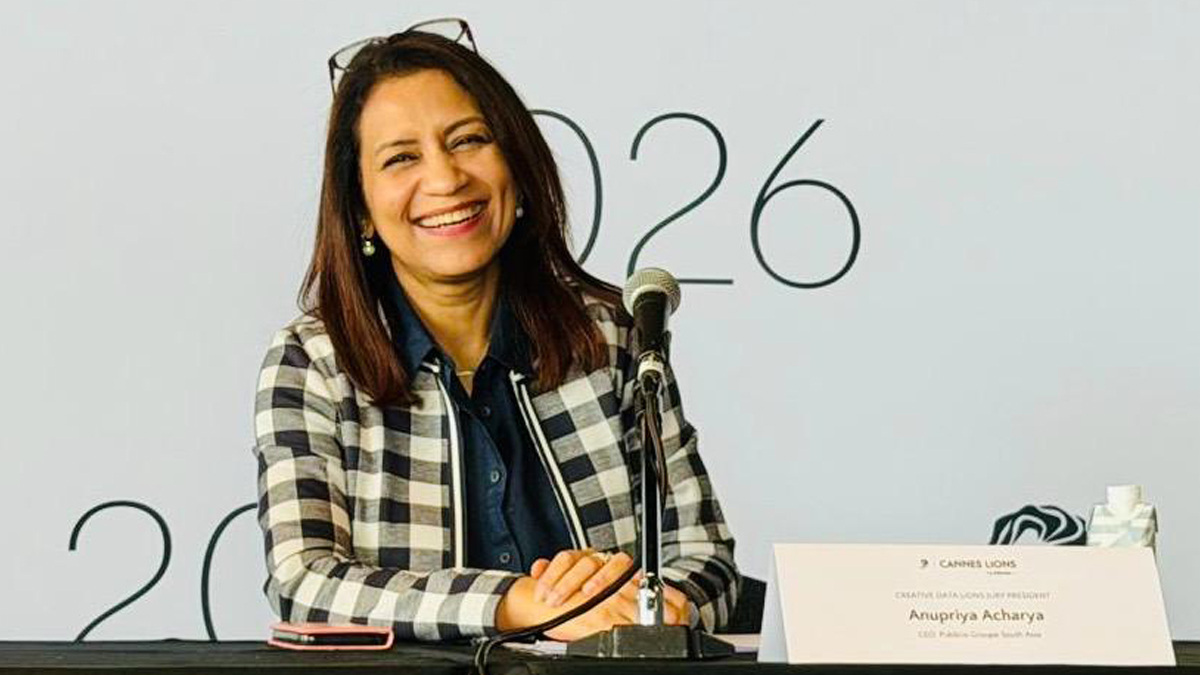
Cannes: A payment terminal just became a panic button. On the night of 24th June, the Creative Data Lions at Cannes 2026 handed their Grand Prix to ‘SOS POS’, built for BCP (Banco de Crédito del Perú) by Circus Grey in Lima. The idea: turn an everyday card machine into a lifeline for people in danger, using nothing more exotic than the data already sitting in the till.
Anupriya Acharya, chief executive officer, Publicis Groupe South Asia, and jury president for Creative Data at Cannes Lions 2026, was unambiguous about why it won. She called it a case of data protecting data, dressed up in disarming simplicity. It took a banking category notorious for sounding identical to itself and gave it something rarer than a tagline: trust, earned in a moment of real vulnerability. It solved a human problem, she said, strengthened trust in a difficult to differentiate category, and showed how creative data can drive business impact while scaling meaningful protection for people and society.
Acharya’s three trends from the Creative Data category
Looking across the winning work, Acharya identified three patterns shaping where creative data is heading.
Big data, bigger nerve. Some winners went large and lived to tell the tale. Suncorp Australia’s Haven crunched climate, property and peril data into resilience plans homeowners could actually use. Fantasy Herd turned the humdrum rhythms of dairy farming into entertainment. The Philipstown WireCar Grand Prix took a parochial children’s tradition and, via mapping and live race data, beamed it to the world. And 600K Network conscripted ordinary citizens as data infrastructure, turning smartphones and QR codes into a verifiable election record under genuinely hostile conditions.
Small data, sharp wit. Elsewhere, the data was modest; the leap of imagination was not. SOS POS itself ran on little more than complaint and location data. Skoda’s DuoBell used acoustic data to plug a safety gap hiding in plain sound. As Acharya put it, great creative data is not about how much data you have, but what you do with it.
Invisible data, becoming systems of change. A third pattern was work that used data to make invisible realities visible, then built systems around them. Here to Stay, for Mastercard, converted migrant underemployment into career pathways and economic opportunity. Forests Without Names, for Hyundai, stitched together fragmented kelp data into a shared environmental mapping standard. Dying Reviews, for Hospice NZ, made the needs of people at the end of life visible to organisations. The best work, Acharya said, did not just reveal problems; it created ways to act on them.
Her verdict on the year: cleverness beats volume, and a single sharp idea, a payment terminal, a school run, a farm camera, can outscore a warehouse of statistics every single time. Cannes has spoken, and for once, the data agrees with the drama.