Brands
Nearly half of Indians think brands are less truthful now than they were 20 years ago
A sweeping study by McCann and Economist Enterprise finds that trust has become a hard-currency revenue driver, with a one-billion-strong “Upward Class” set to determine who wins the next era of brand growth

MUMBAI: The numbers are brutal. Nearly half of Indians, 46 per cent, think brands lie more than they did two decades ago. Nearly three-quarters, 73 per cent, say truth matters more than ever. And 71 per cent are already convinced they will soon be unable to tell a real person from a synthetic one online. For the world’s biggest advertising agencies and the companies that pay them, that is not a philosophical puzzle. It is a P&L problem.
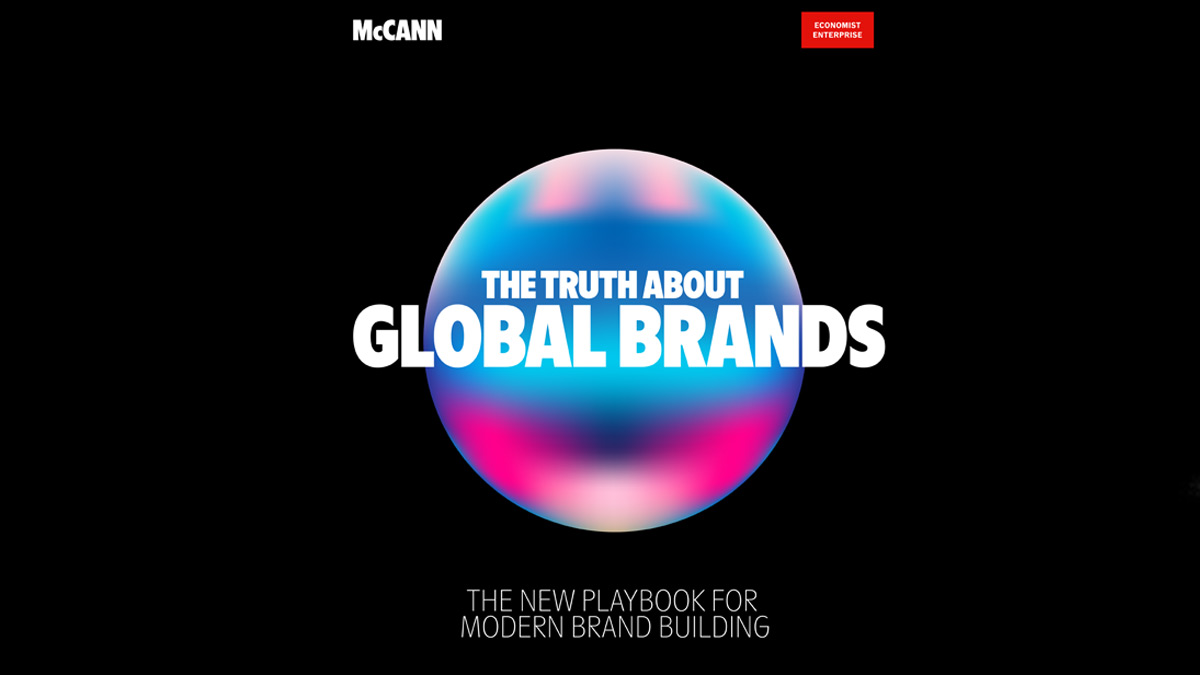
Those findings sit at the heart of The Truth About Global Brands, a study published on June 12th by McCann, the advertising network, in partnership with Economist Enterprise, the B2B arm of The Economist Group. The research surveyed 20,713 people across 20 markets between November 2025 and January 2026, and layered in qualitative interviews with senior marketing leaders and global chief marketing officers. It is among the most comprehensive pieces of brand-sentiment research published this year.
“Global brands are experiencing a growth crisis as we’ve shifted from a trust economy to a doubt economy,” said Tyler Turnbull, global chief executive of McCann. “The new playbook for the future of brand building will be grounded in a brand’s ability to show up with clarity, credibility and cultural fluency at every decision point.”
The ‘Truth Maze’ and the cost of doubt
McCann has coined the term “Truth Maze” for the thicket of conflicting claims, AI-generated content and competing narratives that consumers and business buyers now have to hack through before making a purchase decision. The research makes clear this is not merely an inconvenience: it is costing brands customers and cash.
In India, 71 per cent of consumers and 79 per cent of B2B decision-makers globally say they have stopped using a brand because they lost faith in it. Critically, 88 per cent of Indian respondents say they will actively choose brands they trust even if those brands charge more, a finding that reframes trust from soft corporate virtue to hard pricing power.
“The data tells a compelling story: when business leaders lose faith in a brand, they walk away and they don’t come back easily,” said Tamara McMillen, chief revenue officer at Economist Enterprise. “The commercial cost of doubt is real and measurable.”
AI: use it, but own it
The study does not counsel brands to shun artificial intelligence. Quite the opposite: 72 per cent of consumers and 88 per cent of B2B leaders say brands must adopt AI to remain competitive. But the research is pointed about accountability. In India, 57 per cent of respondents say the most effective thing a brand can do to build trust is to be transparent about its use of AI, while 49 per cent say brands should actively help audiences distinguish what is real from what is generated.
“In a world where truth matters more than ever, certainty is the new value exchange,” said Harjot Singh, global chief strategy officer at McCann.
From West-to-rest to everywhere-at-once
The research charts a second structural shift: the collapse of the old West-to-rest model of cultural influence. Markets such as China, India and Saudi Arabia are now actively shaping global norms rather than passively absorbing them. Seventy-nine per cent of people in India say it is possible to be a global citizen without ever boarding a plane. Culture, the study argues, no longer flows in a straight line from global headquarters to local market. It circulates, emerging in one country, mutating in another, scaling across interconnected networks with no respect for legacy brand hierarchies. McCann calls this “multi-modal globality.”
The ‘Upward Class’: one billion reasons to pay attention
At the intersection of these shifts sits the audience McCann identifies as the decisive growth engine of the next decade: the “Upward Class.” The group numbers 1.02 billion people globally and commands $29.5 trillion in annual spending power. Unlike earlier aspirational segments, these consumers use brands not merely to consume but to signal progress, identity and belonging. They exhibit lower brand cynicism than older cohorts and a stronger belief that brands can genuinely help them get ahead. Critically, they are disproportionately concentrated in precisely the markets, India chief among them, that the old playbook treated as peripheral.
“Future growth won’t come from leaning on existing audiences or legacy markers of scale,” said Turnbull. “It will come from brands that turn truth into a genuine growth engine, building connected systems of meaning, culture and commerce.”
The lesson, buried in 20,000-plus surveys across four continents, is disarmingly simple: stop lying, say what you do with AI, and show up where a billion newly influential consumers are already watching. The brands that cannot manage that will find the cost of doubt appearing, line by line, on their income statements.