MAM
Keshav Prasad Maurya addresses media freedom at NUJI conference
Speaking at NUJI conference, he warns against agenda-driven journalism.

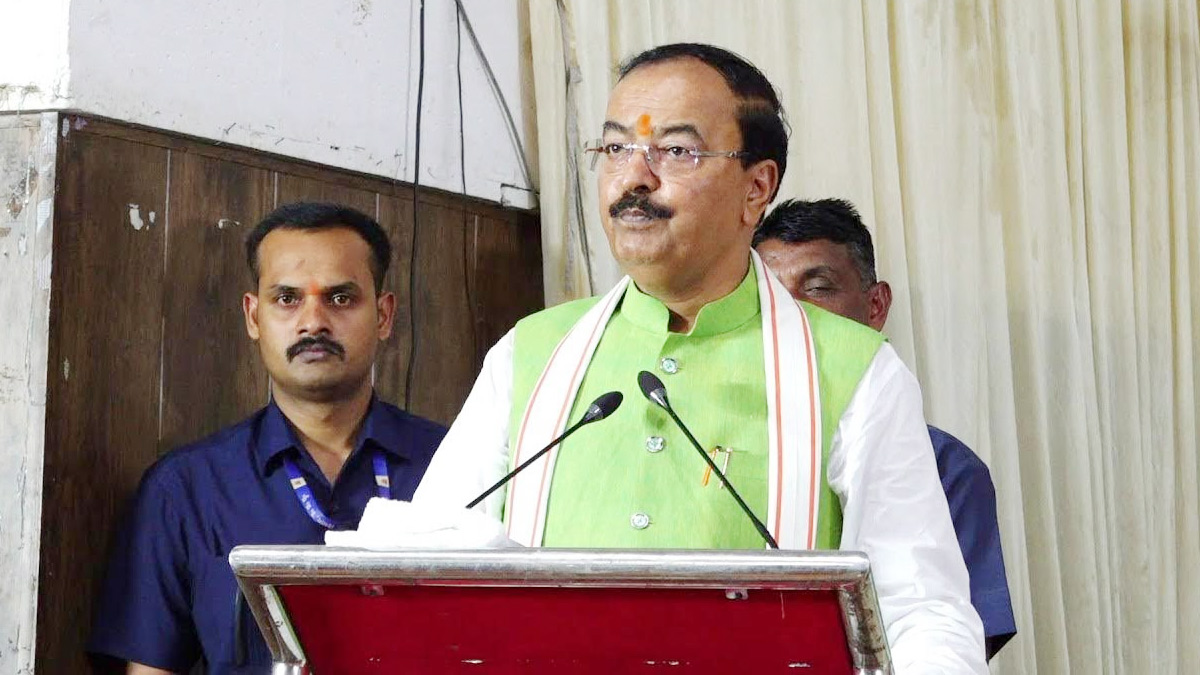
MUMBAI: In an age where headlines travel faster than facts, Uttar Pradesh deputy chief minister Keshav Prasad Maurya has called for journalism to stay anchored to its core purpose, serving democracy without bias. Addressing the opening session of the second day of the National Union of Journalists (India) (NUJI) national conference and executive committee meeting in Agra, Maurya described the media as the “fourth pillar” of democracy and stressed that impartial journalism remains essential to preserving public trust and democratic institutions.
Reflecting on the changing media landscape, Maurya noted that journalism has undergone a dramatic transformation, with a new generation of content creators and commentators entering the profession through mobile-first platforms and digital channels. While acknowledging the democratisation of content creation, he cautioned that not everyone entering the space was committed to the principles of journalism.
Without naming specific entities, he warned that many individuals were increasingly pursuing personal or ideological agendas rather than practising fact-based journalism, a trend he suggested could undermine the credibility of the profession.
Maurya also raised concerns about the growing influence of corporate ownership within the media industry. He said several media organisations are now controlled by large business groups, creating challenges for editorial independence and restricting the freedom traditionally associated with journalism.
Despite these concerns, he maintained that Indian journalism continues to move in a positive direction and said the government remains committed to strengthening the media ecosystem and supporting journalists’ welfare.
The Deputy Chief Minister also responded to concerns raised by NUJI National President Ras Bihari regarding the rise of fake journalists and fraudulent media organisations. Maurya said the government would take the issue seriously and assured delegates that journalists’ demands would be addressed.
“The government stands with the media fraternity,” he said, while reiterating the need to protect the credibility of the profession.
Chairing the session, Ras Bihari struck a more cautionary note, saying discussions at the conference had touched upon what some participants described as an “undeclared emergency” for the media. He argued that restrictions on journalism were becoming increasingly visible and expressed concern that the challenges faced by working journalists were not receiving adequate attention.
Bihari also renewed calls for stricter action against fake journalists and organisations that, he said, damage the reputation of the profession and create confusion within the media landscape.
The conference also reviewed organisational activities across the country. NUJI National General Secretary Pradeep Tiwari presented an overview of the union’s recent initiatives, while National Organising Secretary Pramod Goswami and Uttar Pradesh NUJI President Surendra Dubey briefed delegates on the conference proceedings.
Representatives from Rajasthan, Bihar, Delhi, Uttarakhand and several other states shared updates on media-related developments and organisational activities in their respective regions.
The discussions reflected a media industry grappling with rapid technological change, evolving business models and questions around credibility. Yet amid debates over corporate influence, digital disruption and journalistic freedoms, one message resonated through the conference halls: in a crowded information age, trust remains journalism’s most valuable currency.