Sports
Uday Shankar: Cricket’s golden goose is getting restless
JioStar’s Uday Shankar fires a warning shot at cricket’s administrators and tells Variety the sport risks killing the very bird that laid its $6.2bn egg.

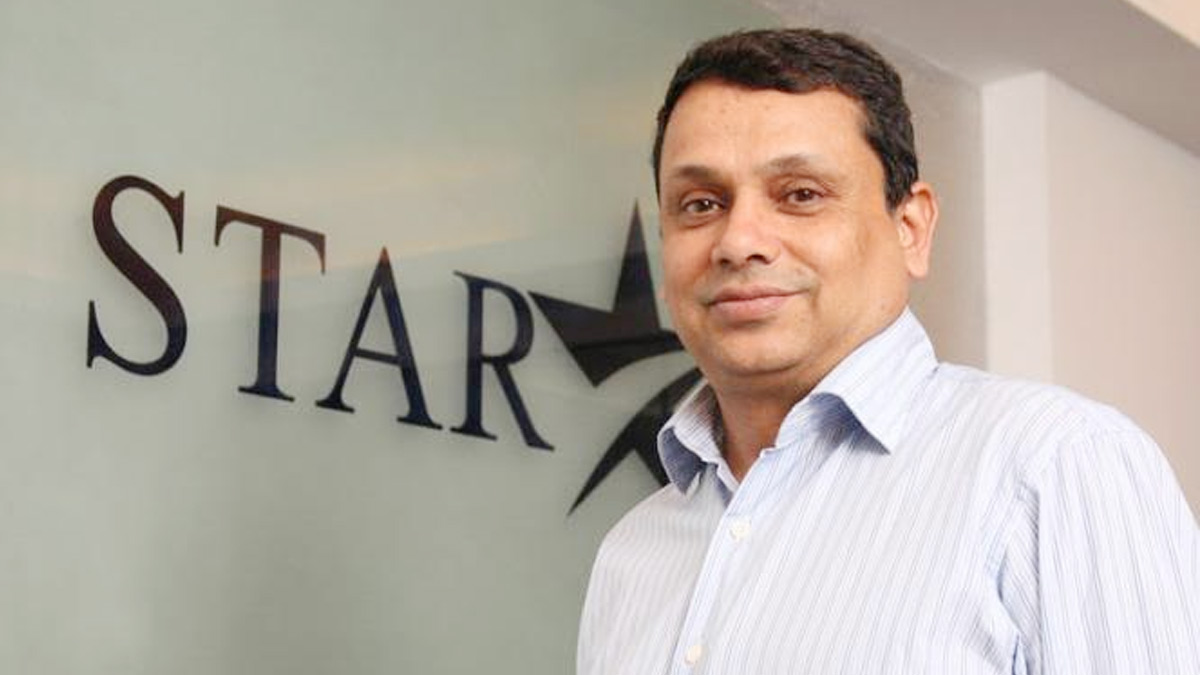
MUMBAI: Cricket, according to the man who bankrolls much of it, is at a crossroads. And Uday Shankar, vice-chair of JioStar, the Indian media colossus that reaches over 500 million viewers and spends $3.9 billion a year on content is not in the mood to be polite about it.
The numbers tell the story. The 2022 IPL rights auction was a belter: $6.2 billion, a per-match valuation of $15 million, second globally only to the NFL. Cricket’s administrators played the bidding room like a fiddle. The trouble is, the fiddle has gone rather quiet. The buyer universe has shrunk, and those still at the table are doing the maths with considerably more rigour. “Why should you really expect JioStar to pay the same value for India versus Afghanistan that I pay for India versus England?” Shankar tells Variety. His answer, they shouldn’t.
“JioStar is the goose that lays golden eggs,” he says. “Now they have to decide whether they want to kill the goose or keep it laying eggs.”
The market is catching up with his argument. With the current rights cycle expiring in 2027, analysts at Media Partners Asia project the next auction will hold flat at around $5.4 billion matching today’s deal in headline terms but representing a 13 per cent decline per match, as a bloated schedule dilutes individual game value. The merger of Viacom18 and Disney India has conveniently removed the main source of competitive tension from the previous auction. The 2022 frenzy will not be repeated.
Cricket’s Future Tours Program draws particular contempt. It almost looks, he tells Variety, like it was designed when the East India Company was still running the show. He is not predicting a walkout not yet. He is issuing a warning with a very specific commercial logic. “India and within India, one or two media companies are so fundamental to the future of cricket.”
The man making these pronouncements did not arrive at JioStar via spreadsheets and strategy decks. He is, at root, a journalist. He left Delhi’s Jawaharlal Nehru University in the early 1980s having concluded, with admirable efficiency, that politics changes you rather than the other way around. He became a reporter instead, heading deliberately to Patna at the height of Bihar’s upheaval caste wars, Mandal Commission fallout, hard-left unrest while his peers chased cushy postings in Mumbai.
Television ambushed him in 1991, when Gulf War coverage on CNN requiring, in those days, a satellite dish the size of a small bungalow made the penny drop. He walked out of his job at the Centre for Science and Environment and set about proving that television would be the most powerful instrument India had ever seen.
There were, inevitably, lean years. He freelanced. He pitched. At one dispiriting interview, a recruiter told him flatly he did not have what it took and ought to go back to print. “I came back disheartened,” he tells Variety. “But it just reinforced my determination.” The recruiter’s channel no longer exists.
His break came when Aroon Purie gave him the nod to help launch Aaj Tak. Then came Star India, where Rupert Murdoch’s instinct, “the power of a billion people and a democracy; how wrong could you go?” aligned perfectly with Shankar’s own. He dragged the network into Bengali, Marathi, Malayalam, Kannada and Telugu. He launched a Kabaddi League when a friend told him he’d grown too arrogant to see straight. Some 450 to 500 million people now watch the sport.
He is equally pitiless on Bollywood. The spy thriller Dhurandhar has been one of the industry’s biggest recent hits but Shankar credits its success not to any systemic improvement in Hindi cinema, rather to the fact that it was made by outsiders. “Cricket has done one brilliant thing: it has opened the talent gate far and wide,” he says. Bollywood keeps fishing in the same small pond. “The viewers of cinema have moved far ahead of the makers of cinema. That is the big crisis.”
One pointed data point on the wider industry: active connected TV sets in India now outnumber pay TV households. The transition has happened. What hasn’t is any meaningful innovation in monetisation streaming still runs on the same advertising-and-subscription model newspapers invented a century ago. AI, he argues, is not a threat to creativity but a tool to drive down unit costs and unlock new revenue. He rejects the label “media company” for JioStar entirely. Technology and creativity, he insists, are the only honest description.
And yet the man saying so spent his formative years filing from flood plains and drought-hit villages. “At heart,” he tells Variety, “I’ve remained a journalist.”
It was, after all, the trade that saved him from politics.