e-commerce
Instamart logs 150 per cent jump in India’s protein cravings
Bengaluru leads protein rush as Tier II cities clock 200 per cent growth.

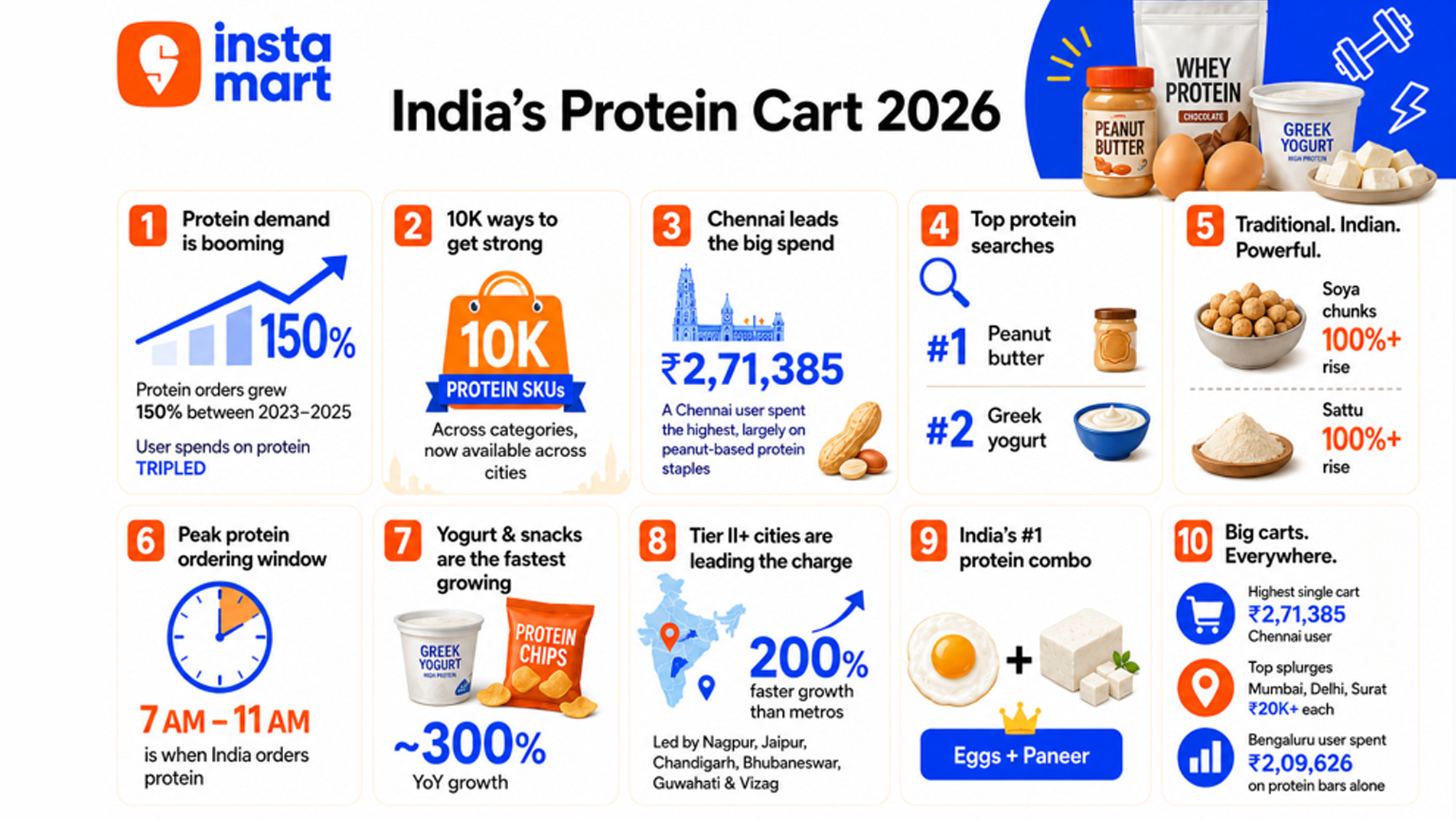
MUMBAI: India’s shopping carts are bulking up, one paneer block and protein bar at a time. What once lived mostly inside gym bags and fitness influencers’ meal plans has now firmly entered the mainstream grocery basket, and quick commerce platforms are seeing the shift happen in real time. Instamart has reported a 150 per cent surge in protein orders over the last two years, highlighting how Indian consumers are increasingly turning towards protein-led and “better-for-you” food choices. The platform has simultaneously expanded its protein portfolio to nearly 10,000 SKUs, spanning everything from traditional staples to modern nutrition products.
And this is no longer just a metro-city wellness trend.
While Bengaluru continues to lead the country’s protein demand, the sharpest acceleration is now coming from Tier II and emerging cities, where protein consumption is growing over 200 per cent faster than in larger urban centres. Cities such as Nagpur, Jaipur, Chandigarh, Bhubaneswar, Guwahati and Vizag are driving the next phase of India’s nutrition boom, signalling a wider behavioural shift towards more conscious eating habits.
The country’s protein basket itself tells a fascinating story.
At the top remain two undisputed champions of Indian kitchens eggs and paneer. Despite the arrival of imported whey powders, protein chips and premium supplements, these everyday staples continue to dominate orders across categories. Chicken, chickpeas, Greek yoghurt, protein bars, makhana, oats, milkshakes and protein snacks followed closely behind.
The most common pairing? Eggs and paneer perhaps the most Indian fitness combination imaginable.
But alongside traditional staples, newer protein formats are quietly exploding into the mainstream. Protein snacks emerged as the fastest-growing category, surging by 300 per cent. Greek yoghurt grew nearly 280 per cent, with almost two out of three users adding it directly to cart after searching. Protein milk and shakes climbed 225 per cent, moving rapidly from niche fitness consumption into everyday routines.
Even breakfast appears to be undergoing a protein-powered makeover.
Sprouted millets, oat-based mixes and protein breads all recorded sharp growth as consumers increasingly looked to integrate protein into regular meals rather than limiting it to post-workout diets. Protein bread, in particular, registered the highest search-to-checkout conversion rate on the platform.
Then came the surprise snack attack.
Protein wafers emerged as one of the biggest breakout impulse purchases, a category that barely existed a year ago. Meanwhile, traditional ingredients such as makhana, roasted chana, besan and chana sattu also saw strong demand, proving that India’s protein evolution is blending modern nutrition trends with familiar pantry staples rather than replacing them entirely.
Search trends revealed another interesting pattern. Peanut butter became the most searched protein-related term on the platform, followed closely by Greek yoghurt. Searches for high-protein eggs, chips and paneer converted strongly into actual purchases, with more than six in ten users directly adding products to cart.
The spending habits were equally eye-catching.
The largest single protein order came from Chennai, where one user spent a staggering Rs 2.71 lakh largely on peanut-based protein staples. Bengaluru saw another user spend Rs 2.09 lakh on protein bars alone, while Mumbai, Delhi and Surat recorded whey protein-heavy shopping carts worth Rs 22,000, Rs 21,500 and Rs 20,500 respectively.
The timing of these orders paints an even clearer picture of changing lifestyles.
The busiest protein ordering window remains between 7 am and 11 am, driven heavily by breakfast routines. A second spike arrives later in the day around workout and meal-planning hours. But perhaps the most intriguing trend is the rise in late-night protein shopping between midnight and 4 am, an emerging behaviour that reflects India’s increasingly round-the-clock wellness culture.
Instamart chief business officer Hari Kumar G said the platform is now witnessing a shift from “essentials” shopping to “aspirational” consumption, where healthier and cleaner food choices are becoming the new normal rather than a niche preference.
The company says its broader assortment, alongside lower-priced trial packs and premium value packs, is helping make protein-led diets more accessible to everyday consumers across income groups and geographies.
Because in today’s India, grocery shopping is no longer just about filling the kitchen shelf. It is increasingly about fuelling a lifestyle.