MAM
Meet Dipti Jindal, the powerhouse behind Hindi cinema’s biggest spectacles
Dipti Jindal, chief executive and associate producer, Nadiadwala Grandson Entertainment, on conviction, craft and the courage to back your gut

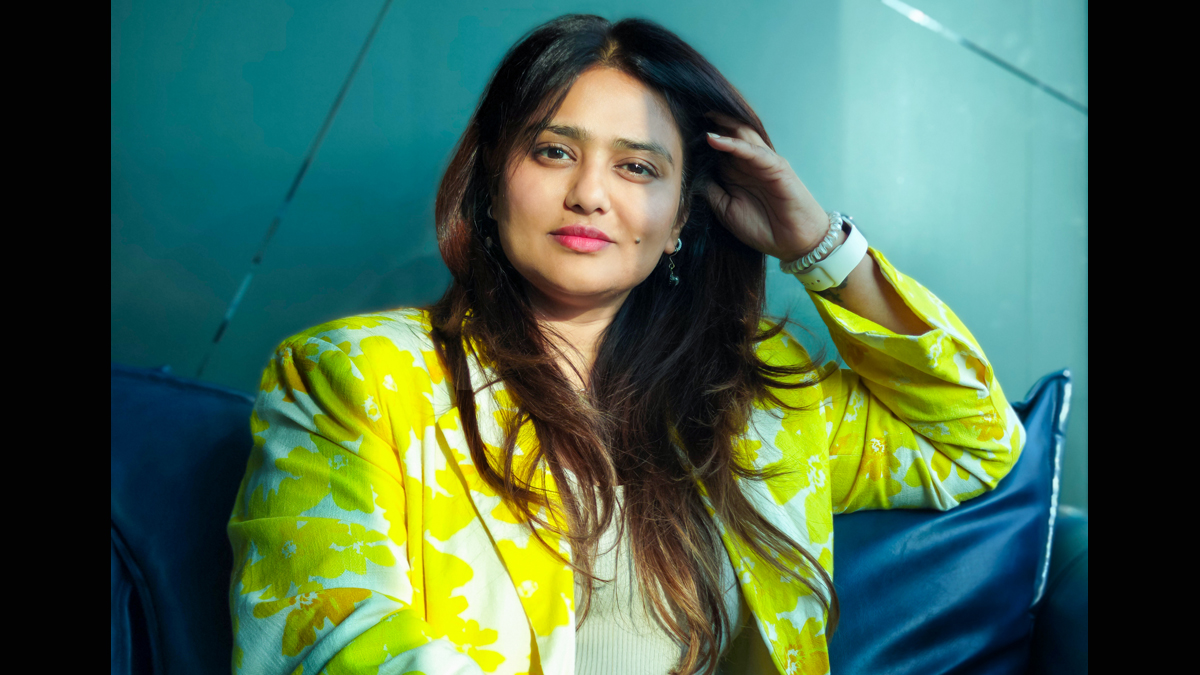
MUMBAI: There are executives who manage film studios, and then there are those who feel them. Dipti Jindal belongs firmly in the second camp. As chief executive and associate producer at Nadiadwala Grandson Entertainment, she is steering one of Hindi cinema’s most iconic legacy banners through its historic 75th year, a milestone that would make most leaders cautious and celebratory in equal measure. Not Jindal. She is, by all accounts, pushing harder.
While the industry endlessly debates the clash between data sheets and creative gut instinct, she has quietly made a habit of balancing both. The strategic force behind massive spectacles such as Sikandar, Housefull 5, Baaghi 4, Satya Prem Ki Katha and Chandu Champion, she also recently guided the banner’s thoughtful expansion into regional cinema with the Gujarati film Dhabkaaro, a project rooted as much in sentiment as in strategy. NGE’s roots, after all, trace back to Nadiad.
She started on the floor as an assistant director, reading schedules, managing crews and learning filmmaking the hard way. That foundation has never left her. In short, if it is a big-screen spectacle built to capture an audience’s heartbeat, Jindal is very likely the person who greenlighted it. We sat down with her to find out how she thinks, what she values, and why, after everything, she still gets a thrill from sitting in a dark theatre on a Friday.
- You started your career as an Assistant Director and worked on the ground for years. How does that “dust on the boots” experience change how you look at a multi-crore budget today? Is there a part of you that still thinks like an AD when you see a production schedule?
Once you’ve been an AD, a part of you always remains one. Even today, I can’t look at a schedule clinically. I see the crew behind it, the long hours, and the invisible effort that keeps everything moving. That experience keeps me grounded and reminds me that filmmaking is ultimately about people showing up for each other.
Stepping into production and leadership has given me a wider perspective. There are things I couldn’t have understood as an AD, and things I might overlook if I hadn’t been one. That balance is something I really value.
And through it all, the curiosity stays alive, the instinct to question, solve, and stay restless. Along with that comes the same excitement of sitting in a theatre on a Friday and getting completely pulled into a film. I carry all of that into every decision I make today.
- You’ve worked your way up from production to the CEO’s office. What is one thing about making a movie that most people sitting in the theatre would be surprised to learn?
How uncertain everything is. You could have the best cast, the best script, the best possible scenario, but in the end, it’s up to the audience, what they like and what they don’t. It all boils down to them. When you sit in a theatre and watch a film, it’s ultimately the audience that decides its fate.
I also feel like people think movies are made through these big moments of inspiration, but films are actually made through thousands of small thoughts. When you’re hearing a script and something moves you emotionally, that’s what really matters. It’s not always these gigantic moments of inspiration that people imagine. So it’s not as much magic as we think it is, it’s more persistence.
- Do you think being a woman gives you a different perspective when choosing scripts, especially when it comes to how female characters are written today?
Honestly, I would disagree. I don’t consciously think about it that way. I don’t look at a script and think this is a male lead or this is a female lead. I look at the script in its entirety and see whether every character is doing justice to their role, without one being highlighted over the other.
But if I do feel that a female character is underwritten when there is scope for much more, I would definitely put my point across. Not just to prove a point, but only when I genuinely feel the script demands it.
- How would you describe Sajid Nadiadwala as a mentor, producer, and leader?
One thing I’ve learned from him is conviction. Markets change, trends change, but the one thing that truly feels like a part of his legacy is his conviction. And I don’t know what the perception of him is out in the world, but forgive me for using this word, he’s such a pookie. He takes care of all of us. He’s one of the wittiest people I know, and at the same time, one of the strongest mentors.
We can always go to him with the assurance that he’ll give us a solution. There has never been a moment, whether it’s work-related, personal, or anything else, when we’ve gone to him and he hasn’t either guided us or heard us out. His doors are always open, and that makes a huge difference.
I’ve never seen him treat a film as just a project. For him, it’s always a film. We’ve never started work on a script or project by looking at numbers first. We start with his gut, his instinct, and the belief that this is a story we want to tell. Whether it works or not is ultimately fate.
Over the years, with the same energy and zest, I’ve only seen his passion grow. I’ve seen him work harder and want to achieve more. I’ve never seen him become complacent or feel like, “I’ve achieved so much, I have a legacy, now I can relax.” He doesn’t relax, and thanks to that, none of us can either.
- You recently moved into regional cinema with the Gujarati film Dhabkaaro. Why was now the right time to move beyond Hindi films, and what did that experience teach you about Indian audiences?
So, one of course, it’s our 75th year of our banner in entertainment. Nadiadwala Grandson’s legacy and roots come from Nadiad, and we wanted to give something back to the place we come from. Everything just felt like the right timing.
When we met Abhishek and the producers and discussed the film, we felt this was a story we genuinely wanted to be a part of, and these were people we wanted to work with. Somehow, everything just fit together naturally.
The Indian audience is really liking the film, and I think audiences connect with stories that are made with honesty and sincerity, which this film truly is. If you watch the film, which I hope everyone does, it carries a very simple message, but one that is relatable to every single person.
We’re very happy to begin, or rather restart, our regional journey with this film. We’ve done regional cinema in the past as well. Sir has written Lai Bhaari, we’ve done Ek Number, and Sir’s grandfather had produced Gujarati films too. So in many ways, it feels like coming back home.
- NGE is known for launching new stars. What is that “special something” you look for when you meet a newcomer for the first time?
I think it’s the hunger and talent. Of course talent matters, but beyond that, it’s also their presence, what they bring to the table. They bring a certain honesty and hunger, and that’s what we really look for.
At the end of the day though, whether they fit the role or not is what matters most. Ultimately, the script decides everything.
- With so many people watching movies on their phones or at home, what makes a story “big” enough to belong in a cinema hall today?
I’ve always felt that movies are meant to be watched in silence, in the dark, with strangers. It’s a shared, collective experience. You give scale, volume, and emotion to something, and when that emotion is shared, it automatically becomes bigger.
Whether it’s a game, a cricket or football match, or even a festival, the moment you celebrate something together in large numbers, the emotion becomes more powerful. That’s why I feel the theatrical experience gives you something that simply cannot be described in words.
- Technology like AI and high-end animation is changing how movies look. How is NGE using these new tools to compete with global films?
I feel AI is a very important tool that all of us need to adapt to. But personally, I still believe that AI is not a storyteller. It cannot replace human emotion.
That’s why I see it as a very useful tool. Of course, we are planning to incorporate AI and use it wherever necessary, but never as a replacement for the human mind or human emotion.
- If you could change one thing about how the Indian film industry works today, what would it be?
I think it would be patience, giving more time to stories, to VFX, and to everything that a film truly needs. I understand there’s a lot at stake. It’s a race to release films on time and complete them on schedule. There’s the cost of money, actor dates, and many other pressures.
But one thing I would probably want is for us to have a little more patience.
The other thing would be letting go of the fear of failure. Sometimes, from my personal experience and from what I observe around me, I feel people start making films not just because they want to tell a story, but also because they’re afraid the film shouldn’t fail.
I think that mindset needs to change a little. I always go back to what my producer says, go with your gut and your conviction. I think that always helps.
- Do you remember the first movie you ever saw that made you fall in love with cinema? What was it about that film that stayed with you?
It’s actually quite funny. When I was young, there was a video library near my house that was shutting down, and my dad bought three VHS tapes; Amar Akbar Anthony, one Professor Shammi Kapoor film, and Dadagiri with Padmini Kolhapure. All three left a very strong impact on me.
Amar Akbar Anthony is everything a film should be. It’s about brotherhood, love, love for your mother, it has everything in it. I think that’s why I’ve always loved larger-than-life films. I’ve loved filmmakers like Manmohan Desai and Farah Khan because they create these large-scale entertainers that I really connect with.
And then, much later, I remember watching Titanic and Speed in theatres. We weren’t really allowed to watch English films growing up, so those experiences stayed with me for the magic they created on screen, the visuals, the storytelling, and the feeling they left inside me.
That’s when I realised this is something I wanted to be a part of, creating cinema and having people experience it on the big screen.
- Behind every successful CEO is a system that keeps them grounded. Who is the one person you call when you have a truly difficult decision to make?
When it comes to work, of course, like I’ve said before, it’s my boss, Mr. Sajid Nadiadwala. I go to him for advice on almost everything work-related.
But outside of work, it’s not just one person. I have my parents, my brother, and two of my closest friends, Aradhana Sharma and Sejal Shah. They’ve always kept me grounded and given me reality checks when I’ve needed them.
So when it’s work-related, it’s definitely my boss. But when it comes to life, or me as a person beyond work, it’s my friends and family.
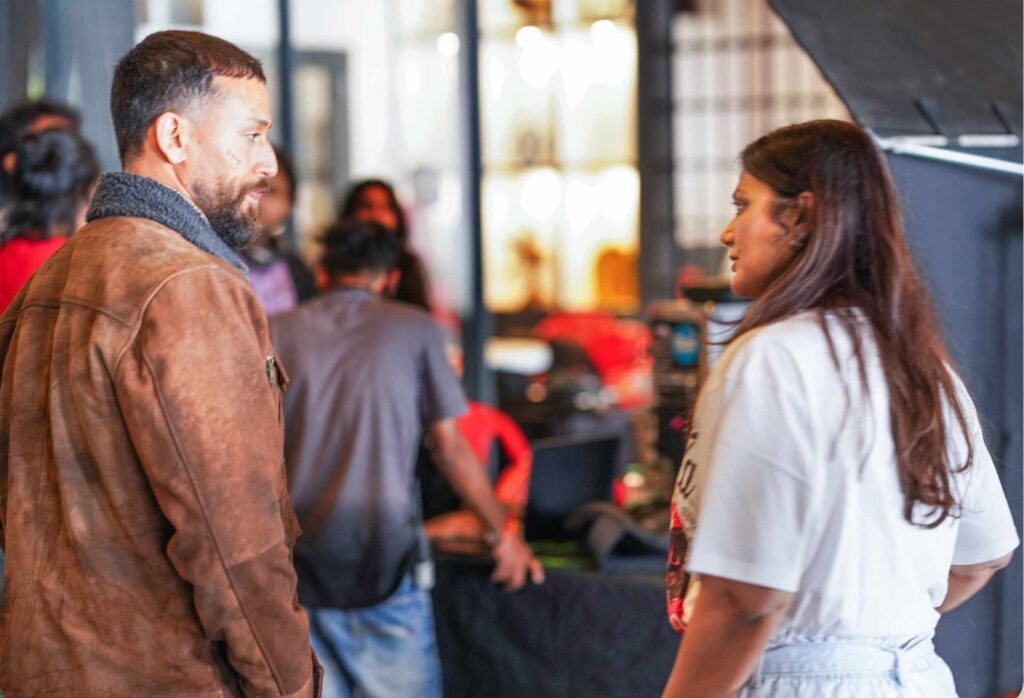
Dipti Jindal is the kind of leader the film industry quietly needs more of: someone who has earned every room she has walked into, who measures success not just in box-office numbers but in the honesty of the story being told. As NGE steps into its 76th year with a formidable slate and a renewed appetite for risk, one thing is clear. The woman behind the curtain is not just shaping spectacles. She is, frame by frame, building a legacy entirely her own.