MAM
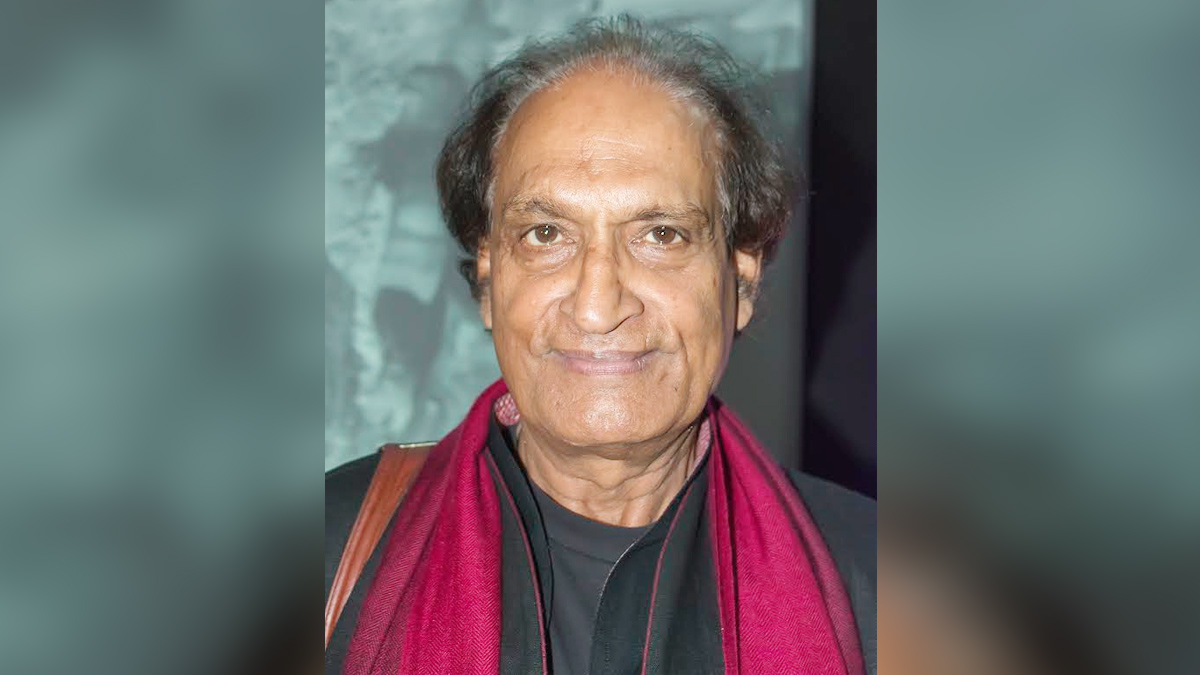
Raghu Rai passes away at 83, leaves behind iconic legacy
Padma Shri-winning photographer documented history across 5 decades.
MUMBAI: The lens may have stilled, but the stories it captured will never fade. Raghu Rai, one of India’s most celebrated photojournalists, passed away on April 26, 2026, at the age of 83. He breathed his last at a private hospital in New Delhi after battling cancer and age-related health issues.
His son, Nitin Rai, revealed that Rai had been diagnosed with prostate cancer two years ago, which later spread to the stomach and, more recently, the brain. Despite multiple rounds of treatment, his health had declined in recent months.
Born in 1942 in Jhang, Punjab (now in Pakistan), Rai entered photography in his early twenties, inspired by his elder brother, photographer S. Paul. Beginning his career in the mid-1960s, he went on to build a body of work that spanned more than five decades, contributing to global publications such as Time, Life, GEO, Le Figaro, The New York Times, Vogue, GQ and Marie Claire.
His global recognition took a decisive leap in 1977 when legendary French photographer Henri Cartier-Bresson nominated him to join Magnum Photos, placing him among the world’s most respected visual storytellers.
Rai’s lens chronicled both power and poignancy. He photographed towering figures such as Indira Gandhi, Dalai Lama, Bal Thackeray, Satyajit Ray and Mother Teresa, while also documenting defining moments like the Bhopal gas tragedy later captured in his book Exposure: A Corporate Crime.
Over the years, he published more than 18 books, building an archive that blended journalism with artistry. His contributions were recognised early when he was awarded the Padma Shri in 1972 for his coverage of the Bangladesh War and refugee crisis. In 1992, he was named “Photographer of the Year” in the United States for his work in National Geographic, and in 2009, he was honoured with the Officier des Arts et des Lettres by the French government.
Rai is survived by his wife Gurmeet, son Nitin, and daughters Lagan, Avani and Purvai. His last rites will be held at Lodhi Cremation Ground in New Delhi at 4 pm on Sunday.
With his passing, Indian photojournalism loses not just a pioneer, but a patient observer of history, one frame at a time.

AD Agencies
Abhay Duggal joins JioStar as director of Hindi GEC ad sales
The streaming giant brings in a seasoned revenue hand as the battle for Hindi television advertising heats up
MUMBAI: Abhay Duggal has a new desk, and JioStar has a new weapon. The media and entertainment veteran has joined JioStar as director of entertainment ad sales for Hindi general entertainment channels, adding 17 years of hard-won revenue experience to one of India’s most powerful broadcasting operations.
Duggal is no stranger to big portfolios or bruising markets. Before joining JioStar, he spent a brief stint at Republic World as deputy general manager and north regional head for ad sales. Before that, he put in three years at Enterr10 Television, where he ran the north region for Dangal TV and Dangal 2, two of India’s leading free-to-air Hindi channels. The north alone accounted for more than 50 per cent of total channel revenue on his watch, a number that tends to get attention in any sales meeting.
His longest stint was at Zee Entertainment Enterprises, where he spent over six years rising to associate director of sales. There he commanded the Hindi movies cluster across seven channels, owned more than half of north India’s revenue across flagship properties including Zee TV and &TV, and closed marquee sponsorships across the Indian Premier League, Zee Rishtey Awards and Dance India Dance. He also handled monetisation for the English movies and entertainment cluster and the global news channel WION, a portfolio that would stretch most sales teams twice his size.
Earlier in his career Duggal closed what was then a Rs 3 crore single deal at Reliance Broadcast Network, one of the largest in Indian radio at the time, before that he helped launch and monetise JAINHITS, India’s first HITS-based cable and satellite platform.
His edge, by his own account, lies in marrying data and instinct: translating audience trends, inventory signals and client demands into long-term partnerships built on cost-per-rating-point discipline rather than short-term deal chasing. In a media landscape being reshaped by streaming, fragmented attention and AI-driven advertising, that kind of rigour is increasingly rare and increasingly valuable.
JioStar, which blends the scale of Reliance’s Jio platform with the content firepower of Star, is doubling down on its advertising business at precisely the moment the Hindi GEC market is getting more competitive. Bringing in someone who has spent nearly two decades doing exactly this, across some of India’s most watched channels, is a pointed statement of intent. Duggal has spent his career turning audiences into revenue. JioStar is clearly betting he can do it again, and bigger.