Education
Abhishek Singh appointed director general of National Testing Agency
Technocrat with deep roots in India’s digital infrastructure push takes charge of the exam body that has faced intense scrutiny

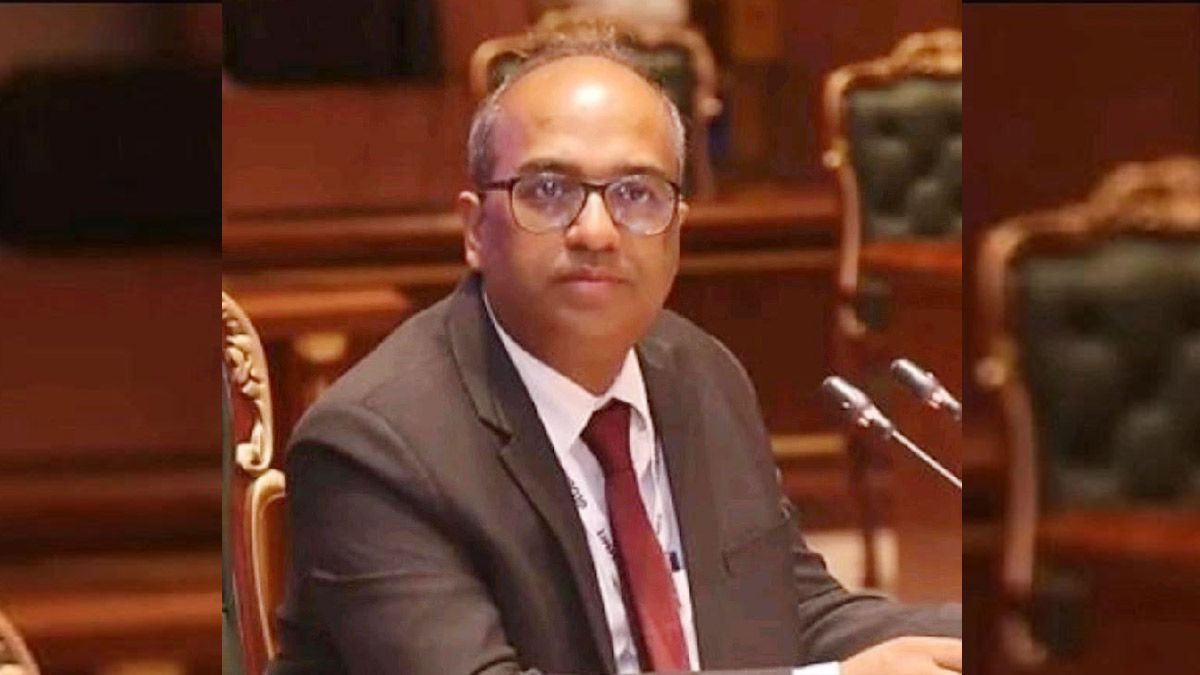
NEW DELHI: India’s beleaguered examination authority has a new boss. Abhishek Singh, currently director general of the National Informatics Centre (NIC), has been appointed director general of the National Testing Agency (NTA), which sits under the Ministry of Education. In a signal of just how seriously the government is treating the role, the post has been temporarily upgraded to the rank and pay of secretary to the government of India.
Singh is not your typical bureaucrat shuffled sideways into a troubled institution. At the NIC, he also held additional charge as additional secretary in the Ministry of Electronics and Information Technology (MeitY), overseeing artificial intelligence, emerging technologies and the Digital India Bhashini division, while simultaneously serving as chief executive of the India AI Mission. That is a formidable technology portfolio by any measure.
His CV reads like a guided tour of India’s digital public infrastructure. He served as president and chief executive of the National e-Governance Division, managing director and chief executive of Digital India Corporation, chief executive of Karmayogi Bharat, and chief executive of MyGov between 2019 and 2024. Before that, from 2014 to 2017, he was executive director at the Food Corporation of India, where he handled information technology, engineering, storage and, additionally, the North Zone operations and the role of chief vigilance officer.

His field credentials are equally robust. Singh has served in both Nagaland and Uttar Pradesh across multiple tenures, navigating law and order, floods, droughts and communal tensions with equal measure. As principal secretary to the chief minister of Nagaland between 2017 and 2019, he also held charge of urban development, personnel and administrative reforms, and, in 2018, home commissioner. At the grassroots, he built roads, irrigation systems, schools and hospitals, and drove welfare programmes focused on poverty alleviation, education and healthcare.
Singh has also worked alongside international agencies including DFID, UNICEF and WHO, contributing to the Child’s Environment Project in Budaun and the Pulse Polio Eradication Programme in Uttar Pradesh. He has conducted elections at the parliamentary, state assembly and local body levels.
Academically, he is no slouch either. Singh holds a master’s degree in public administration from Harvard Kennedy School, where he was a Mason Fellow, and completed his B.Tech and M.Tech from IIT Kanpur.
Meanwhile, the broader bureaucratic reshuffle sees Bihar cadre IAS officer Chanchal Kumar named the new secretary in the Ministry of Information and Broadcasting. Rohit Kansal of the UT cadre moves to the Rural Development Ministry as special secretary, while IAS officer Vikram Yadav has been appointed director general of the Directorate General of Civil Aviation. The outgoing I&B secretary has been reassigned as secretary in the Ministry of Development of North Eastern Region.
The NTA needed someone who could rewire both its credibility and its systems. Singh has spent a career doing exactly that.








Everyone has been turning their selfies into cartoon characters on social media lately. Our recent piece on how people are creating animated WhatsApp avatars for free proves just how fast these tools are catching on.
But beyond all the fun filters and fast effects, there’s a larger narrative at play here, and that is that AI is revolutionising the way people edit photos. What used to take hours or even days in the past can be done in minutes with a few clicks, and you don’t need to have advanced design skills to get the job done either.
Here’s a look at some of the best AI tools that are making photo editing faster, smarter, and more enjoyable whether you’re a creative or simply someone who is looking to have some fun with your photos.
- Photoshop’s AI Photo Tools: Speed and Precision
Most people know Adobe Photoshop as the go-to program for editing images, but its latest AI features take things to a whole new level. Photoshop’s new AI-powered features can automatically identify faces, exposure, and colour issues, fixing them with the click of a button. The neural filters are especially clever, enabling you to smooth skin, modify facial expressions, swap backgrounds and even manipulate lighting to make everything look more natural.
With the integration of these new tools, what used to take a seasoned editor 30 minutes can now be accomplished in seconds, freeing up your time so you can focus on the creative side of things. Whether you’re editing portraits, creating graphics or resizing images for social media, Photoshop’s AI photo tools help to achieve that clean professional finish without the hassle of manual tweaking. It’s one of the best ways to give your photos a polished, cohesive look, even if you don’t consider yourself a pro yet.
- Lightroom: Simplify Bulk Edits and Maintain Consistency
If you’ve ever wondered how photographers maintain the same feel across hundreds of shots, Adobe Lightroom is the answer. Adobe Lightroom is an industry-standard photo management and editing app built for speed, helping you organise, adjust, and fine-tune large batches of images without getting lost in layers or complex tools. Most if not all professional photographers use Lightroom to edit photos before the final shots are sent on to their clients.
Like Photoshop, Lightroom’s built-in AI editing tools can be used for a wide variety of applications, including automatically detecting your subject and adjusting the exposure, colour and tone so every shot looks balanced. You can even apply the same “look” to an entire collection, making it great for projects that rely on consistent visuals – think wedding photos, product shots for an eCommerce website, or social media posts.
And speaking of social media, Lightroom is especially useful for content creators who want a clean, uniform look to their Insta grid or feed without spending hours editing each image individually. In short, Lightroom keeps your workflow simple, but your results professional.
- Sensei-Powered Auto Tagging and Smart Search
Organising photos can become messy and annoying quickly, especially if you have hundreds of folders full of similar shots. That’s where Adobe Sensei comes in. You might not have heard of it by name, but you’ve probably used this tool without even realising you have. How so? Because Adobe Sensei is the AI engine that runs quietly in the background across Photoshop, Lightroom, and other Adobe Creative Cloud apps. This innovative AI engine is programmed to facilitate a wide variety of processes, including facial recognition, recognising objects, and sorting your photos automatically.
Alongside being used for auto tagging elements in images, Sensei is also adept at using image metadata to organise your photo library, and make it even easier to find specific shots with typed search prompts. Say goodbye to searching through dozens of files trying to remember what you named them — just type in something like “beach” or “red dress” and your shot will pop up instantly. For anyone who shoots a lot or manages content libraries, Adobe Sensei’s generative AI engine makes organising photos simple and stress-free.
- Adobe Firefly: Intelligent Background and Object Replacement
Sometimes you take a great photo, but there’s one thing that ruins it. Maybe it’s an awkward background, an annoying photobomber, or a sky that just looks a bit blah. That’s where Adobe Firefly comes in. With this generative AI tool by Adobe, you can simply highlight the problem areas in your images and type in what you’d like instead, and it will make the changes for you. You could trade a dull sky for a sunset, introduce a gentle blur behind your subject or eliminate distractions entirely.
But it’s not just about fixing mistakes. Firefly is also fantastic for experimenting. You can change the feel of a shot, create atmosphere, or build new visuals for marketing and social media all without starting again from scratch. It’s an easy trick that makes photos look more purposeful and artistic, even if you’re starting off with something that looks average.
- Camera Raw: Smarter Corrections Right from the Start
Every photographer or creator knows that editing starts well before you get to the fun filters. Camera Raw’s built-in AI tools quietly sort out the basics so you don’t have to. These innovative AI tools fix lighting, balance colours, and pull detail back from shadows or overexposed spots. It even cleans up grainy low-light shots and straightens out lens distortion without much effort on your end.
For photographers and hobbyists, using Camera Raw’s AI tools just makes image processing easier, particularly for images that require only minor tweaks and adjustments. The attention to detail of Camera Raw’s editing tools makes autocorrecting blemishes, red eyes, and other small details across digital photography quick and efficient, supporting photographers and content creators in getting their image assets publication-ready.
- Adobe Express: Quick Edits for Social Media
Finally, not every photo edit has to be a full studio production. As this tool’s name suggests, Adobe Express is designed to be quick: you can trim, crop, and colour-correct your posts for social media in a matter of minutes. The AI auto-adjust tools detect the subject and optimise brightness, sharpness, and background balance without you having to do much.
Adobe Express is perfect for influencers, small businesses or creators who post daily content, stories and want to remain active on social media without having to spend hours editing content. You can create multiple versions of one image for different social media platforms and keep everything looking cohesive across your feed. It’s simple, practical, and exactly what you need when you want to share something polished without overthinking it.
Use these AI Tools to Elevate your Photo Editing
Editing photos has never been easier. With AI taking care of the technical fixes like lighting, colour, and cleanup, you get more room to focus on the creative side. Whether it’s for work, social media, or just something fun to share, these tools help you turn everyday photos into something worth keeping.
What really matters is experimenting and finding what feels right for your style. The tech is there to make the process faster, but the creative choices are still all yours. So have fun, experiment, and you just might be pleasantly surprised with the results!









