Connect with us

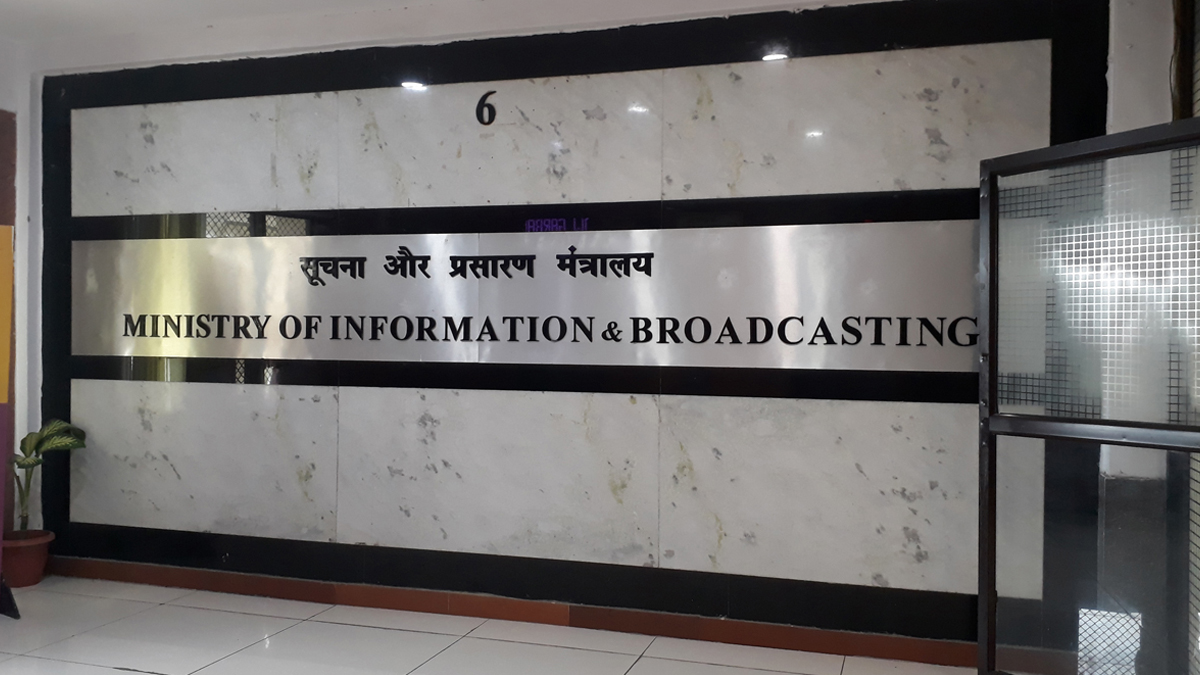
I&B Ministry

Centre allocates Rs 232.46 cr under DCDFC scheme to boost Indian cinema and festivals: MIB

Funds support festivals, filmmakers and film heritage to boost India’s global cinema reach

Published

on

NEW DELHI: India’s efforts to take its cinema and creative talent to wider audiences are gaining pace through the Development, Communication and Dissemination of Filmic Content (DCDFC) Scheme, implemented by the National Film Development Corporation (NFDC).

The scheme, run by the Ministry of Information and Broadcasting, is designed to support the creation, promotion and global visibility of Indian film content. Through financial assistance, international collaborations and festival participation, it aims to give Indian filmmakers a bigger stage both at home and abroad.

Funding under the scheme has steadily supported a range of initiatives, from film festivals and workshops to preservation and digitisation of India’s cinematic heritage. It also offers incentives for international productions to shoot in India and encourages audio visual co productions with global partners.

Advertisement

Over the past few years, substantial funds have been allocated and utilised through NFDC. The government disbursed ₹84.50 crore in 2021–22, rising sharply to ₹348.12 crore in 2023–24. By February 2026, ₹232.46 crore had been allocated for the 2025–26 financial year, of which ₹156.86 crore had been utilised.

Beyond funding, the scheme has become a catalyst for industry gatherings and creative exchanges. Through NFDC, the ministry partners with state governments to host major events such as the International Film Festival of India in Goa, a flagship platform that draws filmmakers, critics and audiences from around the world.

In 2025, the festival featured around 380 screenings and welcomed nearly 18,000 delegates. Another major gathering, the World Audio Visual & Entertainment Summit, attracted more than one lakh participants, underlining the growing scale of India’s media and entertainment ecosystem.

Advertisement

Other industry events supported under the initiative include the Mumbai International Film Festival and specialised programmes such as a Residential Writers’ Lab organised in collaboration with the Maharashtra Film Stage & Cultural Development Corporation Ltd. at Maharashtra Film City.

Together, these initiatives bring filmmakers, writers, technicians and industry professionals into the same creative orbit. Workshops, screenings and masterclasses encourage collaboration while giving emerging talent an opportunity to learn directly from seasoned practitioners.

The information was shared in the Lok Sabha in a written reply by L. Murugan, minister of state for information and broadcasting and parliamentary affairs, responding to a question from G. Kumar Naik.

Advertisement

With funding, festivals and global partnerships working in tandem, the DCDFC scheme is steadily turning the spotlight on Indian cinema while ensuring its stories travel further than ever before.


Click to comment

Leave a Reply

Your email address will not be published. Required fields are marked *

I&B Ministry

PIB Fact Check Unit flags 2,913 fake claims, blocks 1,400 URLs

Government steps up misinformation fight with FCU and IT Rules framework.

Published

on

MUMBAI: In the age of viral forwards and deepfake déjà vu, the government’s fact-checkers are working overtime to separate fact from fiction. India’s Press Information Bureau Fact Check Unit (FCU), operating under the Ministry of Information and Broadcasting, has flagged a total of 2,913 instances of fake news and misinformation linked to the Central Government, highlighting the growing scale of the information battle in the digital era.

Tasked with identifying misleading content from AI-generated videos and deepfakes to forged notifications, letters and spoofed websites, the FCU verifies claims using authorised sources before publishing corrections across its social media channels. These include platforms such as X, Facebook, Instagram, Telegram, Threads and WhatsApp, turning the government’s digital presence into a real-time myth-busting network.

But the effort is not just top-down. The FCU has also been nudging citizens to play detective, encouraging users to report suspicious content for verification. The idea is simple: in a landscape where misinformation travels faster than facts, crowd-sourced vigilance can act as an early warning system.

Advertisement

The scale of intervention became particularly visible during Operation Sindoor, when the unit identified and countered a surge of misleading and hostile narratives circulating online. Alongside publishing verified information, the Ministry directed the blocking of more than 1,400 URLs on digital platforms, an aggressive move aimed at containing the spread of false and potentially harmful content.

The broader regulatory backbone for this effort lies in the Information Technology Rules 2021, which set out a Code of Ethics for digital publishers and establish a three-tier grievance redressal mechanism. The framework is designed to hold publishers of news and online curated content accountable, even as the ecosystem grows increasingly complex.

The update was shared in the Lok Sabha by L. Murugan, minister of state for information and broadcasting, in response to a question raised by V. K. Sreekandan.

Advertisement

Together, the numbers tell a clear story: misinformation is no longer a fringe problem but a mainstream challenge. And as the lines between real and manipulated content continue to blur, the battle for credibility is being fought not just in newsrooms but across every screen in the country.

Continue Reading

Advertisement News18
Advertisement All three Media
Advertisement Whtasapp
Advertisement Year Enders

Indian Television Dot Com Pvt Ltd

Signup for news and special offers!

Copyright © 2026 Indian Television Dot Com PVT LTD