Connect with us

MAM

Mankind Pharma highlights rising kidney disease risk on World Kidney Day

Nearly 138 million Indians live with CKD as experts urge early screening.

Published

on

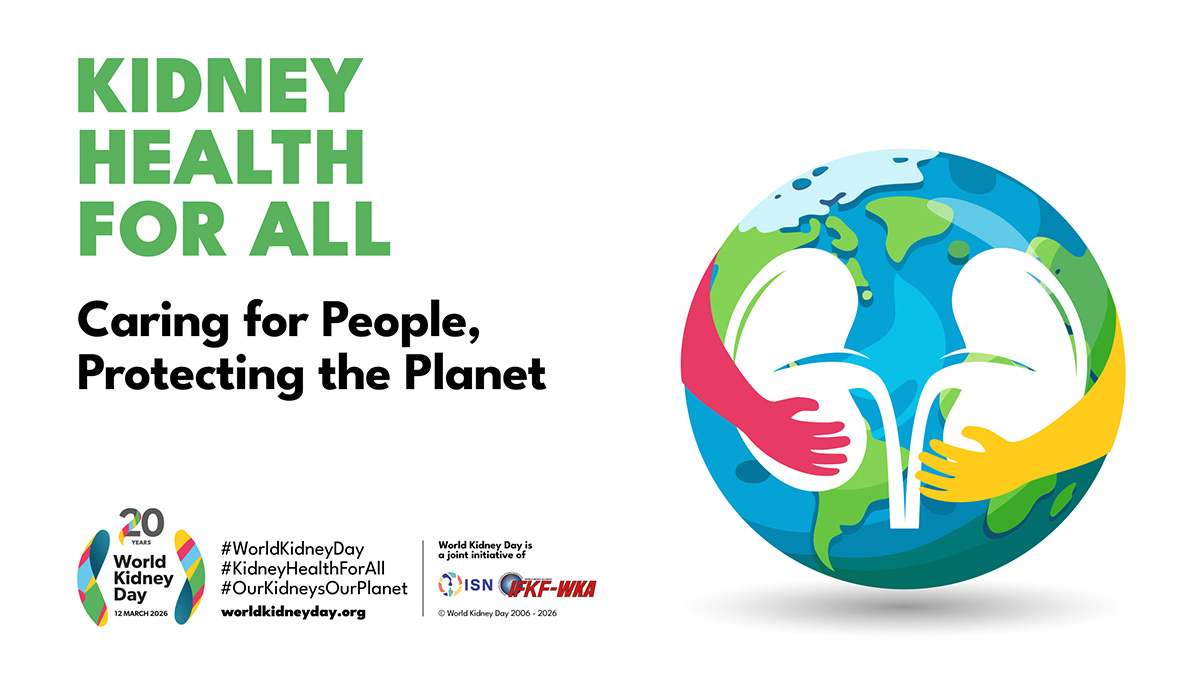
MUMBAI: Your kidneys rarely make noise when something is wrong. That silence, doctors say, is precisely the problem. Marking World Kidney Day, Mankind Pharma has joined healthcare experts to raise awareness about the growing burden of Chronic Kidney Disease (CKD), a condition that often progresses unnoticed until it reaches advanced stages. Globally, CKD affects nearly 10 percent of the population. In India, the scale is even more alarming. Health studies estimate that about 138 million people in the country are living with some form of chronic kidney disease, placing India among the nations with the highest disease burden worldwide.

The difficulty lies in detection. Kidneys quietly perform essential tasks such as filtering waste, balancing body fluids, regulating blood pressure and supporting several metabolic functions. Yet experts warn that an individual can lose up to 90 percent of kidney function without obvious symptoms, making routine screening crucial.

As part of its awareness initiative, Mankind Pharma is encouraging people to monitor key health indicators including blood pressure, blood sugar and kidney function through basic diagnostic tests. The campaign also features educational outreach and discussions with medical experts to highlight the importance of early detection.

Advertisement

The healthcare challenge extends beyond diagnosis to treatment. India requires nearly 200,000 kidney transplants every year, but only around 13,500 procedures are performed annually, meeting less than 6 percent of the total demand. The shortage of organ donors remains a major hurdle, with the country’s organ donation rate still below one donor per million population, far lower than many developed nations.

Doctors also point to lifestyle and health trends driving the surge in kidney disease. Rising rates of diabetes and hypertension remain among the leading causes, alongside factors such as high salt consumption, unhealthy diets and sedentary lifestyles.

Max Super Speciality Hospital chairman of Urology, Renal transplant and robotics Anant Kumar stressed that routine health checks can significantly reduce long term risks.

Advertisement

“Chronic kidney disease often progresses silently and remains undetected until it reaches advanced stages. Individuals with diabetes, high blood pressure, obesity or a family history of kidney disease should undergo regular screening through tests such as blood creatinine, urine analysis and blood pressure monitoring. Early diagnosis plays a crucial role in slowing disease progression and improving outcomes,” he said.

Mankind Pharma chief operating officer Arjun Juneja added that awareness and prevention remain key to tackling the growing health challenge.

“World Kidney Day is an important reminder that prevention and early detection are critical in addressing kidney disease. By promoting regular screenings, healthier lifestyle choices and greater awareness, we hope to encourage individuals to take proactive steps to protect their long term health,” he said.

Advertisement

Medical experts recommend several simple steps to protect kidney health. These include staying physically active, maintaining healthy blood sugar levels, monitoring blood pressure regularly, following a balanced diet with controlled salt intake, staying hydrated and avoiding unnecessary use of painkillers. Routine kidney function tests are especially important for people considered at higher risk.

As the global and national burden of CKD continues to rise, health professionals say awareness campaigns like World Kidney Day serve as an important opportunity to remind people that kidney health often depends on catching problems before the body shows any warning signs.

Advertisement
Click to comment

Leave a Reply

Your email address will not be published. Required fields are marked *

Digital

Content India 2026 opens with a copro pitch, a spice evangelist and a £10,000 prize for Indian storytelling

Dish TV and C21Media’s three-day summit puts seven ambitious projects before an international jury, and two walk away with serious development money

Published

on

MUMBAI: India’s content industry gathered in Mumbai this March for Content India 2026, a three-day summit organised by Dish TV in partnership with C21Media, and it wasted no time making a statement. The event opened with a Copro Pitch that put seven scripted and unscripted television concepts before an international panel of judges, and by the end of it, two projects had walked away with £10,000 each in marketing prize money from C21Media to support development and international promotion.

The jury, comprising Frank Spotnitz, Fiona Campbell, Rashmi Bajpai, Bal Samra and Rachel Glaister, evaluated a shortlist that ranged from a dark Mumbai comedy-drama about mental health (Dirty Minds, created by Sundar Aaron) to a Delhi coming-of-age mystery (Djinn Patrol, by Neha Sharma and Kilian Irwin), a techno-thriller about a teenage gaming prodigy (Kanpur X Satori, by Suchita Bhatia), an investigative crime drama blending mythology and modern thriller (The Age of Kali, by Shivani Bhatija), a documentary on India’s spice heritage (The Masala Quest, hosted by Sarina Kamini), a documentary on competitive gaming (Respawn: India’s Esports Revolution, by George Mangala Thomas and Sangram Mawari), and a reality-horror competition merging gaming and immersive fear (Scary Goose, by Samar Iqbal).

The session was hosted by Mayank Shekhar.

Advertisement

The two winners were Djinn Patrol, backed by Miura Kite, formerly of Participant Media and known for Chinatown and Keep Sweet: Pray & Obey, with Jaya Entertainment, producers of Real Kashmir Football Club, also attached; and The Masala Quest, created and hosted by Sarina Kamini, an Indian-Australian cook, author and self-described “spice evangelist.”

The summit also unveiled the Content India Trends Report, whose findings made for bracing reading. Daoud Jackson, senior analyst at OMDIA, set the tone: “By 2030, online video in India will nearly double the revenue of traditional TV, becoming the main driver of growth.” He noted that in 2025, India produced a quarter of all YouTube videos globally, overtaking the United States, while Indians collectively spend 117 years daily on YouTube and 72 years on Instagram. Traditional subscription TV is declining as free TV and connected TV gain ground, forcing broadcasters to innovate. “AI-generated content is just 2 per cent of engagement,” Jackson added, “highlighting the dominance of high-quality human content. The key for Indian media companies is scaling while monetising effectively from day one.”

Hannah Walsh, principal analyst at Ampere Analysis, added hard numbers to the picture. India produced over 24,000 titles in January 2026 alone, with 19,000 available internationally. The country now accounts for 12 per cent of Asia-Pacific content spend, up from 8 per cent in 2021, outpacing both Japan and China. Key exporters include JioStar, Zee Entertainment, Sony India, Amazon and Netflix, delivering over 7,500 Indian-produced titles abroad each year. The top importing markets are Saudi Arabia, the UAE, Egypt, the United States and the Philippines. Scripted content dominates globally at 88 per cent, with crime dramas and children’s and family titles performing particularly strongly.

Advertisement

Manoj Dobhal, chief executive and executive director of Dish TV India, framed the summit’s ambition squarely. “Stories don’t need translation. They need a platform, discovery, and reach, local or global,” he said. “India produces more movies than any country, our streaming platforms compete globally, and our tech and creators win international awards. Yet fragmentation slows growth. Producers, platforms, and tech move in different lanes. We need shared spaces, collaboration, and an ecosystem where ideas, technology, and people meet. That is why we built Content India.”

The data, the pitches and the prize money all pointed to the same conclusion: India is not waiting for the world to discover its stories. It is building the infrastructure to sell them.

Advertisement
Continue Reading

Advertisement News18
Advertisement All three Media
Advertisement Whtasapp
Advertisement Year Enders

Copyright © 2026 Indian Television Dot Com PVT LTD

This will close in 10 seconds