Connect with us

MAM

India leads emerging trends in internal communication, Nexticshift  study finds

Study highlights AI, scale and pressure as key drivers

Published

on

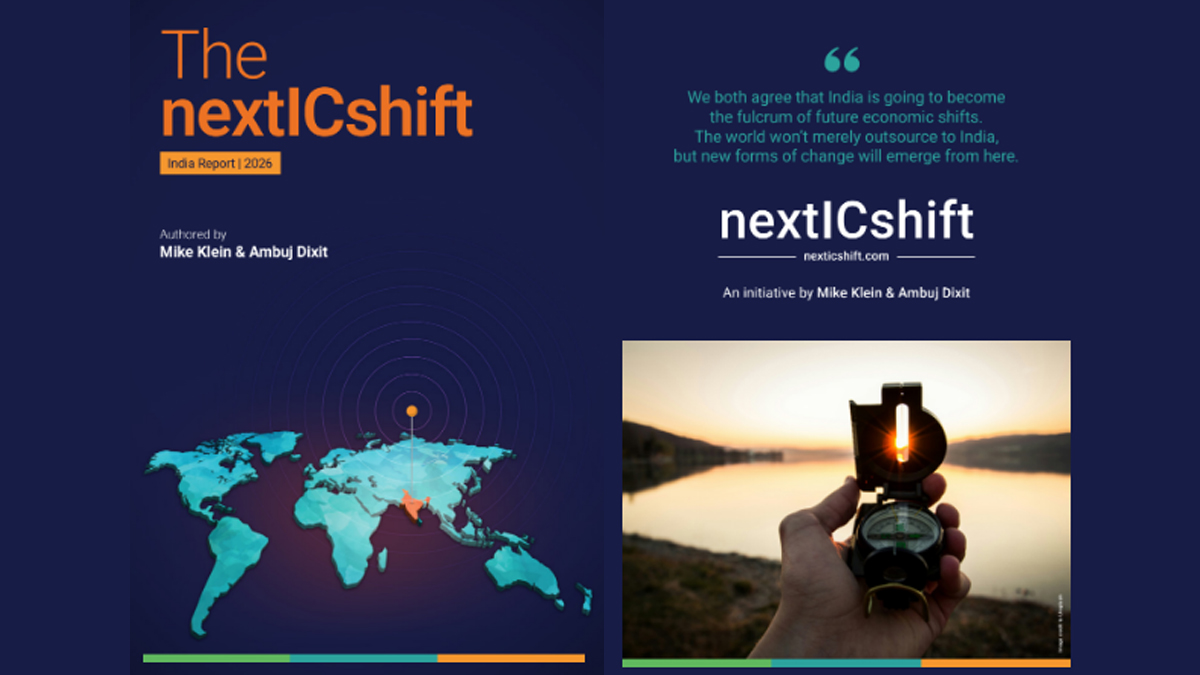
INDIA: India is emerging as an early signal market for the future of workforce and internal communication, according to a new study released under the Nexticshift initiative, which argues that the country is beginning to shape trends other markets will face next.

The report challenges the assumption that Indian internal communication practices merely follow western models. Instead, it finds that India’s scale, speed and pressure-filled operating environment are pushing organisations to adopt more pragmatic, outcome-driven approaches, accelerated by artificial intelligence and demographic change.

With an estimated workforce of nearly 640 million, larger than that of the EU, the US and the UK combined, India represents one of the world’s most complex communication environments. Fewer legacy systems, a younger workforce and rapid, necessity-led AI adoption are reshaping how organisations connect people, priorities and purpose.

Advertisement

The study is based on a five-city listening tour conducted across Mumbai, Delhi, Bengaluru, Hyderabad and Pune in November and December 2025. Researchers held 60 in-depth conversations with chief communication officers, senior internal communication leaders, global capability centre executives, academics and practitioners.

The report was led by Europe-based practitioner Mike Klein, and Ambuj Dixit, based in Mumbai, drawing on nearly five decades of combined experience across corporate, agency and consulting roles.

Its central finding is that intensifying commercial and delivery pressures, combined with limited budgets and resources are forcing internal communication teams to prioritise effectiveness over activity. The function is shifting away from culture-building alone towards enabling clarity, coordination and risk management across large, fast-moving organisations.

Advertisement

As AI compresses timelines and accelerates decision-making, the value of internal communication is increasingly measured by outcomes rather than volume. Routine work is being automated, freeing teams to focus on sharper leadership messaging and more memorable communication as competition for employee attention rises.

“India offers a compressed view of the conditions many organisations globally are only beginning to experience,” said Klein. “That makes it an important place to understand where internal communication is heading.”

“This research is not about best practices or benchmarks,” said Nexticshift co-founder Dixit. “It is about listening carefully to practitioners and recognising how the function is being reshaped by real operating pressure.”

Advertisement

Positioned as an industry resource rather than a prescriptive playbook, the report argues that internal communication is becoming a strategic capability, central to organisational resilience and performance, rather than a support function focused on managing employee sentiment.

Click to comment

Leave a Reply

Your email address will not be published. Required fields are marked *

Brands

Wipro hires 7,500 freshers, withholds FY27 hiring outlook

Profit rises to Rs 3,522 crore, Rs 15,000 crore buyback announced.

Published

on

MUMBAI- Hiring may be on, but visibility is off, Wipro is adding talent even as it pauses the crystal ball. The company hired 7,500 freshers in FY26 but stopped short of offering any hiring outlook for FY27, underscoring the uncertainty gripping the IT services sector as it pivots towards an AI-led operating model.

The disclosure came alongside its fourth-quarter earnings, where management flagged volatile demand conditions and refrained from committing to future workforce expansion. Chief human resources officer Saurabh Govil noted that over 3,000 of the total hires were onboarded in the March quarter alone, signalling continued intake despite a lack of clarity on deployment pipelines.

This divergence active hiring without forward guidance reflects a broader industry pattern where talent acquisition continues even as deal conversions remain uneven and client spending cycles stretch. Wipro expects its IT services revenue for the June quarter to range between a decline of 2 per cent and flat growth sequentially in constant currency terms, reinforcing near-term caution.

Advertisement

Chief executive officer Srini Pallia pointed to artificial intelligence as both a disruptor and an opportunity. He said evolving client priorities are pushing the company towards outcome-driven engagements, with Wipro increasingly focusing on a services-as-software model through its AI Native Business and Platforms unit. The shift marks a structural change from traditional headcount-led growth to AI-enabled delivery frameworks.

The company has already committed over $1 billion to its AI ecosystem, with investors closely watching how these investments translate into revenue. For now, the numbers present a mixed picture. Net profit rose sequentially to Rs 3,522 crore, while revenue grew 3 per cent to Rs 24,236 crore. However, core IT services performance remained under pressure, with full-year revenue declining 0.3 per cent in dollar terms and 1.6 per cent in constant currency.

Large deal bookings offered a counterpoint, rising 45.4 per cent year-on-year to $7.8 billion, highlighting a widening gap between deal wins and actual revenue realisation. On a quarterly basis, IT services revenue slipped 1.2 per cent sequentially, signalling continued softness in execution.

Advertisement

Margins, however, told a more optimistic story. Operating margins expanded to 17.3 per cent in the fourth quarter, up from 14.8 per cent in the previous quarter, reflecting improved cost discipline. That said, the company cautioned that upcoming wage hikes and the ramp-up of large deals could exert pressure going forward.

Attrition stood at 13.8 per cent in the March quarter, indicating stabilisation after periods of elevated churn. Alongside its earnings, Wipro also announced a Rs 15,000 crore share buyback, reinforcing its focus on shareholder returns, with a payout ratio of 88 per cent over the past three years.

Taken together, the numbers capture a company in transition investing in AI, maintaining hiring momentum, but navigating a demand environment where growth is uneven and visibility remains limited.

Advertisement
Continue Reading

Advertisement News18
Advertisement
Advertisement
Advertisement Whtasapp
Advertisement Year Enders

Indian Television Dot Com Pvt Ltd

Signup for news and special offers!

Copyright © 2026 Indian Television Dot Com PVT LTD

This will close in 10 seconds