iWorld
Stream and steady wins the race as OTTs chase hybrid money magic

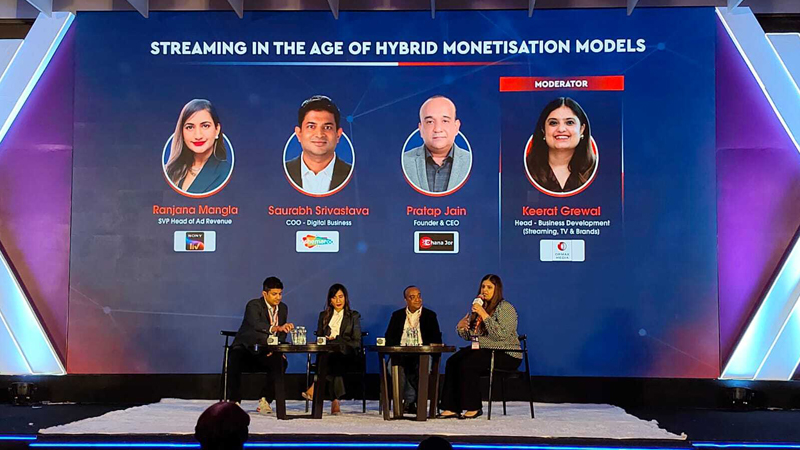
MUMBAI: If streaming once felt like a sprint in India, 2025 has turned it into a marathon, one where platforms keep changing tactics mid-stride. At the 9th edition of the Vidnet Summit, the panel on “Streaming in the Age of Hybrid Monetisation Models” offered a free-flowing, occasionally chaotic but deeply revealing look at how AVOD, SVOD, FAST, TVOD and Pay-Per-View now coexist in an industry hurtling towards hybrid futures.
Moderated by Keerat Grewal, head of business development (streaming, TV & brands), Ormax World, the panel brought together Ranjana Mangla (SVP, Ad revenue head, Sony Liv), Saurabh Srivastava (COO for digital media, Shemaroo Entertainment) and Pratap Jain (founder, Chana Jor). Between candid confessions, colourful metaphors and hard numbers, the speakers mapped the pressures and opportunities shaping India’s streaming economy.
Grewal opened with a statistic that set the stakes, “As of 2025, India has 625 million people consuming online streaming content, and 73 per cent watch free content.”
Free, clearly, is the national habit and free forces platforms to innovate.

Grewal noted that OTT models today cannot be built in isolation. Platforms constantly weigh where to place content premium tiers, YouTube, ad-supported feeds or subscription bundles. Premium users, she said, must feel their annual spend is “worth their time”, while AVOD and SVOD require very different content and pricing philosophies.
For Sony LIV’s Mangla, the answer lies in finding a platform’s core uniqueness.“Sports is tactical,” she said. “We’ve invested in tennis for a long time. We use sports very uniquely, and we make sure it stays profitable at all times.”
Sports, she emphasised, demands long-term investment, strategic placement and ruthless clarity on returns.
Mangla also spotlighted Connected TV (CTV), calling the last 18 months transformative. “CTV is now an unskippable part of every advertiser’s plan—traditional brands, new-age companies, retailers, everyone.” Inventory remains limited, she noted, but demand has skyrocketed, pushing OTT players to build more high-quality, large-screen experiences.
Shemaroo’s Srivastava delivered one of the session’s sharpest insights, “This is the year when video advertising on digital will surpass video advertising on television.”
The shift, he said, is driven by digital’s vast inventory and the ability to test, learn and refine campaigns in real time, something TV cannot match.
Advertisers, Mangla added, now scrutinise digital data with unprecedented detail. “There is a lot of inventory available for advertisers to understand what works and what does not, and they are using it.” But she warned against complacency, “Every 18 months, you have to revisit your strategy. The world changes too fast.”
The conversation pivoted to premium content, with Mangla noting that not every show must appeal to hundreds of advertisers. “If a show appeals to 100 advertisers with clarity, that is enough. You will eventually convert only about 15 per cent anyway.” High-quality content, contextual placements and associative value, participants agreed, remain the backbone of sustainable monetisation.
Chana Jor’s Pratap Jain distilled his philosophy into a single line, “Content should reach every corner of the world, that is the perfect way of making money. Reach is the key.” He argued that user-generated platforms and big-tech ecosystems have natural advantages, pushing traditional broadcasters-turned-OTTs to stay nimble, experimental and audience-obsessed.
Pay-Per-View (PPV), meanwhile, emerged as a quiet but intriguing model. With India’s appetite for special events from sports to concerts to reality finales PPV may yet evolve into a meaningful premium layer for high-value content.
Despite the colourful tangents touching on prasad, prayers, sugar cane and even yoga tablets, the underlying consensus was unmistakable: hybrid monetisation is not a trend but a necessity.
AVOD brings reach, SVOD brings loyalty, FAST brings frequency, TVOD brings spikes, PPV brings exclusivity and CTV brings premium advertisers. Success lies in balancing them all without losing sight of content quality.
India’s streaming landscape, with 625 million users, is vast, diverse and deeply cost-conscious. With 73 per cent choosing free content, platforms have no option but to experiment aggressively with hybrid strategies, premium positioning and context-rich advertising.
As the panel wrapped, one message echoed through the hall: this decade belongs to platforms that evolve quickly, choose clarity over chaos, and understand that in India’s streaming race, stream and steady wins it.






iWorld
Instagram to curb reach of repost-heavy accounts in new update
Original content to get priority as reposts lose visibility on Explore and feeds.
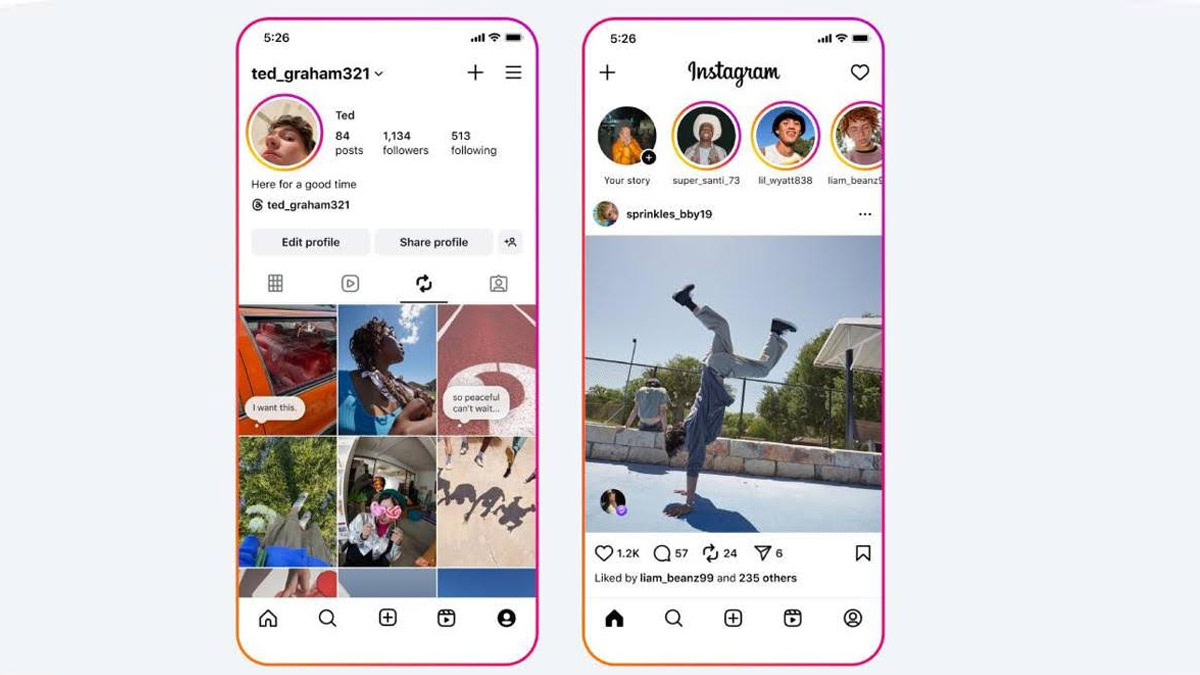
MUMBAI: Copy, paste, repeat? Instagram is ready to hit unfollow on that strategy. The platform is tightening its grip on repost-heavy accounts, signalling a clear shift towards rewarding originality over aggregation. As part of the update, Instagram will stop recommending content from accounts that primarily repost others’ work across key discovery surfaces, including feeds and the Explore tab. The change expands existing restrictions that were earlier limited to Reels, now covering photos and carousel posts as well. While reposted content will still be visible to an account’s existing followers, its chances of reaching new audiences through recommendations are set to shrink significantly.
At the heart of the move is a push to clean up clutter. Instagram is targeting aggregator accounts that recycle content without adding meaningful value, aiming to reduce duplication and elevate the visibility of original creators.
The platform has also clarified what qualifies as “original”. Content created directly by users whether photos, videos or substantially edited material will continue to be prioritised. Even when using existing formats or templates, posts that bring in fresh humour, commentary or creative edits will still make the cut.
What will not pass muster are low-effort tweaks. Adding watermarks, making minor speed changes or reposting screenshots even with credit will not be considered original and will not be eligible for broader distribution.
Importantly, the update will not affect what users see from accounts they already follow. But for creators relying heavily on reposts, visibility beyond their existing audience could take a noticeable hit.
In a platform driven by discovery, that shift matters. Instagram’s message is simple, if you want to be seen, start creating not just curating.