Connect with us

MAM

Havas slams the door on WPP takeover chatter

Published

on

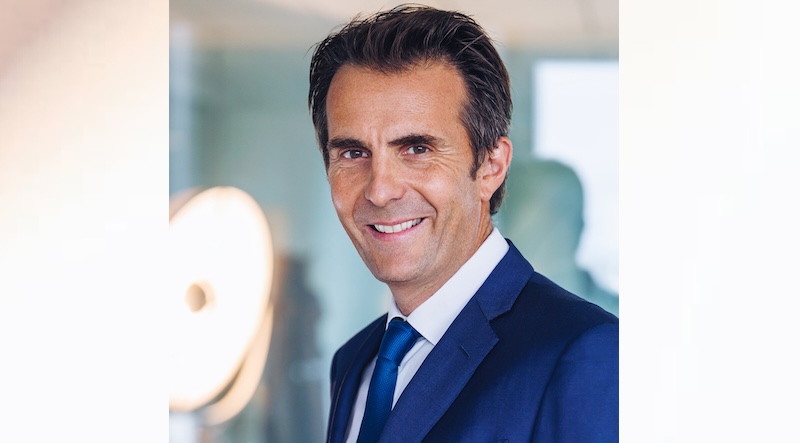
PARIS: Yannick Bolloré has had enough of the gossip. The Havas chief executive told employees on 17 November  that his French advertising group is “not in discussions with WPP” about taking a stake in the embattled British rival—despite a weekend of frenzied speculation that sent WPP’s battered shares rocketing 11 per cent.

The Times had reported that Havas was eyeing either a chunk of WPP or its media agency arm, prompting talk that private equity sharks Apollo and KKR were also circling. An American advertising executive poured petrol on the flames by telling Adweek the two sides were in “very serious” discussions. By Monday morning, WPP shares were the FTSE 100’s biggest climber.

Bolloré’s internal memo, seen by multiple outlets, sought to kill the chatter stone dead. “Given the recent press coverage amplifying these rumours and the questions we’ve received from colleagues and clients, we want to clarify that we are not in discussions with WPP,” he wrote. Havas, he noted, delivered 3.8 per cent organic growth in the third quarter—outpacing rivals whilst WPP stumbles.

Advertisement

The Paris-based group does have an appetite for deals, Bolloré acknowledged, but prefers “bolt-on and targeted acquisitions” to mega-mergers. “While we could consider a larger acquisition aligned with our strategy,” he added, “there are currently no ongoing discussions of that nature.”

WPP needs all the help it can get. Its shares plunged 16 per cent in late October to their lowest level since 1998, after another round of missed forecasts. Chief executive Cindy Rose called the performance “unacceptable” and drafted in McKinsey to devise a turnaround strategy. The company’s market value has cratered from £25 billion in 2017 to roughly £3 billion today, putting its FTSE 100 membership in jeopardy.

The frenzy underscores how desperate investors are for consolidation in a sector squeezed by digital platforms and shrinking budgets. Omnicom’s $13.5 billion swoop on Interpublic Group is set to close this month, whilst Dentsu is mulling a sale of its international operations.

Advertisement

For now, though, Havas is keeping its powder dry. Bolloré signed off by urging staff to ignore the “rumours and noise” and focus on the firm’s AI-driven strategy. Translation: don’t hold your breath for a white knight rescue of WPP.

Here’s the full contents of the internal note: 

Dear all,
It’s our policy not to comment on market rumors, however, given the recent press coverage amplifying these rumors and the questions we’ve received from colleagues and clients, we want to clarify that we are not in discussions with WPP.
As you know, Havas has delivered strong results over the past months in a world full of uncertainties. In Q3, we achieved organic growth of +3.8%, outperforming the market, reflecting remarkable client wins and expanded collaborations with long-standing partners. Thanks to your commitment and energy, we continue to reinforce our market position and drive growth.
Havas has a strategy of bolt-on and targeted acquisitions that contributes to our strong momentum, alongside strategic partnerships. While we could consider a larger acquisition aligned with our strategy, as stated during our Q3 earnings announcement a few weeks ago, there are currently no ongoing discussions of that nature.
Undistracted by rumors and noise, we remain focused on accelerating the deployment of our Converged.AI strategy, driving group-wide AI adoption, and delivering excellence for our clients and prospects.
Let’s keep pushing forward with ambition and confidence, shaping the future of our industry together.

Advertisement

Sincerely,
Yannick

Click to comment

Leave a Reply

Your email address will not be published. Required fields are marked *

Brands

TV bills on the rise: JioStar, Sony, and Zee crank up prices by 10 per cent

Broadcasters tune into higher tariffs as JioStar, Sony, and Zee reveal new prices

Published

on

MUMBAI: If you were hoping for a cheaper night in front of the telly next year, you might want to look away from the remote. India’s broadcasting giants are flipping the script on pricing, with JioStar, Sony, and Zee all tuning into a new frequency of higher tariffs. Ahead of the 2026 financial year, the Big Three have released their updated Reference Interconnect Offers (RIOs), signalling a collective push that will see most monthly bills rise by roughly 10 per cent.

The synchronised move suggests that broadcasters are testing the price elasticity of their audience. In simpler terms, they are betting that your love for daily soaps and live sports is stronger than your annoyance at a slightly lighter wallet.

Sony is making a particularly bold play in the High Definition space. If you enjoy the crispness of Sony Entertainment Television HD or Sony SAB HD, your monthly bill for those channels will jump from 25 rupees to 30 rupees. The same 30-rupee price tag now applies to their sports heavyweights, including Sony Sports Ten 1, Sony Sports Ten 2, Sony Sports Ten 3 Hindi, and Sony Sports Ten 5.

Advertisement

However, Sony is also expanding its horizons. Fans of regional content have new arrivals to look forward to, provided they are patient. Sony Sports Ten 4 Kannada is slated for an April 2026 debut, while Sony Vizha and Sony Vizha HD are expected by June. By August, Sony Telugu and Sony Telugu HD should be live. To keep customers sweet until then, Sony is offering “proportionate discounts.” For instance, the Happy India 2026 Smart Tamil bouquet, normally 42 rupees, will cost just 29.91 rupees until the new Vizha channel officially joins the party.

On the standard definition front, Sony is keeping its “strategic mass price” at 19 rupees for big hitters like Sony Max, Sony Marathi, and Sony Aath. Smaller channels see minor tweaks: Sony Max 2 is nudging up from 2 rupees to 3 rupees, while Sony Yay! sits at 6 rupees and Sony Max 1 remains at 5 rupees.

Zee Entertainment is also getting in on the act with a comprehensive 10 percent hike. Their flagship Standard Definition channels, such as Zee TV, Zee Cinema, Zee Marathi, Zee Bangla, Zee Sarthak, Zee Kannada, and Zee Tamil, are all locked in at 19 rupees. Interestingly, they have matched this 19-rupee price point for many of their HD versions too, including &TV and &Pictures.

Advertisement

For those who prefer the all-you-can-eat bouquet approach, Zee’s All-in-One Hindi SD pack has risen to 58 rupees. Their Marathi and Bangla packs are now 64 rupees, while the Southern trio of Tamil, Kannada, and Telugu SD packs will set you back 85 rupees. If you want those same Southern packs in glorious HD, the price climbs to a steeper 131 rupees. Zee is also shuffling its deck by exiting English entertainment but entering the sports arena, with Zee Cafe and &flix seeing price adjustments to 7 and 8 rupees respectively.

JioStar is perhaps the most aggressive of the bunch when it comes to regional favourites. While they have kept core Hindi staples like Star Plus, Colors, and Star Gold at 19 rupees, they have pushed premium regional channels like Asianet, Colors Kannada, Vijay TV, and Maa TV up to 30 rupees. This move is significant because any channel priced over 19 rupees cannot be included in a discounted bouquet, meaning fans of these channels will have to buy them separately, potentially driving up the total cost of a monthly subscription.

Even the youngsters aren’t spared, with kids’ favourites like Nick SD and Nick HD+ now priced at 19 rupees. As we head towards April 2026, the ball is now in the court of the cable and dish operators. They must decide how much of these increases they can swallow and how much they will pass on to the person holding the remote. For the average viewer, the message is clear: premium content is getting a premium price tag.

Advertisement
Continue Reading

Advertisement News18
Advertisement All three Media
Advertisement Whtasapp
Advertisement Year Enders

Copyright © 2026 Indian Television Dot Com PVT LTD