Brands
Snack to the Future as Skyscanner takes India on a tasty world tour


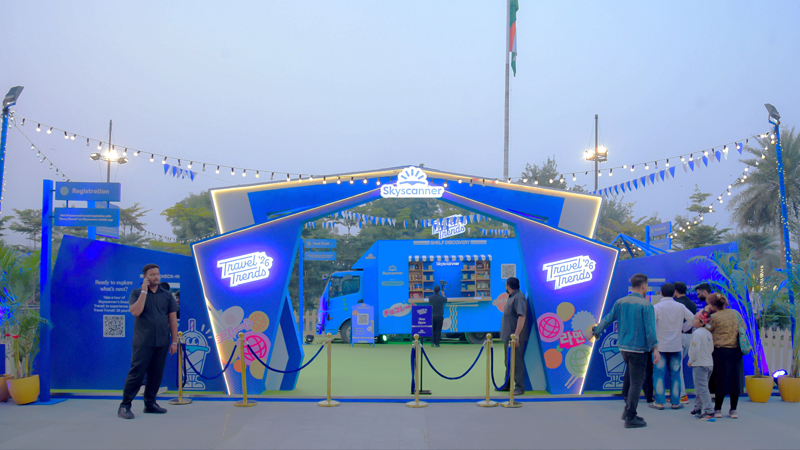
MUMBAI: If wanderlust had a flavour, Delhi and Mumbai just got a generous serving of it, one global snack at a time. In a first-of-its-kind India outing, global travel app Skyscanner rolled out its Snack Transit Pop-Up, a food-truck–meets–world-market experience that blended snacking with spontaneous travel inspiration. The activation, held on 14 November at Select CityWalk, Delhi and 15 November at Carter Road, Mumbai, marked Skyscanner’s most playful step yet beyond the digital screen.
Driven by insights from the Skyscanner Travel Trends 2026 Report, the pop-up brought its ‘Shelf Discovery’ trend to life, one fuelled by the finding that 79 per cent of Indian travellers love browsing supermarkets abroad to understand local flavours and culture. And if queues were anything to go by, India was more than ready for a global tasting tour.
Visitors lined up for a chance to sample and collect snacks from 16 countries, transforming an evening stroll into an edible expedition. From Kit Kat Matcha and Tim Tam to Sriracha Chilli Topaki and Coca-Cola Cherry, the menu read like a passport stamped with cravings.
Families, students, Gen Z explorers, young professionals, and casual mall-goers all found themselves swept up in this bite-sized world tour proof that when food meets travel, everyone hops on board.
Anchoring the experience was a bright, buzzing Snack Transit food truck, where visitors redeemed a complimentary snack by scanning a QR code to download the Skyscanner app and explore the Travel Trends 2026 Report.
Around it, interactive zones turned exploration into a game:
● A Spin Wheel to test travel trivia
● A Claw Machine for snack-hunting glory
● A cheerful Photo Booth offering instant print souvenirs
The mix of play, flavour, and discovery made the pop-up feel part theme park, part world tasting room.
The excitement spilled over to Instagram as visitors posted their Snack Transit moments, tagging Skyscanner and helping the activation ripple across feeds in both cities.
Reflecting on the event Skyscanner Travel Trends and Destinations Expert Neel Ghose said, “The Skyscanner Snack Transit isn’t just about food; it’s about the way we travel today. Curiosity has become the new currency of travel, and what used to begin with a search bar now starts with a spark of discovery sometimes on a supermarket shelf, sometimes in a city street. By reimagining global snacks as symbols of exploration, we wanted to show how travel inspiration can be both tangible and universal.”
With its quirky blend of culture, cravings and curiosity, Skyscanner’s Snack Transit pop-up didn’t just satisfy tastebuds, it reminded India that sometimes, the journey begins with a single bite.